Mastering Glazes High-Cal Matte crawling:
Know Tile #6 kaolin, know the fix.
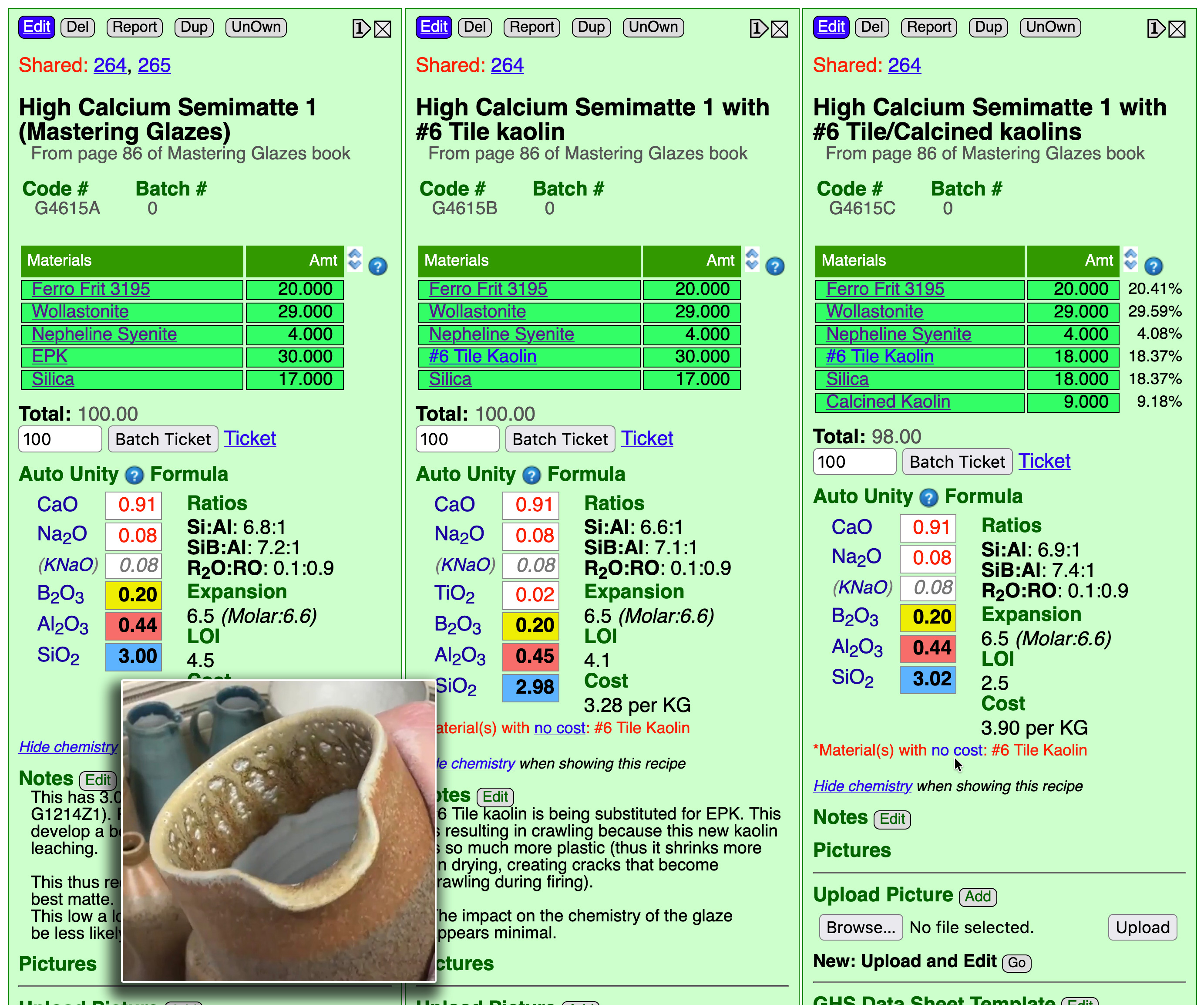
The kaolin is implicated in this glaze crawling problem. 30% EPK is a lot - a tipping point for issues with shrinkage and cracking on drying. Although #6 Tile kaolin in its place (center) doesn't disrupt the overall chemistry, it does disrupt the drying shrinkage: it is just too plastic for that high a percentage in a recipe. The fix is to substitute part of it for calcined kaolin.
Calcined kaolin has no LOI (vs 12% for raw kaolins). Without overthinking it, LOI-adjust by considering that 10% less is needed. So 20% #6 Tile and 9% calcined kaolin will equal 30% EPK. The right panel shows the calculated chemistry of the recipe with this change; notice it is very close to the same.
There are other fix options also. NZ and Grolleg kaolins are less plastic choices than #6 Tile; using either might mean that no calcined material is needed. Also, the failure happened on multi-layering of dipping glazes; crawling is common with that. The base glaze could have been mixed as a base-coat dipping glaze.
Related Pictures
The most plastic kaolin in North America.

This picture has its own page with more detail, click here to see it.
#6 Tile kaolin is a "designer kaolin"; they add bentonite to the material during manufacture to increase the plasticity far beyond what Mother Nature can make. This 10-inch vase is made from the pure kaolin, it is very thin-walled and light. This would be impossible with almost any other kaolin. The fired colour is darker than some other North American kaolins, but less of this (and less added bentonite) is required in a recipe to get the same plasticity. Thus, in the end, a plastic porcelain body can often fire just as white using this as other whiter-burning, but less plastic kaolins.
Videos
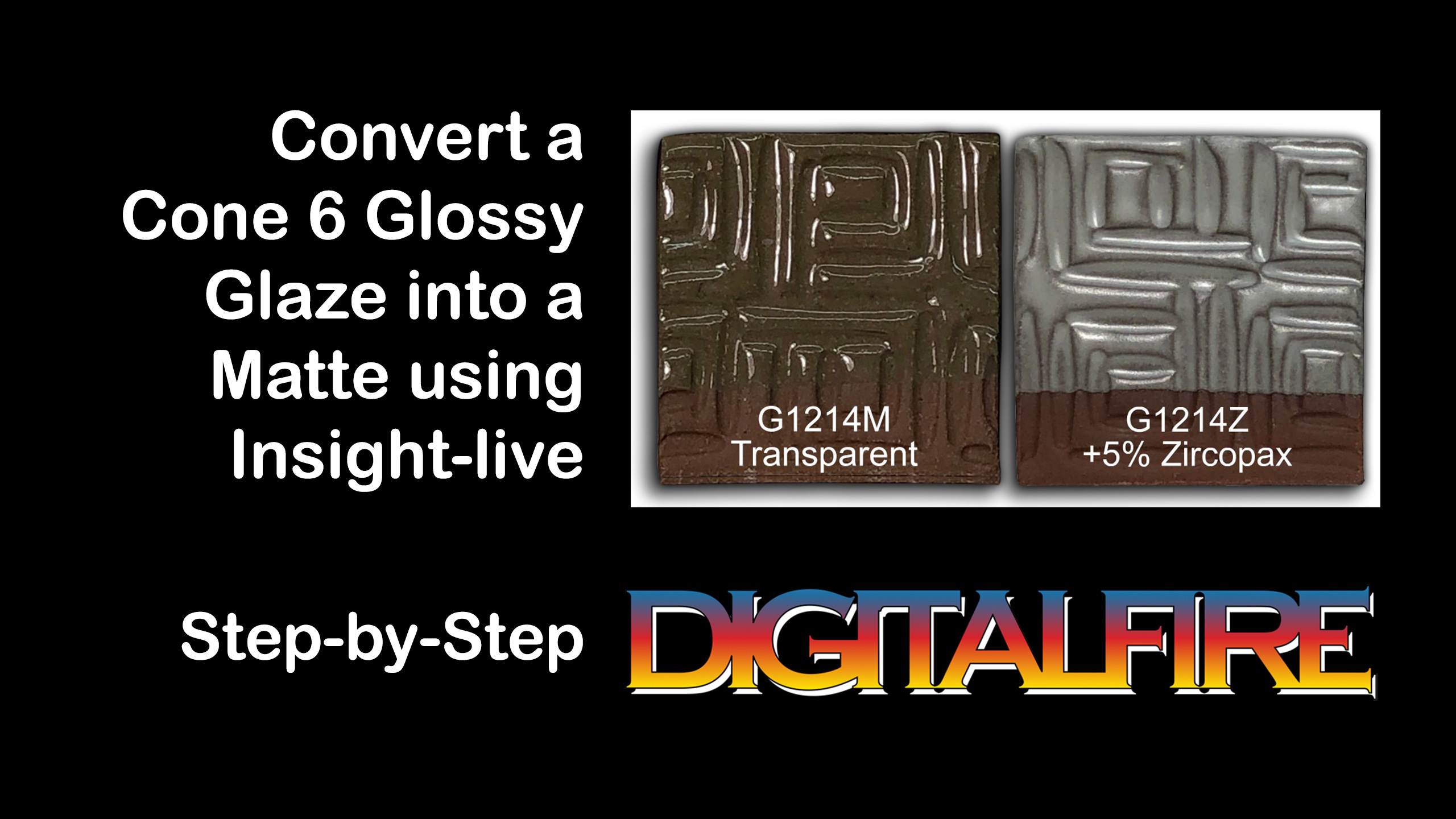 |
Converting G1214M Cone 6 transparent glaze to G1214Z matte
I converted a glossy transparent pottery glaze into a matte glaze using glaze chemistry and recipe logic. Watch me do it in my account at Insight-live.com. We'll cut the Si:Al ratio, increase the CaO further, maintain the thermal expansion for glaze fit and make the recipe shrinkage adjustable using a mix of calcined and raw kaolin. See the landing page to learn every detail: https://digitalfire.com/picture/3787. |
Links
| Typecodes |
Glaze Chemistry
Case studies where glaze chemistry was used to solve a problem. |
| Glossary |
Base-Coat Dipping Glaze
These are ceramic glazes intended for dipping but which contain a gum to enable them to adhere to the body better and tolerate over-layers without danger of flaking or cracking. |
 PayPal | No tracking, No ads, No paywall, No transient content! Just organized, concise information constantly updated and improved. Was this helpful? Consider supporting me. |
Got a Question?
Buy me a coffee and we can talk 

https://digitalfire.com, All Rights Reserved
Privacy Policy