Titanium Dioxide in a cone 6 calcia matte glaze
The glaze is G1214Z1 cone 6 base calcia matte on Plainsman M390 fired at cone 6 using the PLC6DS schedule. 5% titanium dioxide has been added (a high percentage). Titanium can create reactive glazes, like rutile, with no other colorants added. This effect also works well on matte surfaces, but the glaze needs good melt fluidity (that is good because functional mattes melt well). Calcia mattes host crystallization and work particularly well. Because titanium dioxide does not contain iron oxide, lighter colors and better blues are possible compared to rutile (iron is still needed, but it is coming from the body here). Like rutile, the effects are dependent on the cooling rate of the firing, slower cools produce more reactivity. Even application without drips is important (mixing as a thixotropic dipping glaze is best). This appearance also depends on using a dark-burning body or engobe.

Related Pictures
High-titanium glazes:
Great on a test tile, troublesome on ware

This picture has its own page with more detail, click here to see it.
On this M390 red clay test tile, the titanium-variegated cone 6 calcia matte glaze G1214Z1 looks excellent (rutile has a similar effect). But that appearance depends on a combination of factors: glaze chemistry, 5% titanium dioxide, the titanium grade, application thickness, the red M390 body and the PLC6DS firing schedule. The relief of the tile especially flatters it - forcing the glaze thin over high points and allowing it to pool in recesses, displaying a whole range of effects in just a few centimetres.
The tile tells you what effects a glaze is capable of; it does not necessarily tell you what the glaze will look like on ware. These mugs demonstrate that. They were fired using the C6DHSC schedule and are made from buff-burning M340 (left) and M390. The mug on the right also has a heavier, less-even application. Surprisingly, some of the thickest runs become more transparent rather than more opaque. That is a reminder that the pale, variegated character of this glaze is not simply the result of titanium acting as an opacifier; it depends heavily on melt thickness and titanium-driven crystallization during cooling.
Online Glaze Recipe Rescue:
Seeks good home for a magnesia matte blue
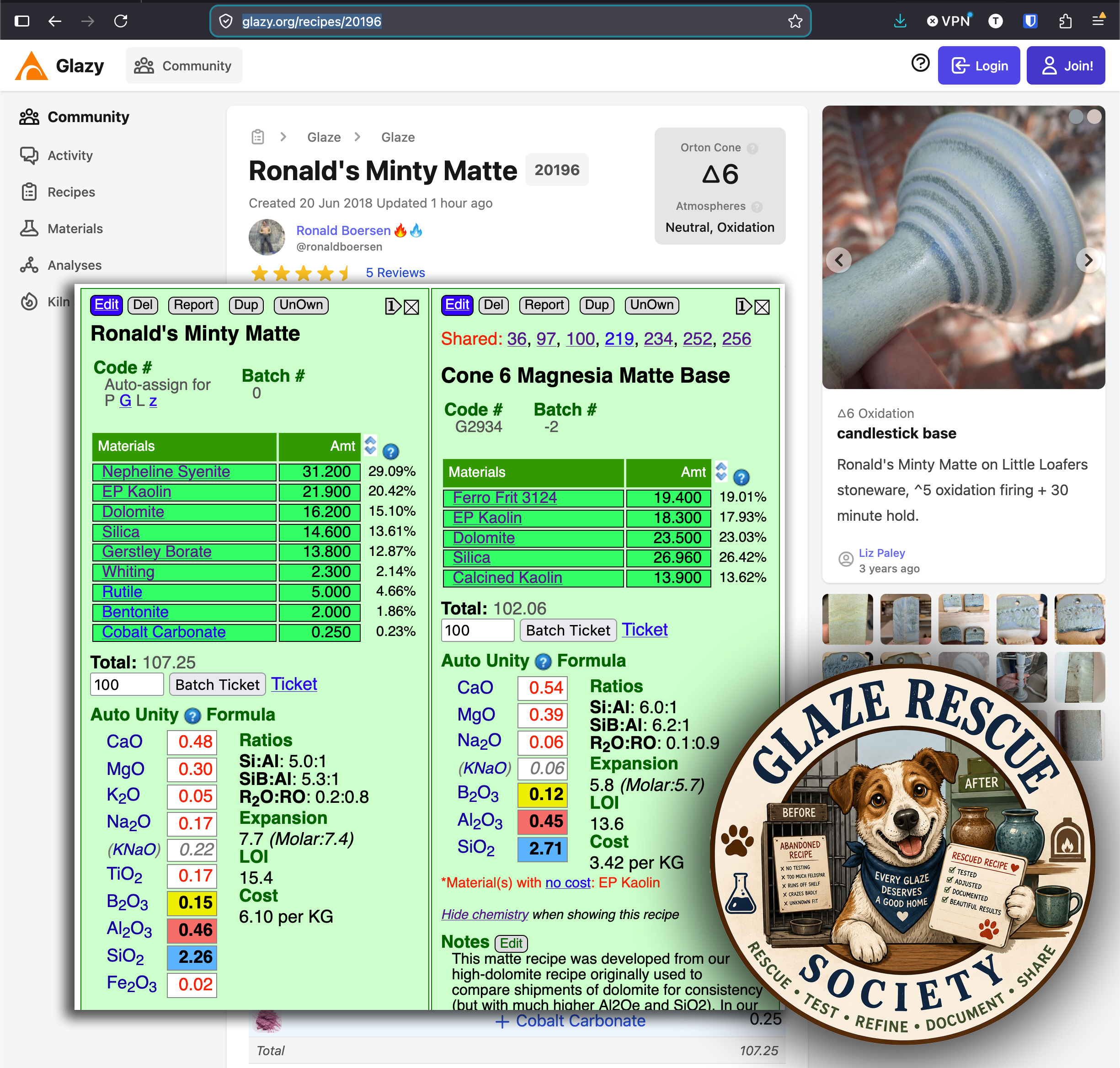
This picture has its own page with more detail, click here to see it.
This "Minty Matte" glaze was found wandering in a Facebook group. The current "home" is a base recipe having high nepheline syenite coupled with very low SiO2 (thus high COE). It crazes on most clay bodies used by the potter who contacted me. Its tag traced it to Glazy 20196. I sometimes think of these as "shelter recipes", needing a "glaze rescue". The beautiful appearance of this one provides the motivation to give it a little love and rehome it into a new base recipe! The love it needs is a simple understanding of the mechanism to move: It is rutile saturation in a magnesia matte with a little cobalt to kick the blue. Base recipes aren't carved in stone; the chemistry of this one can be altered to drop the COE a lot (by switching Na2O for MgO). G2934 magnesia matte also works with this mechanism (and has a much lower COE). Transplanting the rutile and cobalt into it would surely reduce crazing.
However, this recipe needs another rescue. From a misunderstanding. Although the potter contacting me was happy with the G2934 as a base for the rutile and cobalt, she had learned that durable glazes should have an R2O vs RO Ratio of around 0.3:0.7 (G2934 is 0.1:0.9). However, the R2O:RO ratio thing is misunderstood. Durability is much more about producing a well-melted homogeneous glass (but not over-fluid) with minimal phase separation and surface crystallization, good body fit and absence of large amounts of easily dissolved colorants.
Links
| Recipes |
G1214Z1 - Cone 6 Silky CaO matte base glaze
This glaze was born as a demonstration of how to use chemistry to convert a glossy cone 6 glaze into a matte. |
| Glossary |
Calcia Matte
Calcia matte ceramic glazes are “crystal mattes” while magnesia mattes are “microstructure mattes”. They have a smoother surface but can also have finely textured, even frosty, feathery or sugary surfaces, depending cooling and crystalliztion. |
| Glossary |
Reactive Glazes
In ceramics, reactive glazes have variegated surfaces that are a product of more melt fluidity and the presence of opacifiers, crystallizers and phase changers. |
| Materials |
Titanium Dioxide
A super white powder used in ceramic glazes to variegate, opacify and moderate color. |
 PayPal | No tracking, No ads, No paywall, No transient content! Just organized, concise information constantly updated and improved. Was this helpful? Consider supporting me. |
Got a Question?
Buy me a coffee and we can talk 

https://digitalfire.com, All Rights Reserved
Privacy Policy