A slight change to a Redart stoneware recipe does this!
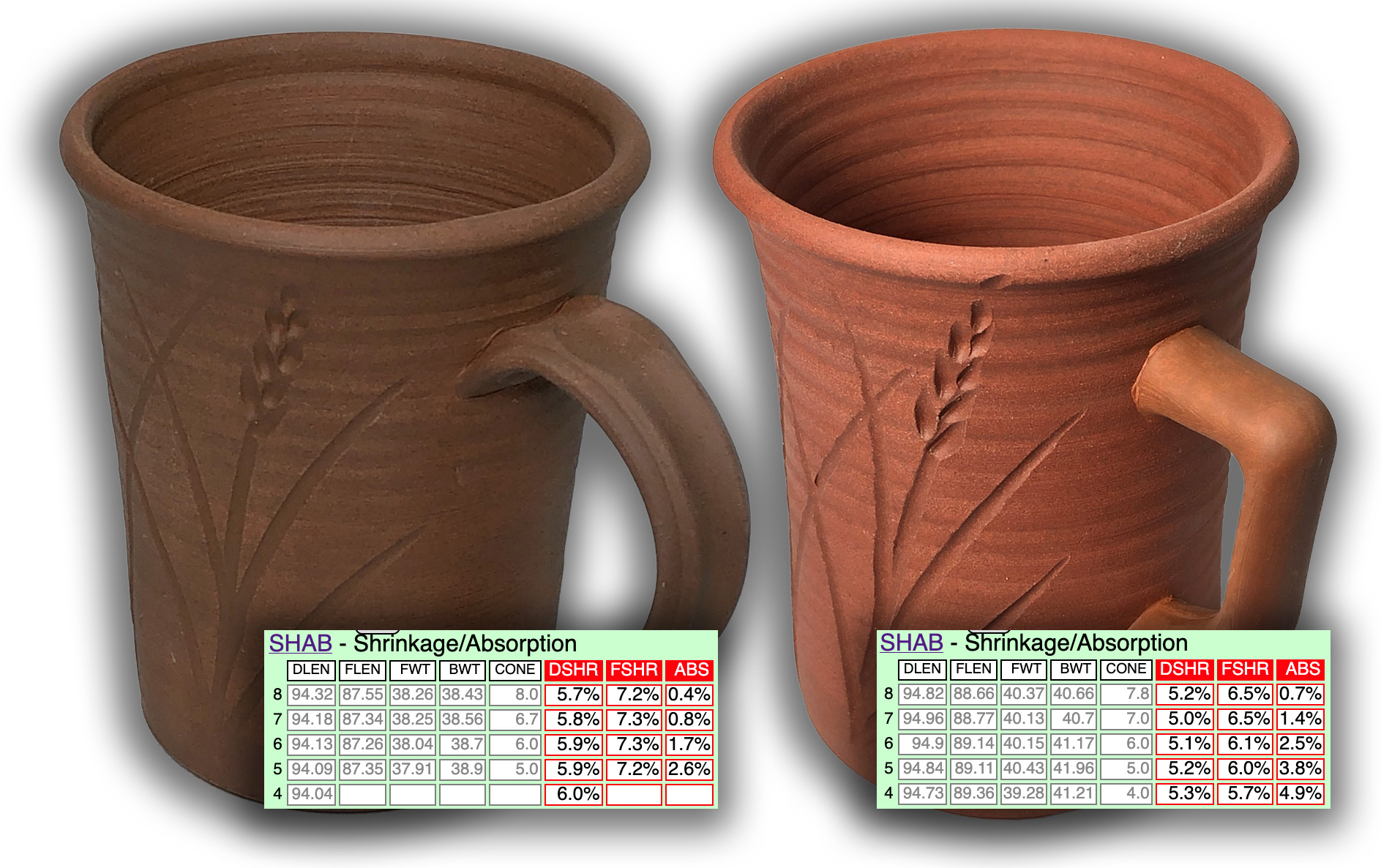
Redart is not only used in terra cotta bodies but also in stonewares. Both as a color source and to induce fired maturity (like a feldspar). These are L4005C and L4005D fired to cone 6 oxidation (shrinkage and absorption data are shown, click the above code numbers to see the complete report). They contain 35% Redart. They also have a 2% red iron oxide addition; this improves color and enables flexibility if the iron content in Redart changes.
What is the recipe difference? D simply adds 5% silica and uses a different ball clay! This demonstrates that Redart is a "tipping point material". The body suddenly changes from terracotta red to brown across a narrow temperature range just below cone 6. So if the recipe or firing schedules change a little the appearance of the body can change a lot. But what if the alkali content in the Redart changes? That would do the same. And that appears to be what has happened recently. Is the Redart the problem or failure to test incoming shipments and adjust recipes (assuming they are adjustable)?
 PayPal | No tracking, No ads, No paywall, No transient content! Just organized, concise information constantly updated and improved. Was this helpful? Consider supporting me. |
Got a Question?
Buy me a coffee and we can talk 

https://digitalfire.com, All Rights Reserved
Privacy Policy