Why fast fire glazes employ zinc:
A melt fluidity comparison tells us
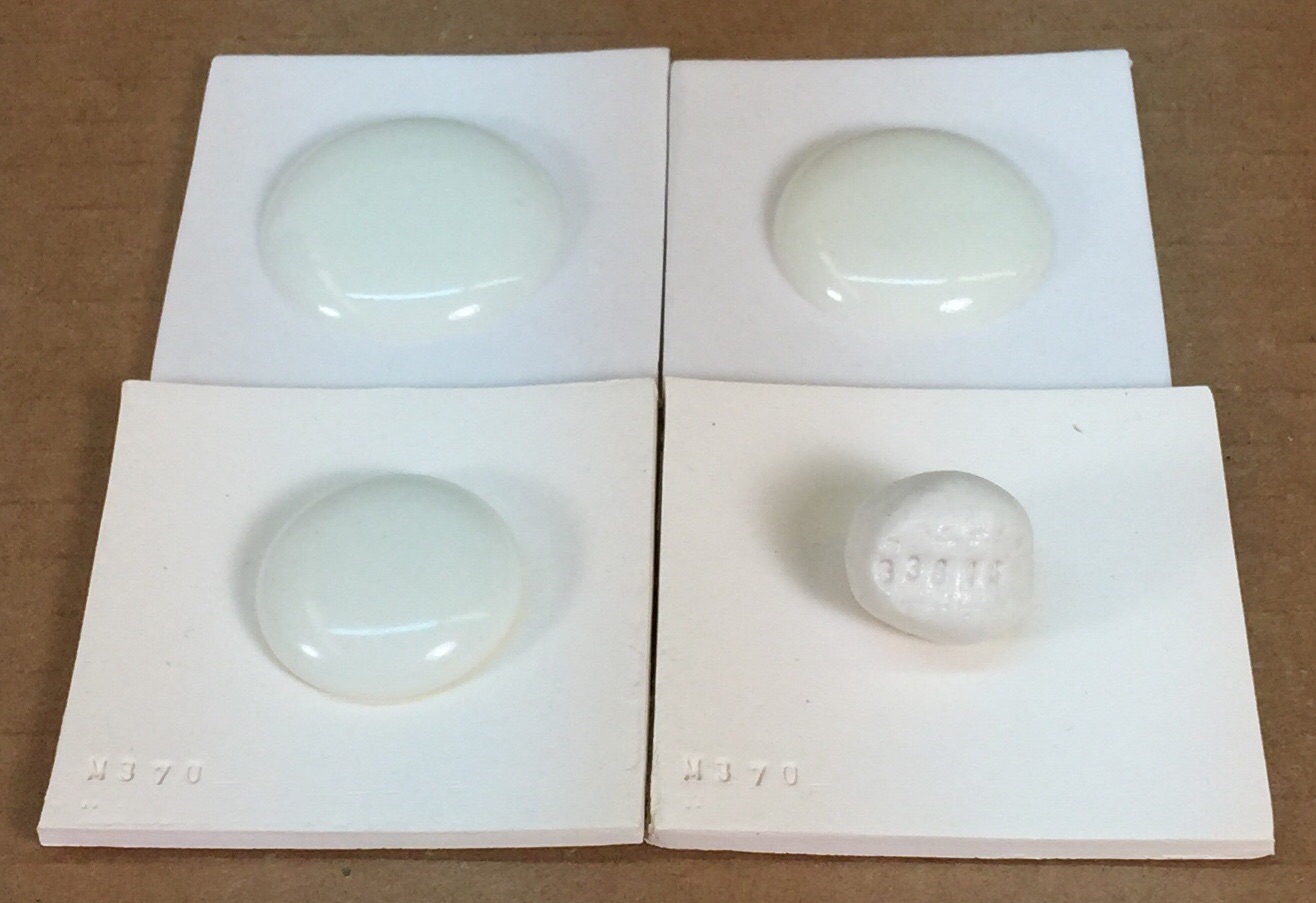
I am comparing two glazes using 10-gram GBMF test balls. I am using 10-gram GBMF test balls (they simply melt down onto a tile). The top two tiles show them at cone 6, the bottom two at cone 1 (yes, most cone 6 boron fluxed glazes are already melting at cone 1).
Left: G2926B clear boron base glaze.
Right: G3814 zinc-fluxed clear base.
Two things are clear:
Zinc is a powerful flux (it only takes 5% in the recipe to yield 0.18 molar of ZnO), whereas it takes 25% frit to yield 0.33 molar of boron.
Zinc melts late: Notice that the boron-fluxed glaze is already flowing well at cone 1 (bottom left), whereas the zinc one has not even started (bottom right). This is very good for fast fire because more gases of decomposition from the body can pass before it melts, producing fewer glaze defects.
Links
| Oxides | ZnO - Zinc Oxide |
| Glossary |
Fast Fire Glazes
Industrial ceramics are fired very quickly and require minimal micro bubbles and zero pinholes and blisters. Fast fire late melting glazes accomplish that. |
| Glossary |
Melting Temperature
The melting temperature of ceramic glazes is a product of many complex factors. The manner of melting can be a slow softening or a sudden liquifying. |
| Materials |
Zinc Oxide
A pure source of ZnO for ceramic glazes, it is 100% pure with no LOI. |
| Tests |
Glaze Melt Fluidity - Ball Test
A test where a 10-gram ball of dried glaze is fired on a porcelain tile to study its melt flow, surface character, bubble retention and surface tension. |
 PayPal | No tracking, No ads, No paywall, No transient content! Just organized, concise information constantly updated and improved. Was this helpful? Consider supporting me. |
Got a Question?
Buy me a coffee and we can talk 

https://digitalfire.com, All Rights Reserved
Privacy Policy