Copper is not just a pigment:
It can be a powerful flux, with consequences
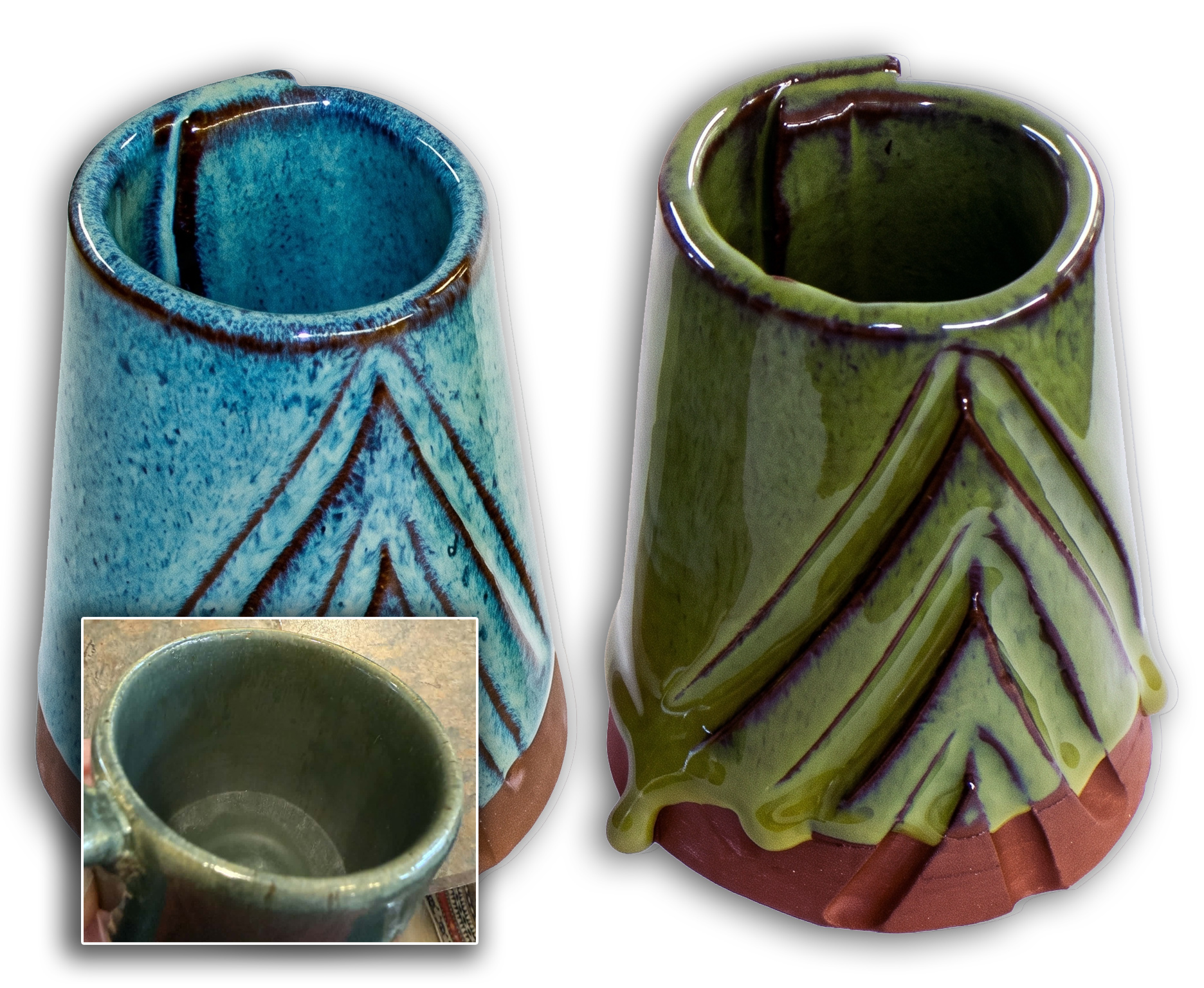
Left: The base recipe of GA6-C (80% Alberta Slip, 20% Frit 3134, 4% rutile). That recipe is stable; it does not run. Right: A 2% addition of copper carbonate transforms it into a runny, melt fluid glaze. It also produces a pleasant green even on this red-burning body (a good green is not easy in oxidation ceramics). Using a catch glaze (e.g. a frit-reduced version), this could be made safe on vertical surfaces. However, there are red flags here. Having only 2% copper would not destabilize a typical glaze (making it leachable). But phase separation is occurring here, likely because the base contains significant rutile. That means the phases are copper-bearing and possibly copper-concentrating. And, as noted, the copper has a greater-than-expected impact on the melt. Third, commercial variegated copper glazes can even leach in acids (as happened with the mug inset after a night with lemon juice). While the GA6-C recipe does have a 0.3:0.7 R2O:RO ratio, other indicators make it a course of wisdom to consider the GLLE test before use on functional surfaces.
Related Pictures
Copper can destabilize a glaze and make it soluble

This picture has its own page with more detail, click here to see it.
A closeup of a glossy Cone 6 glaze having 4% added copper carbonate. The bottom section has leached in lemon juice after 24 hours. This photo has been adjusted to spread the color gamut to highlight the difference. The leached section is now matte.
Commercial supposedly-safe glazes leaching. A liner glaze is needed.

This picture has its own page with more detail, click here to see it.
Three cone 6 commercial bottled glazes were layered inside this mug, which was then filled with lemon juice overnight. The whitened, altered areas show that the glaze surface has been attacked by the acid. Even if glaze A, B and C have each passed a fired-surface release test individually, A-over-B-over-C is a new fired glass composition and microstructure. The individual certifications do not logically constitute a test of that combination. The color change suggests attack on cobalt-bearing glass, but exactly what is leaching cannot be known without testing because the recipes are proprietary. For functional ware, it is better to use a stable transparent or white liner glaze whose recipe and limits are known.
When manufacturers say their products conform to standards such as ASTM D-4236, they are referring to the safety labeling of the liquid art material for the user of the product, not guaranteeing that layered fired surfaces on finished ware will be leach-resistant
Links
| Oxides | CuO - Cupric Oxide |
| Materials |
Copper Oxide Black
The purest source of CuO copper oxide pigment used in ceramic glazes. |
| Glossary |
Flux
Fluxes are the reason we can fire clay bodies and glazes in common kilns, they make glazes melt and bodies vitrify at lower temperatures. |
 PayPal | No tracking, No ads, No paywall, No transient content! Just organized, concise information constantly updated and improved. Was this helpful? Consider supporting me. |
Got a Question?
Buy me a coffee and we can talk 

https://digitalfire.com, All Rights Reserved
Privacy Policy