Factory workers using the same techniques as potters
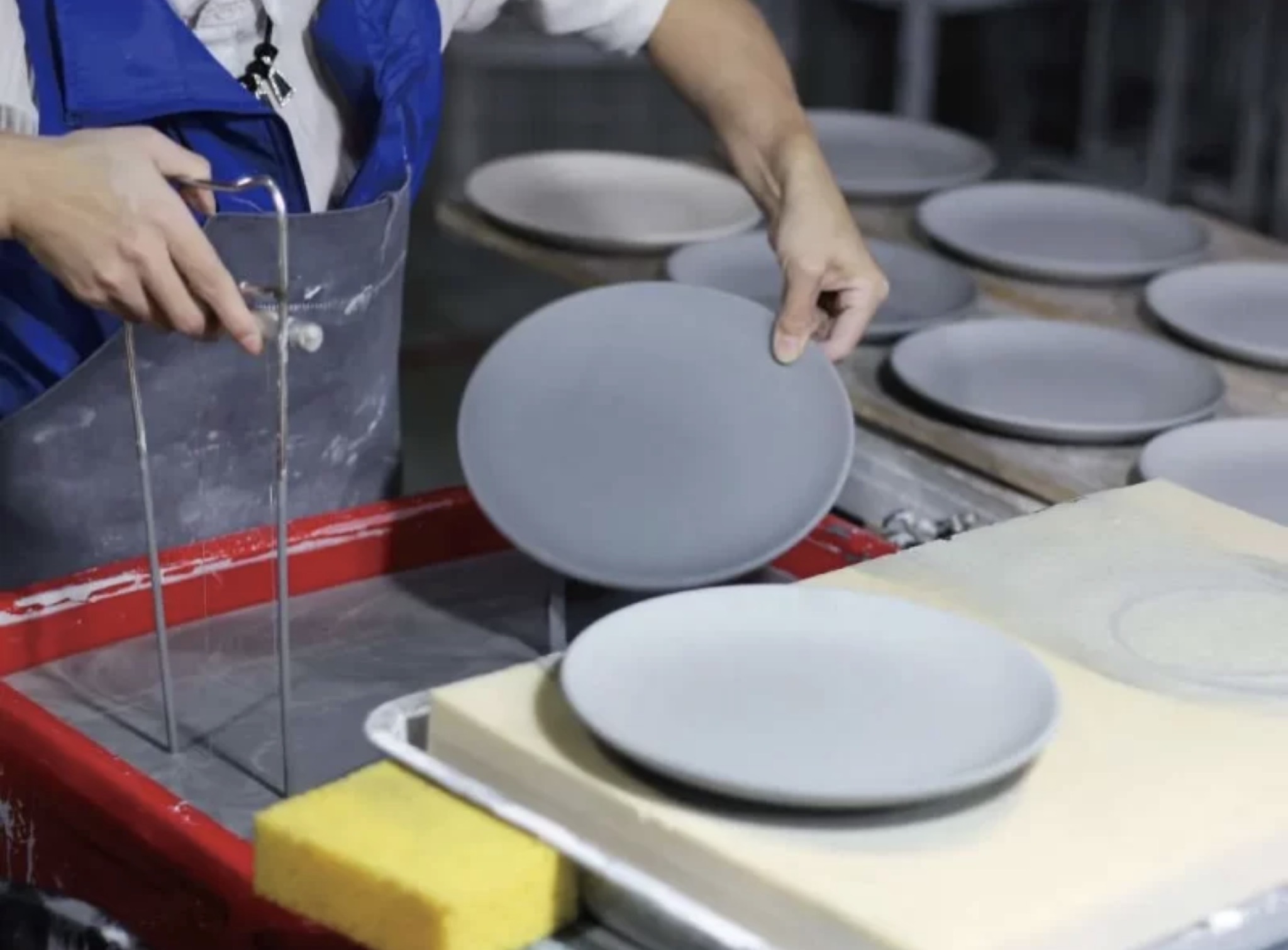
While some sectors of modern ceramic manufacturing are highly automated, crockery and holloware production relies heavily on skilled workers who execute the same fundamentals as studio potters. And they use equipment a studio potter can make. But the speed and cooperation at which they work is astonishing. Consider:
-Foam and sponge belts: To finish unfired surfaces and wipe glaze from feet.
-Spinning sponge tables for rim and edge dry finishing.
-Rheology Control: Glaze slurry rheology (specific gravity, thixotropy, fluidity) is adapted to each situation. Workers dip, spin, and extract pieces in seconds without runs, drips, or extended drying pauses.
-Custom Tooling: Instead of standard shop tongs or studio brushes, workers use single-point holding tools, custom wire dipping tongs, and painting and stamping sponges.
-Traditional Jiggering: Workers turn large masses of soft clay into cups and bowls in seconds, or they feed stiff clay into semi-automatic machines.
-Handle Preparation: Workers use custom plaster holders and specialized blade cutters to shear slip-cast handles to match vessel contours.
-Fountain & Dip Glazing: Workers glaze interiors and rims simultaneously.
-Direct Screen Printing: Workers drape a silk screen directly around pieces and scrape ink through via a hand rubber scraper.
Tap/click the typecode link below for the videos.
Links
| Projects | Videos of factory workers making holloware |
 PayPal | No tracking, No ads, No paywall, No transient content! Just organized, concise information constantly updated and improved. Was this helpful? Consider supporting me. |
Got a Question?
Buy me a coffee and we can talk 

https://digitalfire.com, All Rights Reserved
Privacy Policy