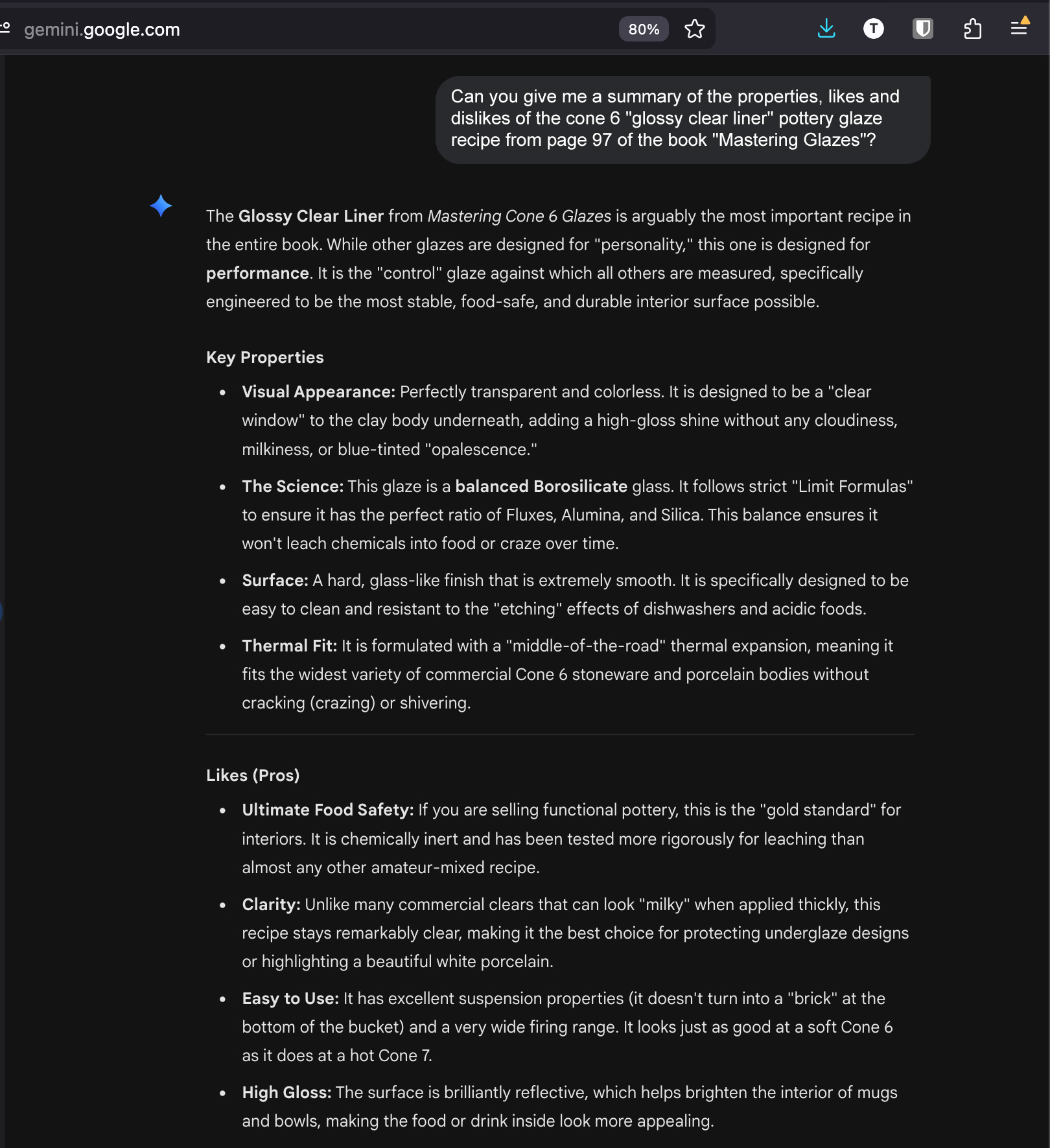
Gemini describes a pottery glaze recipe like a salesman
This is 2026. It uses expressions like "designed for performance", "specifically engineered", "perfectly transparent", "strict limit formulas", "perfect balance", and "ultimate". Really? Doesn't calling a recipe "ultimate" suggest that if one has an issue with it, then the problem is automatically with them, not the recipe? No. Consider:
-Glazes are systems, not recipes. They have many mixing, application, drying, firing, surface and aesthetics properties that interrelate. Add to that cost, material availability and consistency, material solubility, changes with aging and microbial response. These properties all play against each other; if you want one, you have to give up another. You can optimize some of them at the expense of others.
-Non-recipe factors, like firing method and schedule, application methods, body or engobe or slip underneath, and mixing methods, can really affect performance.
-The only recipe that is perfect for you is the one you develop and fine-tune to have the property pluses that favour your priorities and the faults that match what you can tolerate. The expression "perfect balance" thus applies only to Ron Roy who formulated it.
One more reason to become your own glaze engineer.
Links
| Glossary |
Tipping point
Why do ceramic processes seem to work for years and then suddenly fail? Obvious and not-so-obvious tipping points in recipes, materials and methods can trigger production disasters. |
| Glossary |
Base Glaze
Understand your a glaze and learn how to adjust and improve it. Build others from that. We have bases for low, medium and high fire. |
| Typecodes | A List of Classic Base Glazes for Pottery |
| Recipes |
MGBase3 - General Purpose Glossy Base 1 (Mastering Glazes)
From page 92 in Mastering Glazes book |
 PayPal | No tracking, No ads, No paywall, No transient content! Just organized, concise information constantly updated and improved. Was this helpful? Consider supporting me. |
Got a Question?
Buy me a coffee and we can talk 

https://digitalfire.com, All Rights Reserved
Privacy Policy