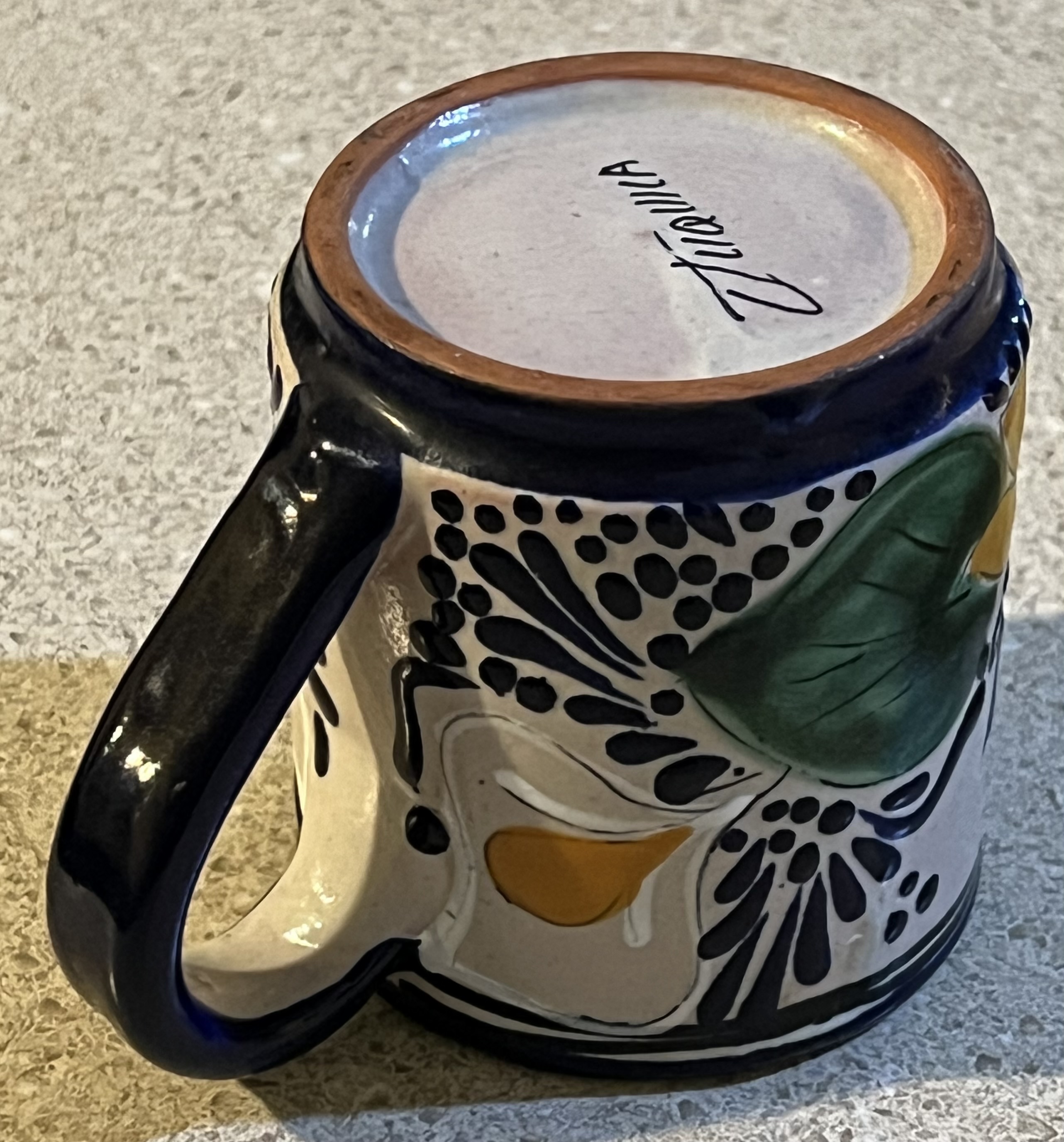
Talavera traditional mug from Mexico
An example of what terracotta can be
Mexican Talavera is a centuries-old, tin-glazed ceramic. It is part of a UNESCO-recognized making process/tradition featuring a milky-white glaze and vibrant, hand-painted designs. Authentic Talavera is certified by the Consejo Regulador de la Talavera, specific regions of the country enjoying a protected designation (e.g. Puebla, Tlaxcala). The traditional color palette was cobalt blue, yellow, orange, green, mauve, and black (achieved using natural mineral pigments). Authentic pieces are hand-painted and signed by the artisan. This mug looks Talavera-style, but certification or workshop provenance (documented history) would be needed to call this "official". This is a beautiful example of how the terracotta process brings the making of colorful utilitarian objects within the reach of a village potter.
The "Talavera" designation is not a statement about food safety. If decoration is on the inside or especially the rim, there is reason for caution because coloring pigments have traditionally been mixed with a low-melting glass, based on lead. Even the white glaze itself was/is fluxed with lead. A certification from the maker/importer or a proper lead/cadmium leach test is recommended. Any potter today, having access to modern boron-fluxed colors and glazes, could also use these pieces as inspiration.
Related Pictures
Republishers of Digitalfire Content:
Thank you.
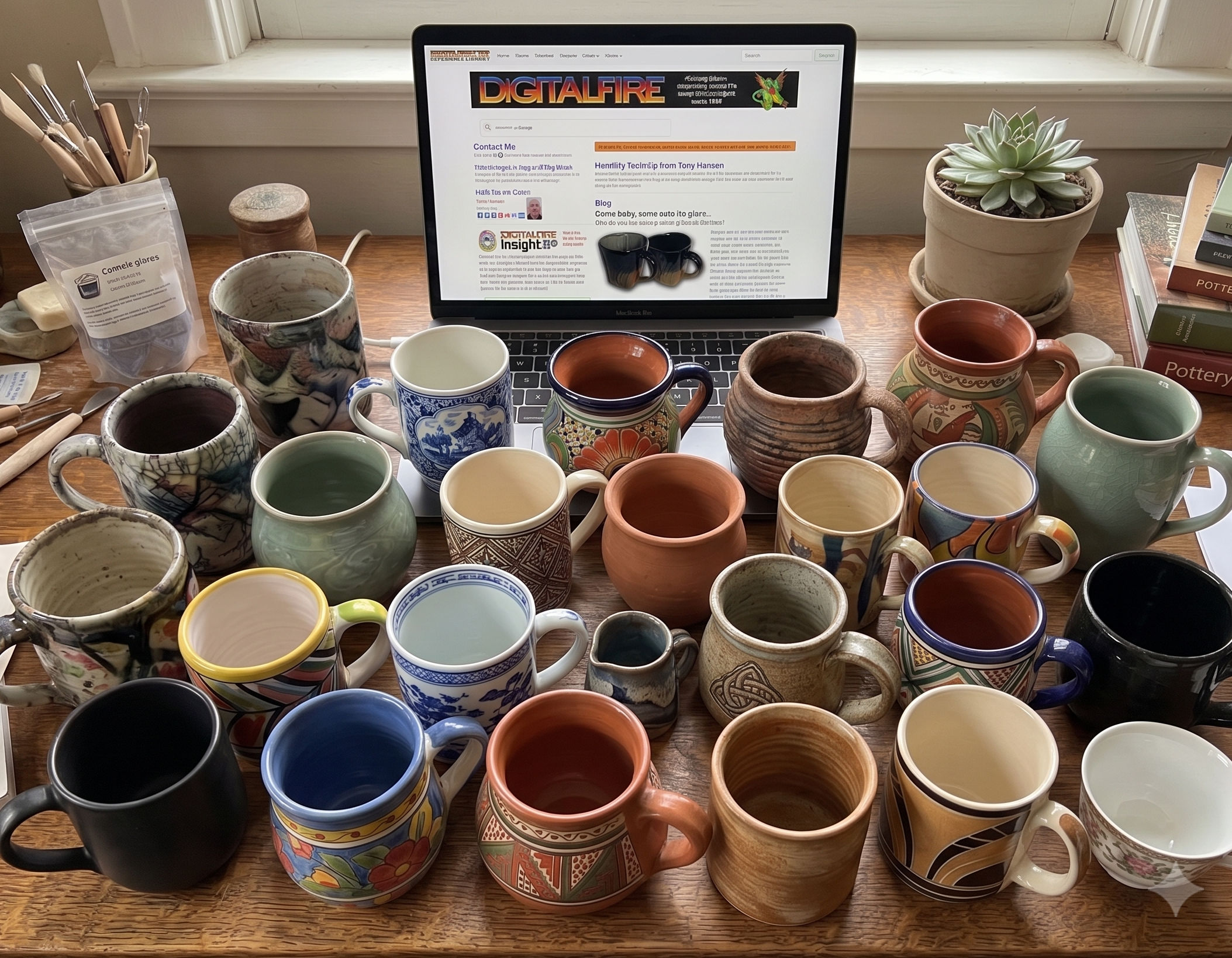 Gemini did an amazing job of assembling mugs that showcase the designs of many cultures. AI Policy
This picture has its own page with more detail, click here to see it.
I wish to express my gratitude to all the people and organizations around the world that have been republishing content on Digitalfire (most often with translation). They are mostly people who love ceramics and IT like me, on every continent. When people ask, I almost always agree; when they don’t, it is still ok. To make things clearer, I will put content under a licence to control use: Likely CC BY and ODC-BY. I feel grateful that the pages are valued (so please don't hassle them for copyright infringement). Thank-you messages, often emotional, have arrived almost every day for many years. They come from individuals, but also large corporations, schools, organizations and even high-tech industries. Some work in the background, the mainstream or management is unaware of their brilliance. I've gotten thousands of cups of virtual coffee and countless donations in the past few years. It is a little overwhelming! Some very exciting liaisons are forming with republishers; you will see them as outgoing links and added functionality at digitalfire.com.
Links
| Glossary |
Terra Cotta
A type of red firing pottery. Terra cotta clay is available almost everywhere, it is fired at low temperatures. But quality is deceptively difficult to achieve. |
 PayPal | No tracking, No ads, No paywall, No transient content! Just organized, concise information constantly updated and improved. Was this helpful? Consider supporting me. |
Got a Question?
Buy me a coffee and we can talk 

https://digitalfire.com, All Rights Reserved
Privacy Policy