Iron oxide as a fining agent to debubble a low fire transparent
These terra cotta clays were bisque fired at cone 04 and glaze fired to 04 using the 04DSDH schedule. The glaze is G1916Q, an expansion-adjustable cone 04 clear. That schedule alone is often enough to get transparent, defect free glazes in many situations. But not in this case. The solution was to add a fining agent. In this case we added 2% red iron oxide (to the top glaze). The particles of iron floating in the melt acted as a congregating points for bubbles, helping them to escape. And we got a bonus: a more interesting aesthetic. A 1% addition also worked, but not as well (we have settled on 2% iron and screening the glazes to 100 mesh). Screening out the larger particles slightly degraded the fining performance (so we have to accept the tiny specks). Iron does not always workin other situations. Other fining agents we have used at cone 6 do not work in this situation (e.g. 2% Zircopax, Alumina). Of course, this glaze will fire amber on a white body.

Related Pictures
Flexible G1916Q low-fire DIY glaze recipe:
The "Q" in its code number is telling
This picture has its own page with more detail, click here to see it.
The "Q" in the code number signifies that it was preceded by tests A, B, C, ... P; thus, it is the product of a lot of work to develop a flexible recipe that anyone can make and adjust. This could be your path into low-fire pottery.
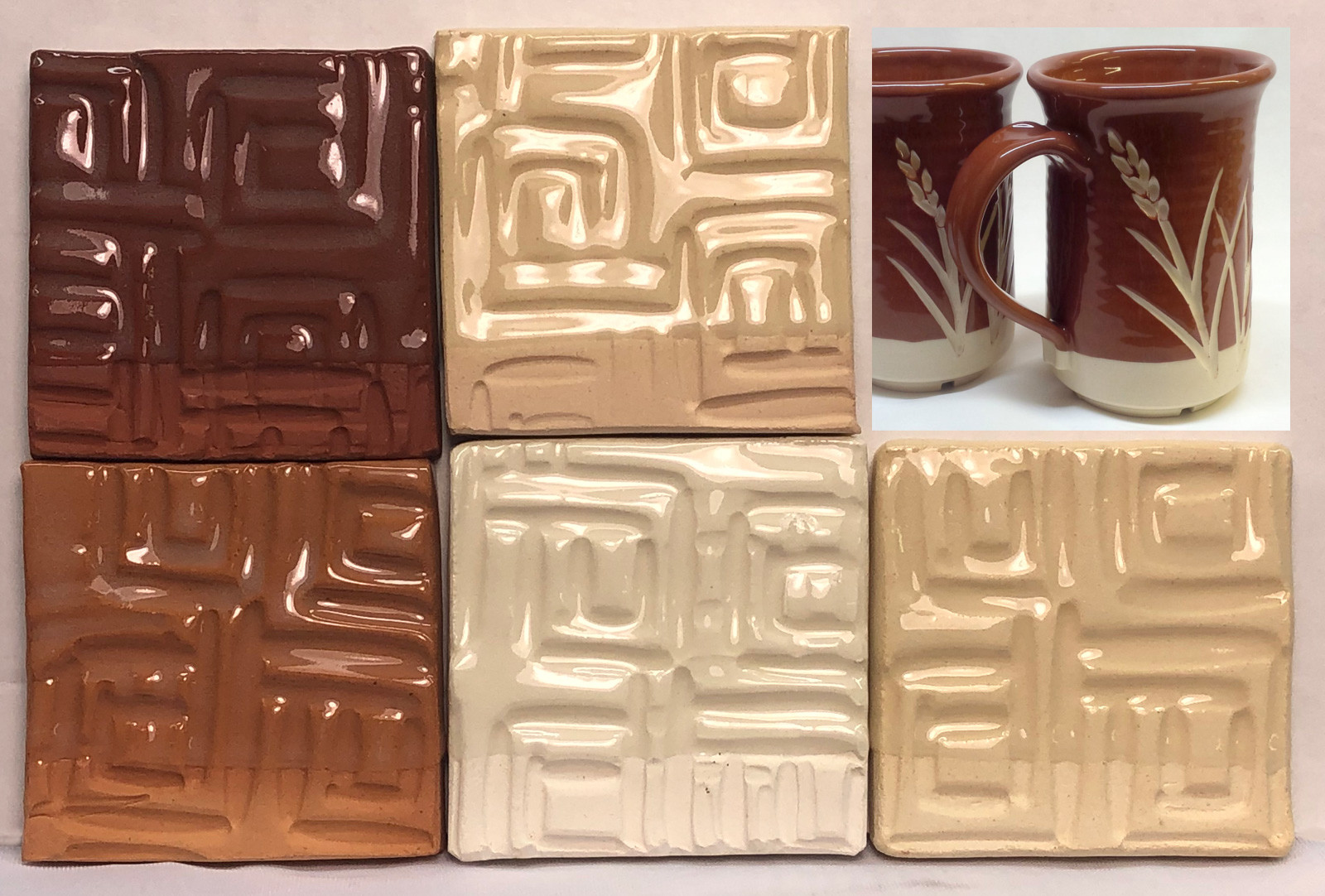
The photo shows G1916Q on L215, L212, L210, L213, Buffstone at cone 03. It uses common Ferro frits and can be made to fit any low-fire clay body (it is thermal expansion COE adjustable). It melts well down to cone 05. And we have a strategy to reduce clouding and micro-bubbling. These five test tiles were fired using the 04DSDH (drop-and-hold) firing schedule. All exited the kiln without crazing. The L215, L213, L210 and L212 samples subsequently survived a 300F/Icewater test without crazing, but the Buffstone did not (reduce its COE by increasing Frit 3249 and reducing Frit 3110, e.g. 15:5 instead of 10:10). The L213 could shiver (increase COE by increasing Frit 3110 at the expense of Frit 3249).
There is a secret to the clarity of this terra cotta glaze

This picture has its own page with more detail, click here to see it.
The body is Plainsman L215 and the glaze is G1916Q. Both were thinly applied and fired using the 04DSDH schedule. The glaze has 2% iron oxide added and sieved to 80 mesh. The iron reddens the color and its particles act as a fining agent to reduce micro-bubble population. The one fired to cone 03 (left) is considerably stronger, better surviving the stress of successive impacts with a hammer. However, it has minute surface dimples, likely from decomposition beginning in the body. The mug on the right fired to cone 04, only slightly above the 05 bisque. The glaze surface is much better, almost crystal clear. A big advantage of cone 04 and cooler is that ware can be fired on stilts (enabling glazing the bottoms).
Links
| Glossary |
Glaze Bubbles
Suspended micro-bubbles in ceramic glazes affect their transparency and depth. Sometimes they add to to aesthetics. Often not. What causes them and what to do to remove them. |
| Glossary |
Transparent Glazes
Every glossy ceramic glaze is actually a base transparent with added opacifiers and colorants. So understand how to make a good transparent, then build other glazes on it. |
| Glossary |
Drop-and-Soak Firing
A kiln firing schedule where temperature is eased to the top, then dropped quickly and held at a temperature 100-200F lower. |
| Glossary |
Fining Agent
Individual tiny bubbles in a glaze melt can coalesce around the undissolved particles of a fining agent, the growing bubble swallowing others around it and finally exiting at the surface. |
| Glossary |
Terra Cotta
A type of red firing pottery. Terra cotta clay is available almost everywhere, it is fired at low temperatures. But quality is deceptively difficult to achieve. |
 PayPal | No tracking, No ads, No paywall, No transient content! Just organized, concise information constantly updated and improved. Was this helpful? Consider supporting me. |
Got a Question?
Buy me a coffee and we can talk 

https://digitalfire.com, All Rights Reserved
Privacy Policy