An example of extreme overfiring of a clay body
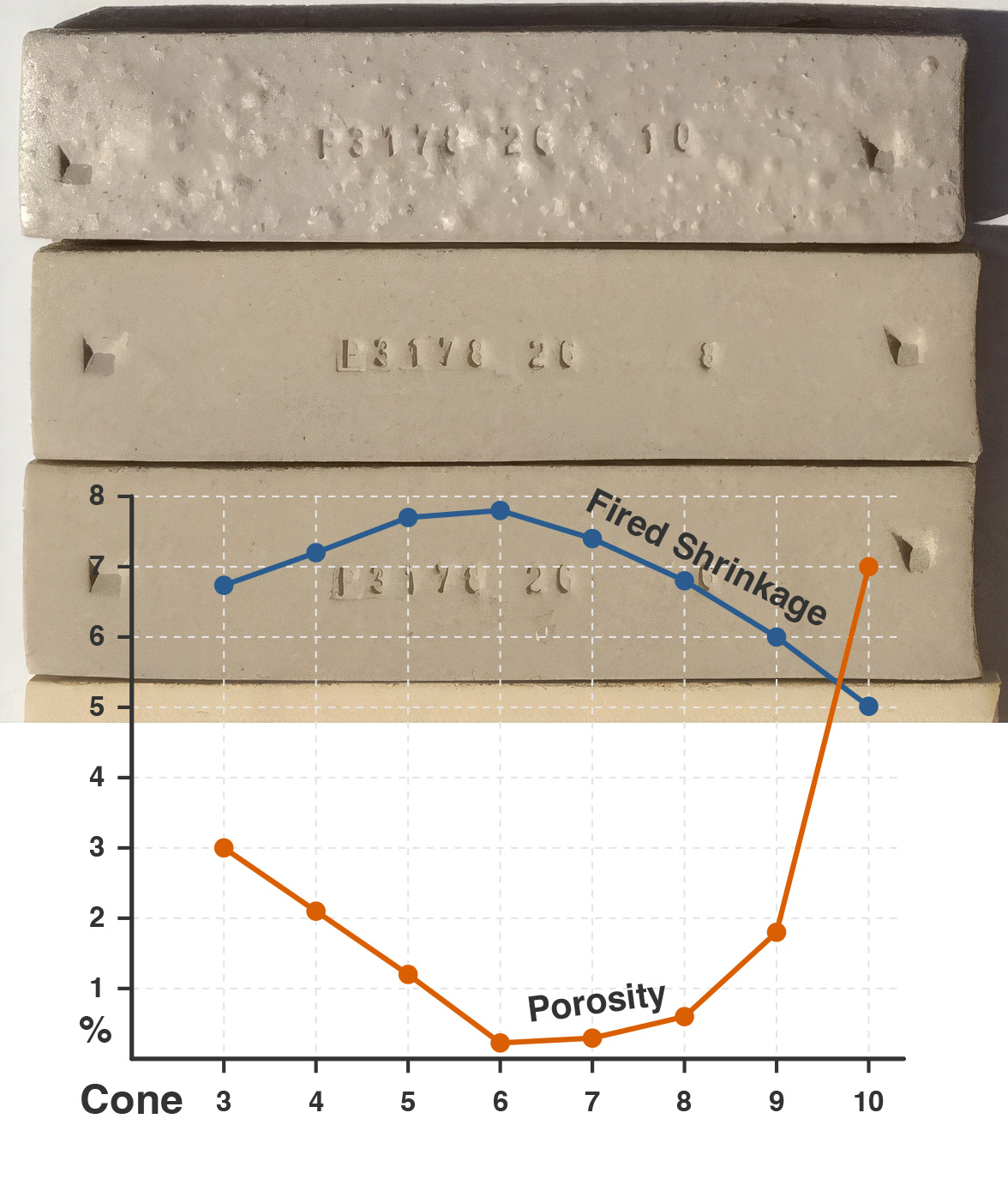
The lower bar is already bloating at cone 6. The upper one was fired to cone 10 reduction. The LOI gases are creating voids inside and the bar is melting.

Related Pictures
This bloating is a normal consequence of overfiring
This is how you know it has too much feldspar
This picture has its own page with more detail, click here to see it.
Example of a whiteware clay bloating at cone 10 oxidation. While it appears stable at cone 8, it isn't. This is a variation on the 25x4 porcelain recipe. It employs 200 mesh silica, kaolin, ball clay and feldspar. Whiteware bodies like this often soften and melt without ever bloating, but not this one. These fired bars appear to show that this vitrifies at cone 8. However, ware fired at cone 8 exhibits the classic evidence of overfiring: It warps. Overfire it still more, to cone 10, and we enter bloating territory by a new development: The ball clay in the recipe contains soluble salts; these become a thin glaze that glosses and seals the surface, trapping LOI gases which create internal voids (top bar). This line graph shows it as a massive spike in absorption/porosity going into cone 10. It also shows that cone 6, the bottom bar, provides the lowest porosity and highest fired shrinkage, while not being on a volatile part of the curves.
This phenomenon is a reminder that the percentage of feldspar (or feldspar-containing clays) is best tuned such that the body is just reaching (or has just reached) its minimum achievable porosity (assuming it is for functional ware). This can be done by making SHAB test bars like this and firing them at a range of temperatures up to and beyond the target to get a broad view of how maturity progresses.
Links
| Troubles |
Over Firing of Ceramic Glazes and Bodies
Overfiring can happen with glaze, engobes or clay bodies. The problem is more subtle than you might think. |
 PayPal | No tracking, No ads, No paywall, No transient content! Just organized, concise information constantly updated and improved. Was this helpful? Consider supporting me. |
Got a Question?
Buy me a coffee and we can talk 

https://digitalfire.com, All Rights Reserved
Privacy Policy