Is cone 10 better than cone 6?
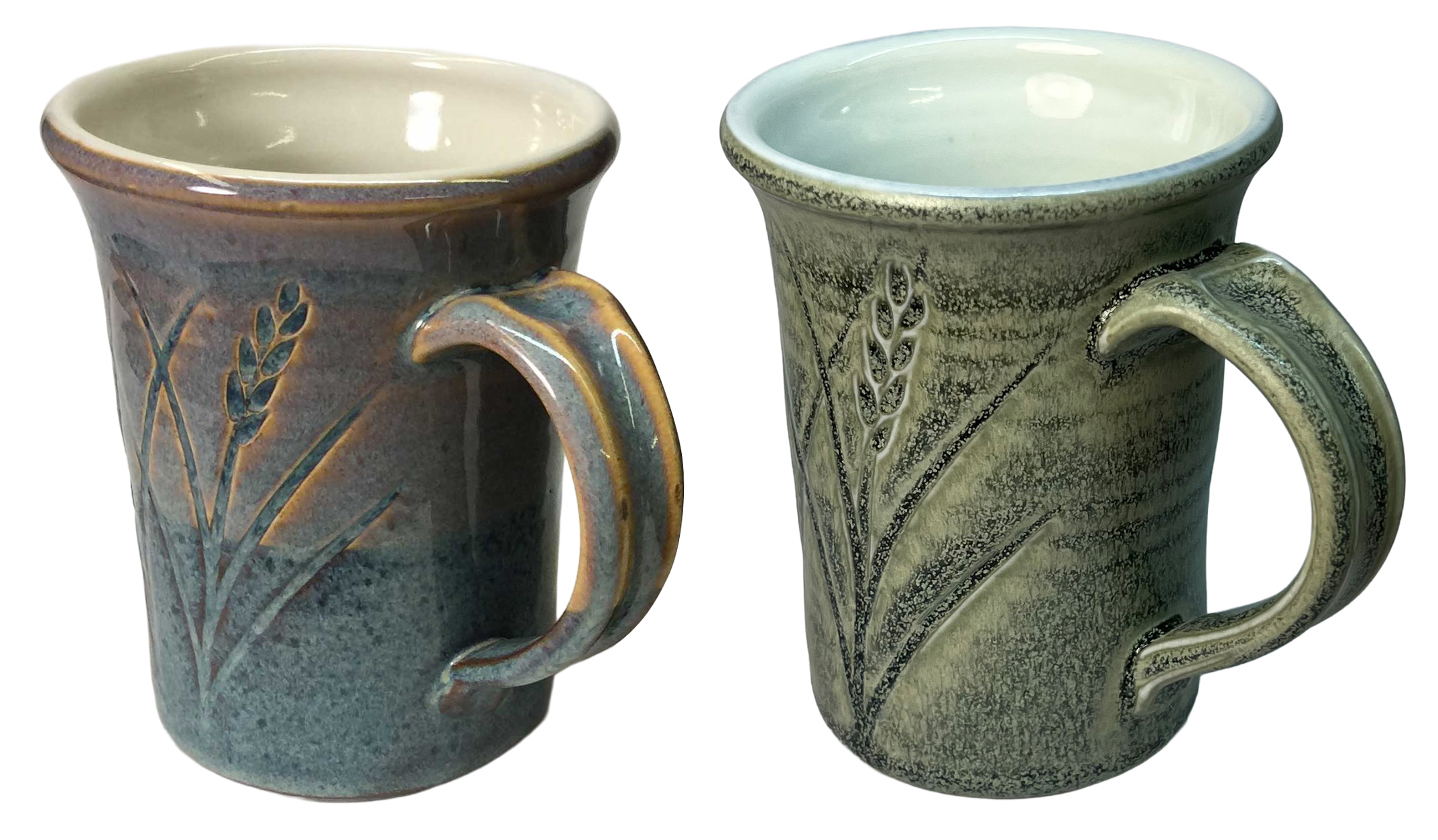
Left mug: Cone 6 buff stoneware, inside glaze: G2926B, outside glaze: GA6-C rutile blue, engobe: L3954B.
Right mug: Cone 10R Grolleg porcelain, inside glaze: G1947U, outside glaze: G2571C.
Is mug 2 better just because it was fired cone 10? Enough to pay three times more for the clay? Years of experience and testing give me no reason to believe both won’t last a lifetime. It is interesting, that the engobe under that cone 6 clear liner can be stained any color, including the cone 10R blue-white.
Bodies can be vitrify at either temperature. However, cone 10 is where mullite develops best. But in a pottery kiln, just how literal is the popular image of mullite needles acting like reinforcing fibres in concrete? In reality, its development and effectiveness depends on multiple factors related to the microstructure, which may or may not happen here. Likely more important is micro-cracking around surviving quartz grains. A porcelain made with 200 mesh silica has plenty, and its dense microstructure poorly accommodates the volume changes in the quartz as they traverse quartz inversion temperatures. The stoneware? It’s open structure tolerates the quartz much better without strength loss.
Links
| Glossary |
Reduction Firing
A method of firing stoneware where the kiln air intakes and burners are set to restrict or eliminate oxygen in the kiln such that metallic oxides convert to their reduced metallic state. |
| Glossary |
Rutile Blue Glazes
A type of ceramic glaze in which the surface variegates and crystallizes on cooling in the presence of titanium and iron (usually sourced by rutile) |
 PayPal | No tracking, No ads, No paywall, No transient content! Just organized, concise information constantly updated and improved. Was this helpful? Consider supporting me. |
Got a Question?
Buy me a coffee and we can talk 

https://digitalfire.com, All Rights Reserved
Privacy Policy