Flexible G1916Q low-fire DIY glaze recipe:
The "Q" in its code number is telling
The "Q" in the code number signifies that it was preceded by tests A, B, C, ... P; thus, it is the product of a lot of work to develop a flexible recipe that anyone can make and adjust. This could be your path into low-fire pottery.
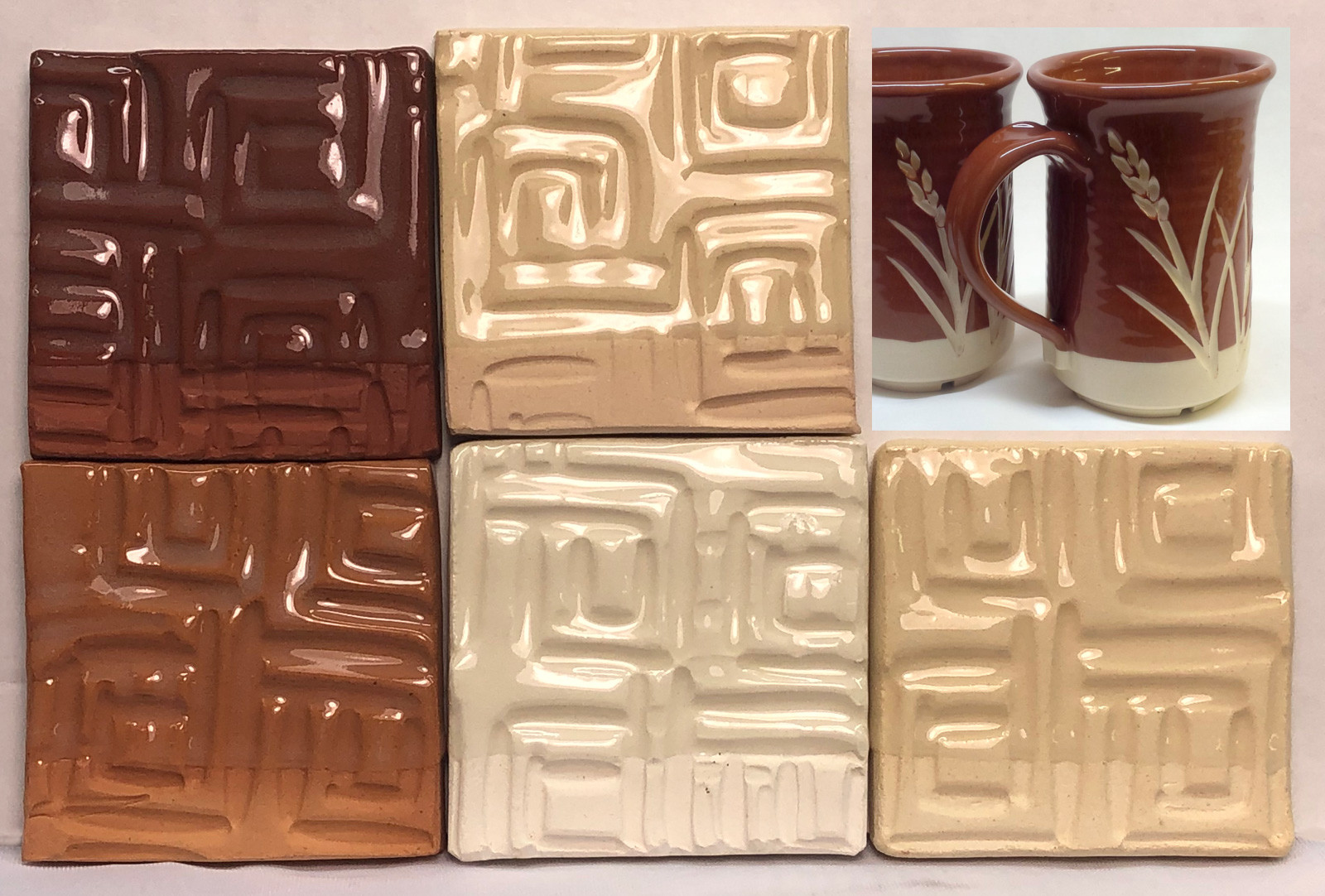
The photo shows G1916Q on L215, L212, L210, L213, Buffstone at cone 03. It uses common Ferro frits and can be made to fit any low-fire clay body (it is thermal expansion COE adjustable). It melts well down to cone 05. And we have a strategy to reduce clouding and micro-bubbling. These five test tiles were fired using the 04DSDH (drop-and-hold) firing schedule. All exited the kiln without crazing. The L215, L213, L210 and L212 samples subsequently survived a 300F/Icewater test without crazing, but the Buffstone did not (reduce its COE by increasing Frit 3249 and reducing Frit 3110, e.g. 15:5 instead of 10:10). The L213 could shiver (increase COE by increasing Frit 3110 at the expense of Frit 3249).
Related Pictures
DIY brushing glazes by-the-jar:
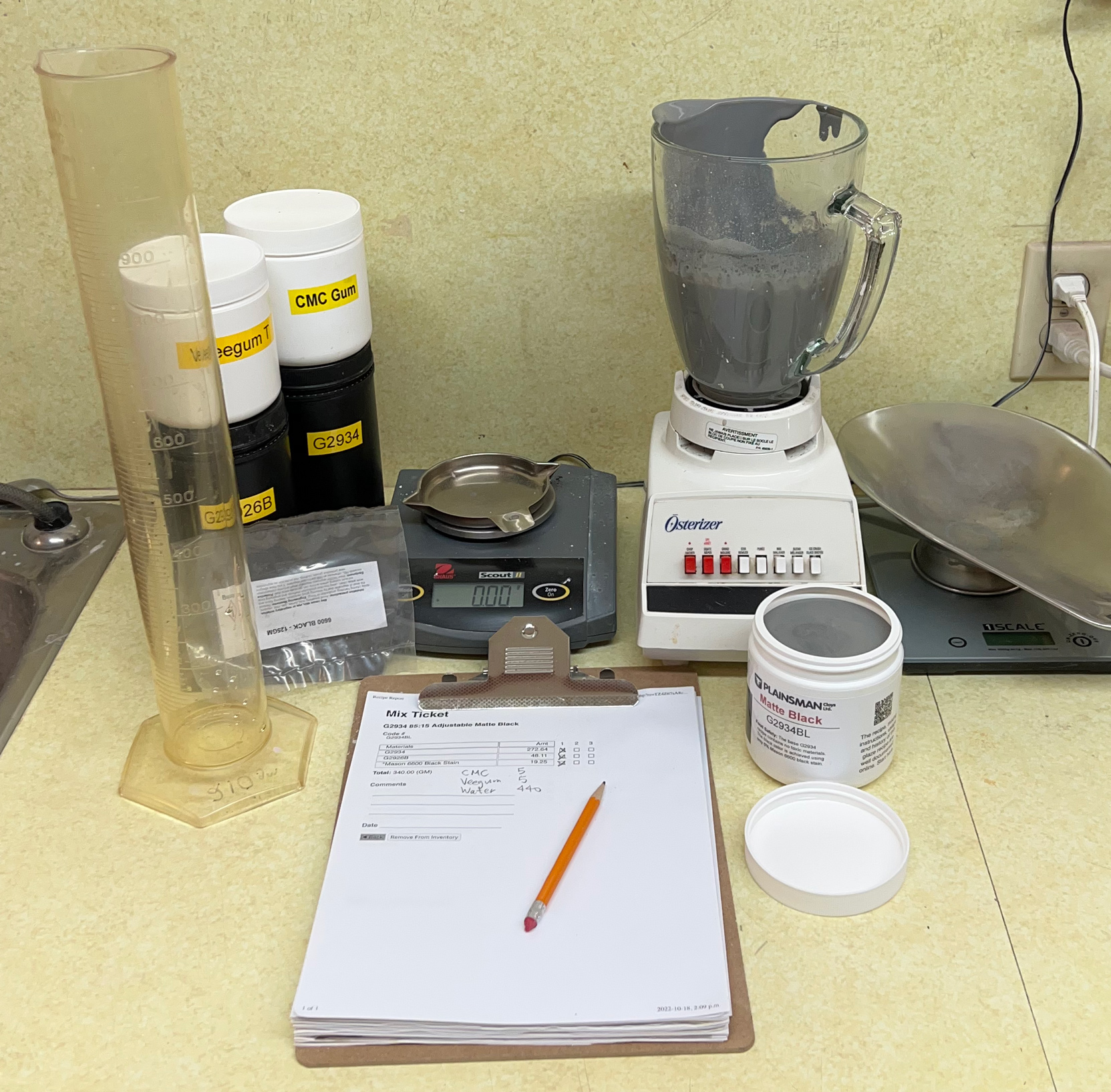
Here is my setup to make them
This picture has its own page with more detail, click here to see it.
Let's make a DIY low SG version of G2934BL. Weigh out 340g of dipping glaze powder. Include 5g Veegum (to gel the slurry to enable more than normal water) and 5g CMC gum (for slow drying and brushing properties). Shake-mix all the powder in a plastic bag. Pour it into 440g water, blender mix on low speed, then finish with 20 seconds on high speed. This fills a 500ml jar. In subsequent batches, I adjust the Veegum for more or less gel, the CMC for slower or faster drying and the water amount for thicker or thinner painted layers. Dipping glaze recipes can and do respond differently to the gums. Those having little clay content work well (e.g. reactive and crystalline glazes). If bentonite is present, it is often best to leave it out. Recipes having high percentages of ball clay or kaolin might work best with less Veegum. Keep good notes (with pictures) to reach the objective of good brushing properties. Use code-numbering on the jars and test pieces.
Here is some incentive: Brushing glazes have gotten to the point where it can cost $5 to glaze one mug! This is so worthwhile doing that I make custom labels for each jar!
A G1916Q cone 04 glaze gets even better:
With 45-micron silica

This picture has its own page with more detail, click here to see it.
This is G1916Q3, a version of G1916Q with added 45-micron-grade silica, fired at cone 04. Despite the extra silica and low firing temperature, the glaze remains glossy, transparent and well melted. The finer powder promotes dissolution into the melt, where the added silica can improve chemical durability. Notice the shivering at the right-hand rim of this Plainsman L215 mug. The encouraging part is that the recipe provides a straightforward way to raise its thermal expansion: replace some low-expansion Frit 3249 with high-expansion Frit 3110, then retest.
For stoneware potters exploring low fire, a recipe like this offers a practical starting point and a clear way to make adjustments. It can be opacified with zircon, colored with compatible stains, and prepared for dipping or brushing. This surface shows how much brilliance and clarity are possible at cone 04. Fire to cone 02 and you have stoneware.
Iron oxide as a fining agent to debubble a low fire transparent

This picture has its own page with more detail, click here to see it.
These terra cotta clays were bisque fired at cone 04 and glaze fired to 04 using the 04DSDH schedule. The glaze is G1916Q, an expansion-adjustable cone 04 clear. That schedule alone is often enough to get transparent, defect free glazes in many situations. But not in this case. The solution was to add a fining agent. In this case we added 2% red iron oxide (to the top glaze). The particles of iron floating in the melt acted as a congregating points for bubbles, helping them to escape. And we got a bonus: a more interesting aesthetic. A 1% addition also worked, but not as well (we have settled on 2% iron and screening the glazes to 100 mesh). Screening out the larger particles slightly degraded the fining performance (so we have to accept the tiny specks). Iron does not always workin other situations. Other fining agents we have used at cone 6 do not work in this situation (e.g. 2% Zircopax, Alumina). Of course, this glaze will fire amber on a white body.
Links
| Recipes |
G1916Q - Low Fire Highly-Expansion-Adjustable Transparent
An expansion-adjustable cone 04 transparent glaze made using three common Ferro frits (low and high expansion), it produces an easy-to-use slurry. |
 PayPal | No tracking, No ads, No paywall, No transient content! Just organized, concise information constantly updated and improved. Was this helpful? Consider supporting me. |
Got a Question?
Buy me a coffee and we can talk 

https://digitalfire.com, All Rights Reserved
Privacy Policy