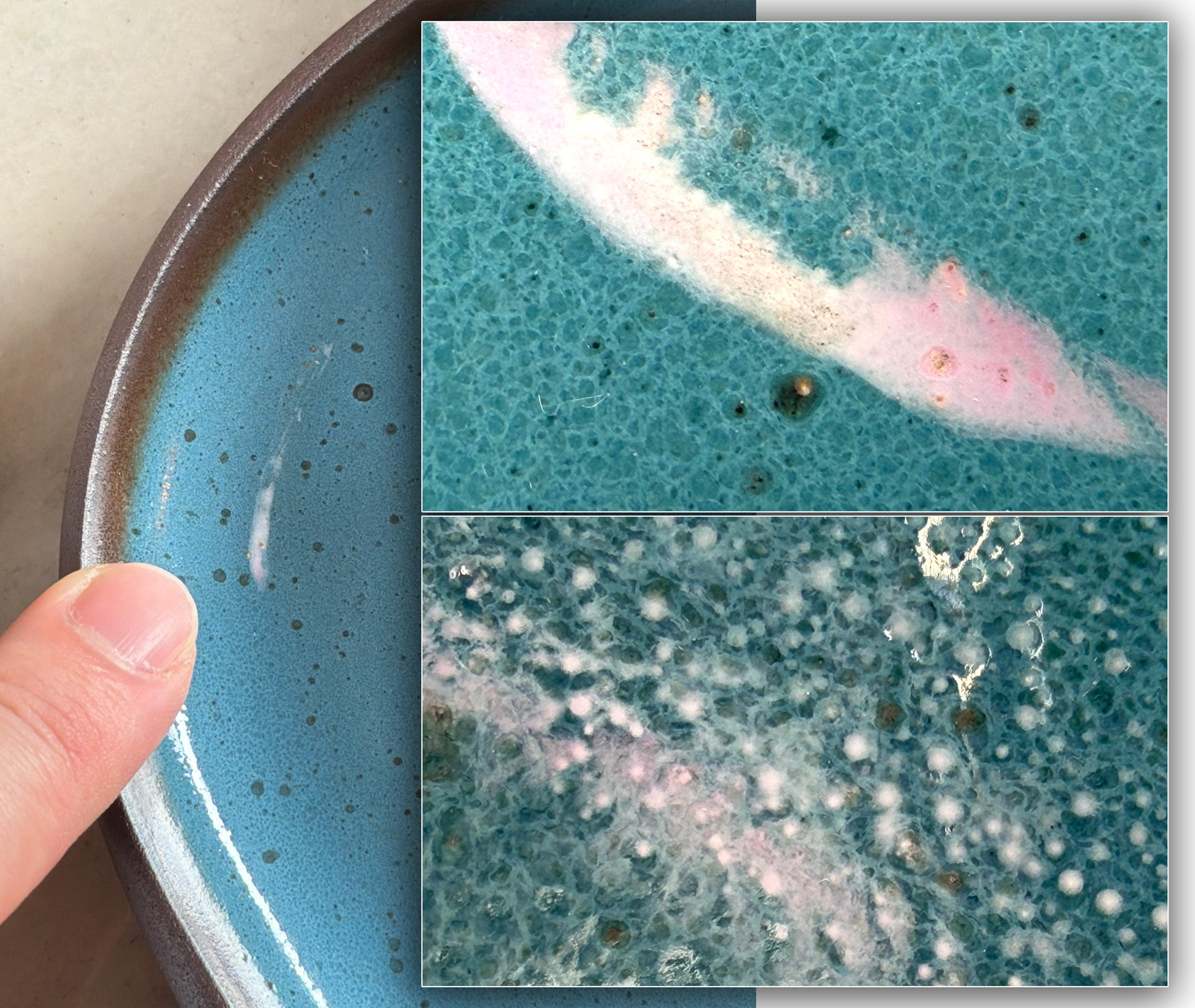
New macro-capable cameras on cell phones are great for close-ups
This transparent glaze looks pretty clear, but on closer examination it is full of tiny bubbles. To the naked eye a clear glaze can simply appear cloudy, but a magnification like this shows the real issue. Potters are not helpless to reduce micro-bubbles, for example, it can be done by using glaze materials having a lower LOI, not using an body above its firing range (to avoid gases of decomposition) and switching to a finer grained clay made of higher quality materials.

Related Pictures
Phase separation close-up
The power of modern phone cameras
This picture has its own page with more detail, click here to see it.
This reduction stoneware glaze is producing white streaks on some pieces (left center). The body is a coarse iron stoneware. A magnification is needed to better explain this.
It is 2025, many smartphones now have dedicated macro lenses and can be held as close as a 1 centimeter. They automatically sense placement and switch to using the macro lens. Of course, the phone must be held rock steady and good lighting is essential. If you are a doubter of what they can produce, look at the two magnifications on the right. On the top one, the white streak is clearly visible, floating in a sea of phase-separated glass patterned by earlier-escaping bubbles. The extreme magnification on the bottom right appears to implicate tiny crystals growing in an area where late bubbles have escaped, changing the pattern of phase separation. This doesn’t yet explain the cause, but it is valuable information courtesy of a macro lens.
 PayPal | No tracking, No ads, No paywall, No transient content! Just organized, concise information constantly updated and improved. Was this helpful? Consider supporting me. |
Got a Question?
Buy me a coffee and we can talk 

https://digitalfire.com, All Rights Reserved
Privacy Policy