Are glazes food safe just because they carry a label?
This Gemini-generated mug could conceivably exist yet carry these labels. Yet experienced ceramic technicians would immediately be suspicious. The glaze is highly fluid and heavily crystallized; both suggest low or very low Al2O3 levels (it is the key oxide that makes glazes durable). If the interior color is produced using a cadmium-containing encapsulated stain, cadmium-release testing would be essential before claiming the ware is food safe. This is clearly engineered for visual effects rather than durability. None of those characteristics prove it is unsafe, but they do mean that labels like "nontoxic" are not substitutes for actual leach testing. A glaze can be made entirely from materials classified as nontoxic and still fail to meet the durability standards expected of functional foodware.
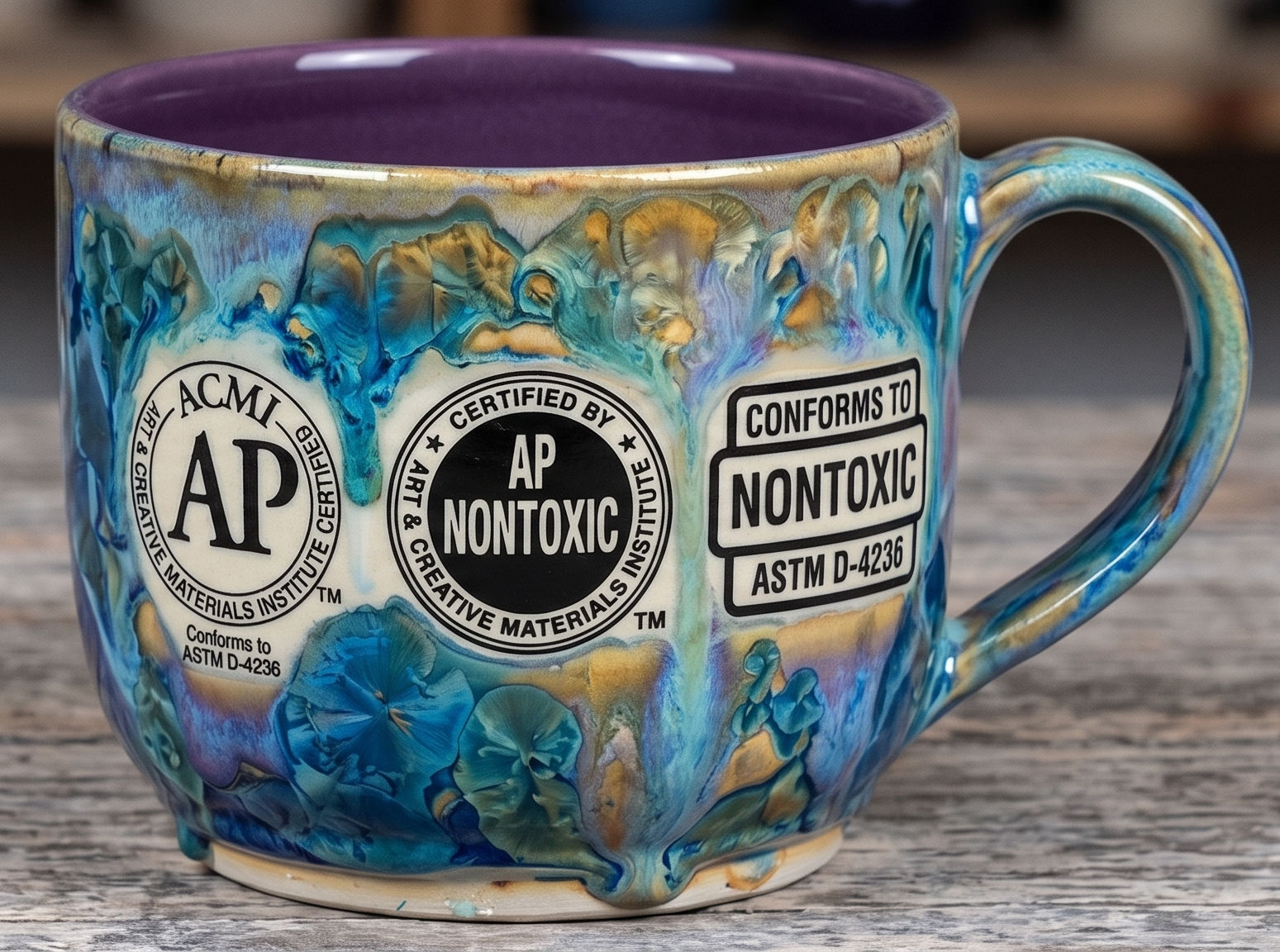
Generated by Gemini to display the kinds of glazes most likely to leach, yet which are being sold with these labels on the jars. AI Policy
Related Pictures
Commercial glazes on decorative surfaces
Your own on food surfaces
This picture has its own page with more detail, click here to see it.
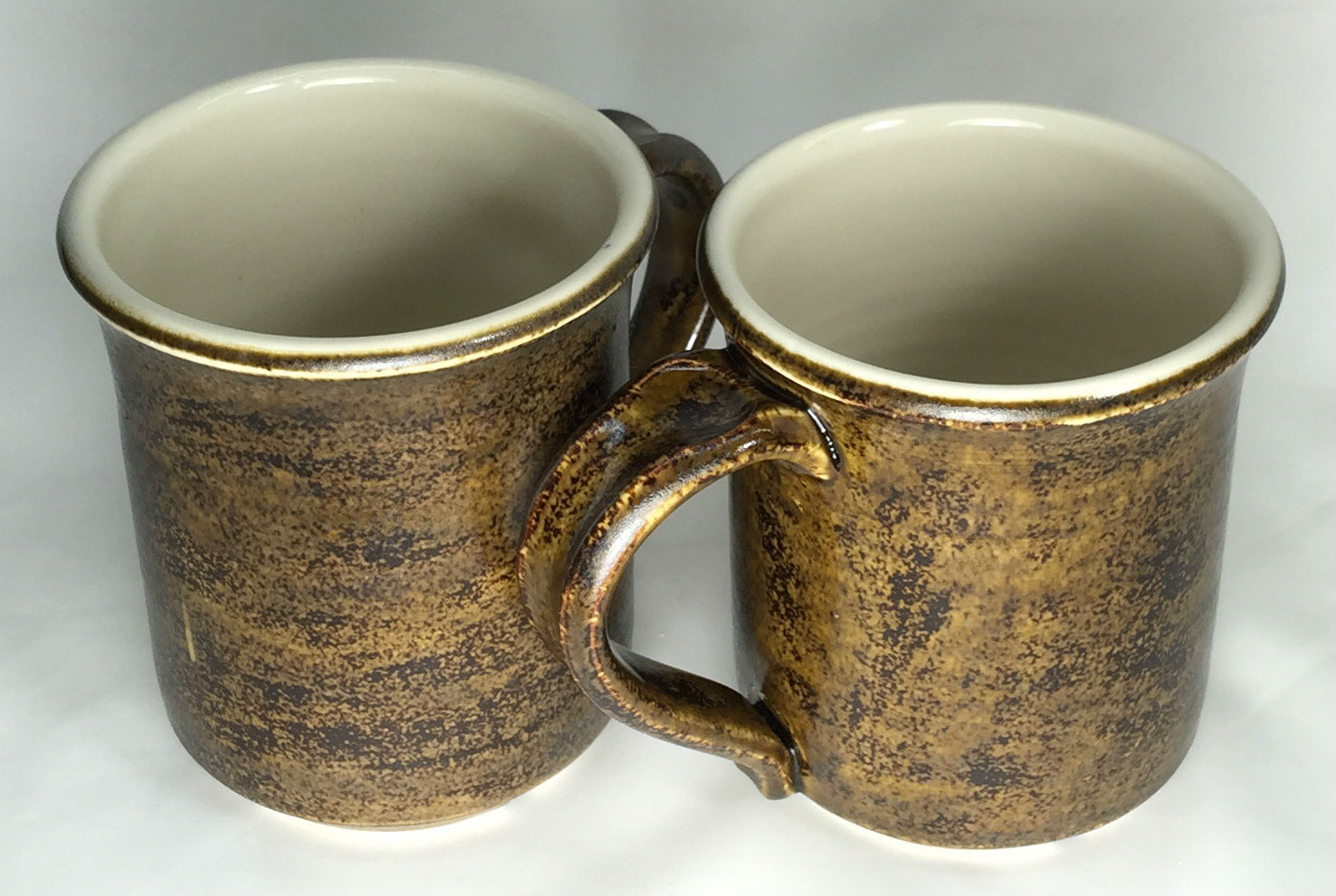
These cone 6 porcelain mugs are hybrid. Three coats of a commercial glaze painted on the outside (Amaco PC-30) and my own liner glaze, G2926B, poured in and out on the inside. When commercial glazes (made by one company) fit a stoneware or porcelain (made by another company) it is by accident, neither company designed for the other! For inside food surfaces make or mix a liner glaze already proven to fit your clay body, one that sanity-checks well (as a dipping glaze or a brushing glaze). In your own recipes you can use quality materials that you know deliver no toxic compounds to the glass and that are proportioned to deliver a balanced chemistry. Read and watch our liner glazing step-by-step and liner glazing video for details on how to make glazes meet at the rim like this.
Links
| URLs |
https://www.astm.org/d4236-94r21.html
ASTM D-4236 - Standard Practice for Labeling Art Materials for Chronic Health Hazards - It is not what you think! ASTM D-4236 DOES NOT establish that a fired glaze is food-safe or resistant to leaching. It is a standard for evaluating and labelling chronic health hazards associated with using the art material itself. It "applies exclusively to art materials packaged in sizes intended for individual users of any age or those participating in a small group". It "concerns those chronic health hazards known to be associated with a product or product component(s) when it is present in a physical form, volume, or concentration that in the opinion of a toxicologist has the potential to produce a chronic adverse health effect". It also admits that "since knowledge about chronic health hazards is incomplete and warnings cannot cover all uses of any product, it is not possible for precautionary labelling to ensure completely safe use of an art product" (referring to safe use of the art product, not food safety of the fired pottery made from it). It is interesting that one manufacturer displays this warning on pages relating to dipping glazes and accessory products (which are used by manufacturers): "Safety Warning: Tableware producers must test all finished ware to establish dinnerware status, due to possible variations in firing temperature and contamination." That being said, some manufacturers do test glazes and underglazes for lead and cadmium release (e.g. using ASTM C927/C738 to meet FDA dinnerware guidelines). For them, ASTM D4236 is not the evidence presented for dinnerware-safety evidence; separate fired-glaze testing is. For example, one brushing glaze label specifically says its “Food Safe” designation comes from lead/cadmium-release testing under ASTM C738-94. |
 PayPal | No tracking, No ads, No paywall, No transient content! Just organized, concise information constantly updated and improved. Was this helpful? Consider supporting me. |
Got a Question?
Buy me a coffee and we can talk 

https://digitalfire.com, All Rights Reserved
Privacy Policy