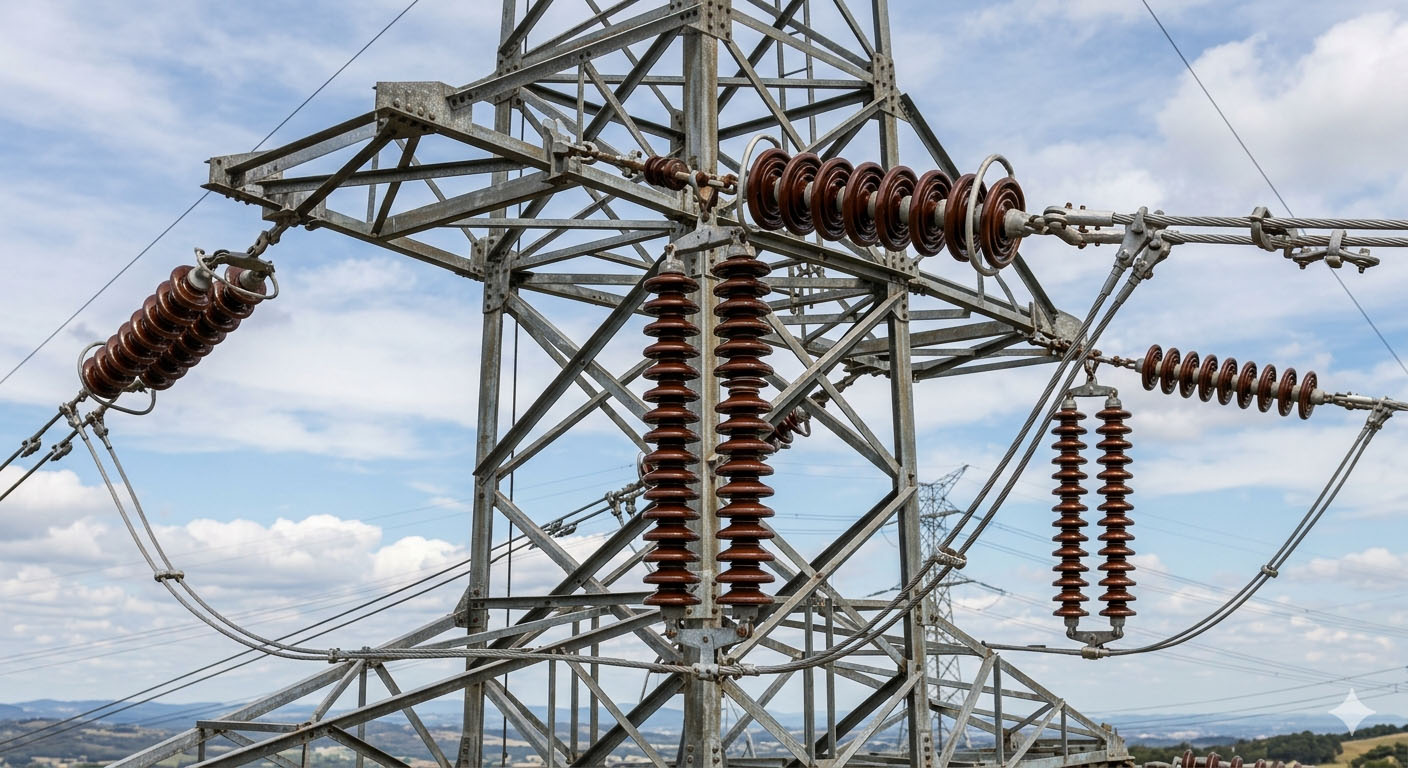
High tension porcelain insulators
Not like the porcelain you use for pottery
Electrical insulators most often employ aluminous porcelains. Like sanitaryware and tableware (mullite porcelains), feldspar still forms some glass, but the microstructure of electrical porcelains is dominated by angular, size-controlled, alumina grains. Only a small amount of mullite forms. The result is a matrix having much better mechanical and dielectric strength, better insulating properties and resistance to thermal shock. How can this be affordable given that calcined alumina is many times more expensive than other common porcelain ingredients? When producers are already extremely careful to meet specifications, rejects are low enough that the added cost of alumina is acceptable given the performance gains.
What about the glossy brown glaze? Brown hides dirt, dust, and industrial grime. Slight variations in firing are less visible and the glassy finish causes rainwater to form discrete droplets rather than a continuous conductive film. The Iron-oxide-based brown is self-opacifying so it does not require zircon. And it is highly resistant to uV degradation and compatible with the chemistry needed to achieve glaze compression (to minimize crazing).
Created by Google Gemini AI Policy
Links
| Glossary |
Porcelain Insulators
Among the most difficult ceramic product to make. They demand electrical reliability, mechanical strength, weather resistance, and dimensional consistency over decades of outdoor service. |
 PayPal | No tracking, No ads, No paywall, No transient content! Just organized, concise information constantly updated and improved. Was this helpful? Consider supporting me. |
Got a Question?
Buy me a coffee and we can talk 

https://digitalfire.com, All Rights Reserved
Privacy Policy