Video: Convert a glossy glaze to a calcia matte:
Ten minutes of glaze-chemistry adrenaline!
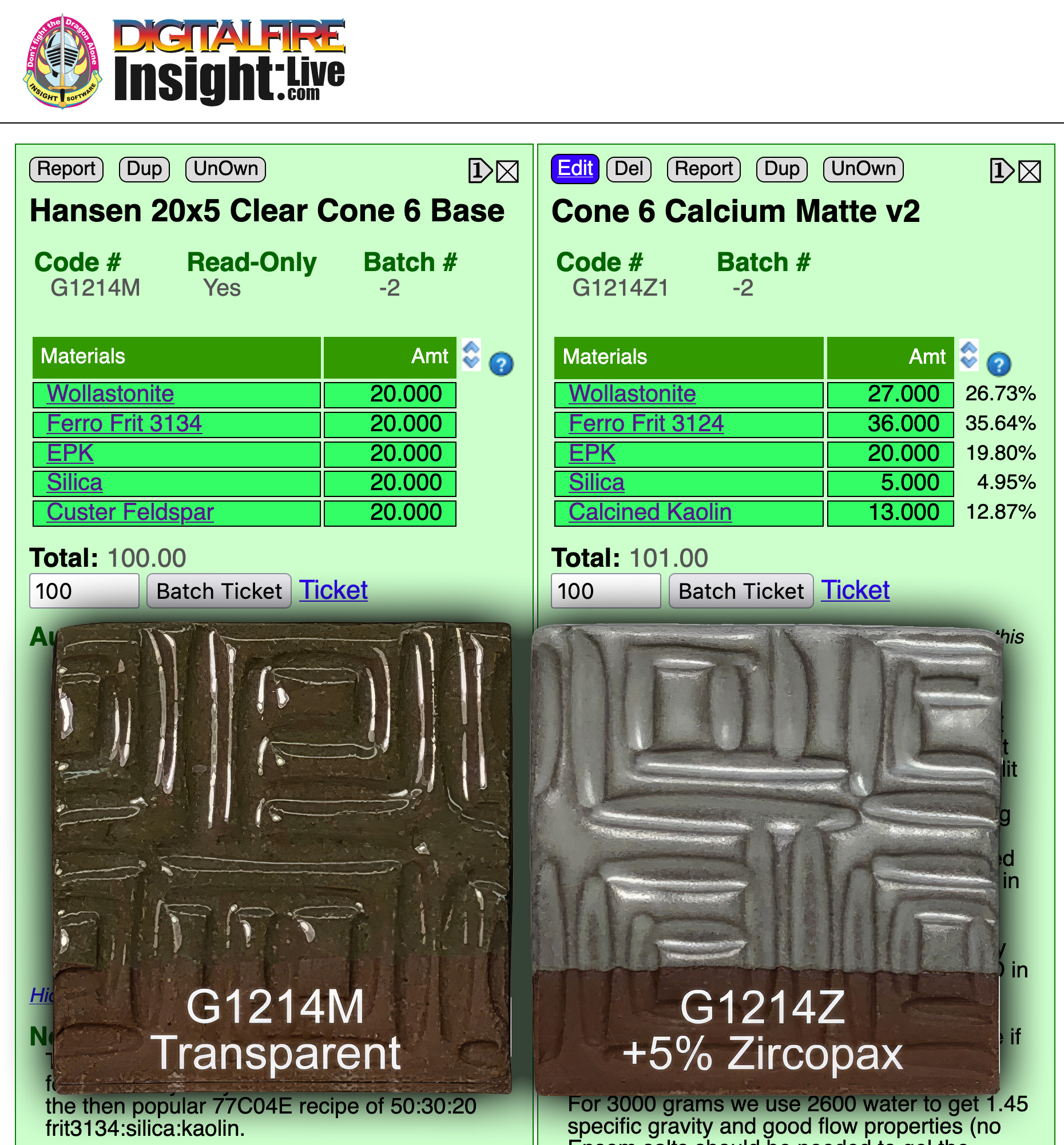
Watch the G1214Z video to see me convert the G1214M 20x5 cone 6 clear base into G1214Z cone 6 calcia matte using simple glaze chemistry and recipe logic. This first appeared in the Digitalfire desktop Insight instruction manual 30 years ago. It is an understatement to say that this process is interesting if you want to know more about glazes, their chemistry and recipe logic. Watch this video and see me adjust the recipe of my high-calcium transparent cone 6 glaze to convert it into a calcia matte. In an Insight-live.com account, the process is easy enough for anyone. We'll cut the Si:Al ratio, increase the CaO, maintain the thermal expansion for glaze fit and make the recipe shrinkage-adjustable using a mix of calcined kaolin and raw kaolin. We will even compare it with the High Calcium Semimatte from Mastering Glazes.
Videos
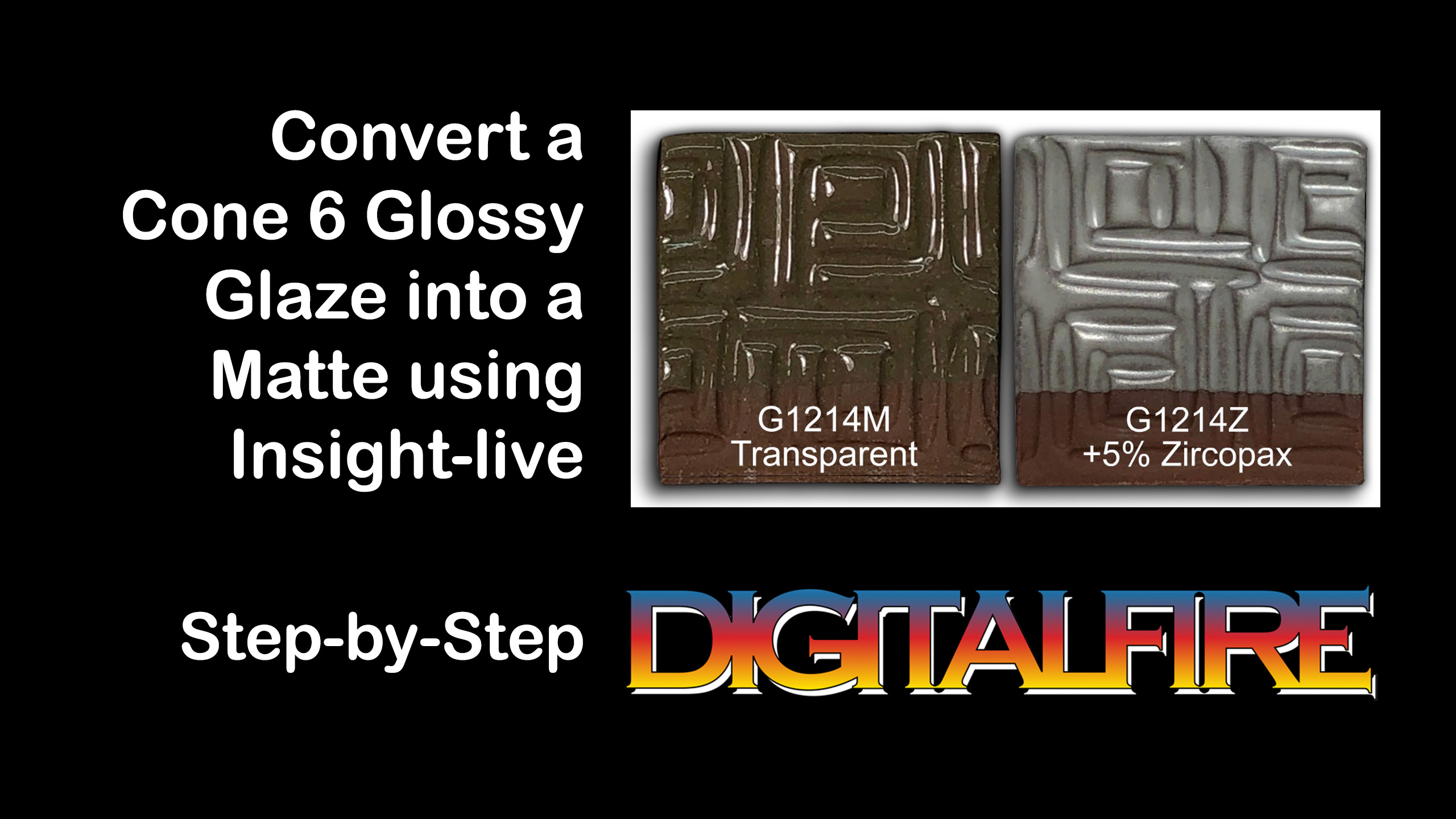 |
Converting G1214M Cone 6 transparent glaze to G1214Z matte
I converted a glossy transparent pottery glaze into a matte glaze using glaze chemistry and recipe logic. Watch me do it in my account at Insight-live.com. We'll cut the Si:Al ratio, increase the CaO further, maintain the thermal expansion for glaze fit and make the recipe shrinkage adjustable using a mix of calcined and raw kaolin. See the landing page to learn every detail: https://digitalfire.com/picture/3787. |
Links
| Recipes |
G1214M - 20x5 Cone 6 Base Glossy Glaze
Developed by Tony Hansen in the 1980s. Its was popular for the simplicity and how well it worked with chrome-tin stains. |
| Glossary |
Calcia Matte
Calcia matte ceramic glazes are “crystal mattes” while magnesia mattes are “microstructure mattes”. They have a smoother surface but can also have finely textured, even frosty, feathery or sugary surfaces, depending cooling and crystalliztion. |
 PayPal | No tracking, No ads, No paywall, No transient content! Just organized, concise information constantly updated and improved. Was this helpful? Consider supporting me. |
Got a Question?
Buy me a coffee and we can talk 

https://digitalfire.com, All Rights Reserved
Privacy Policy