There’s DIY magic in the ground beneath your feet!
Place: Vernon, Alabama.
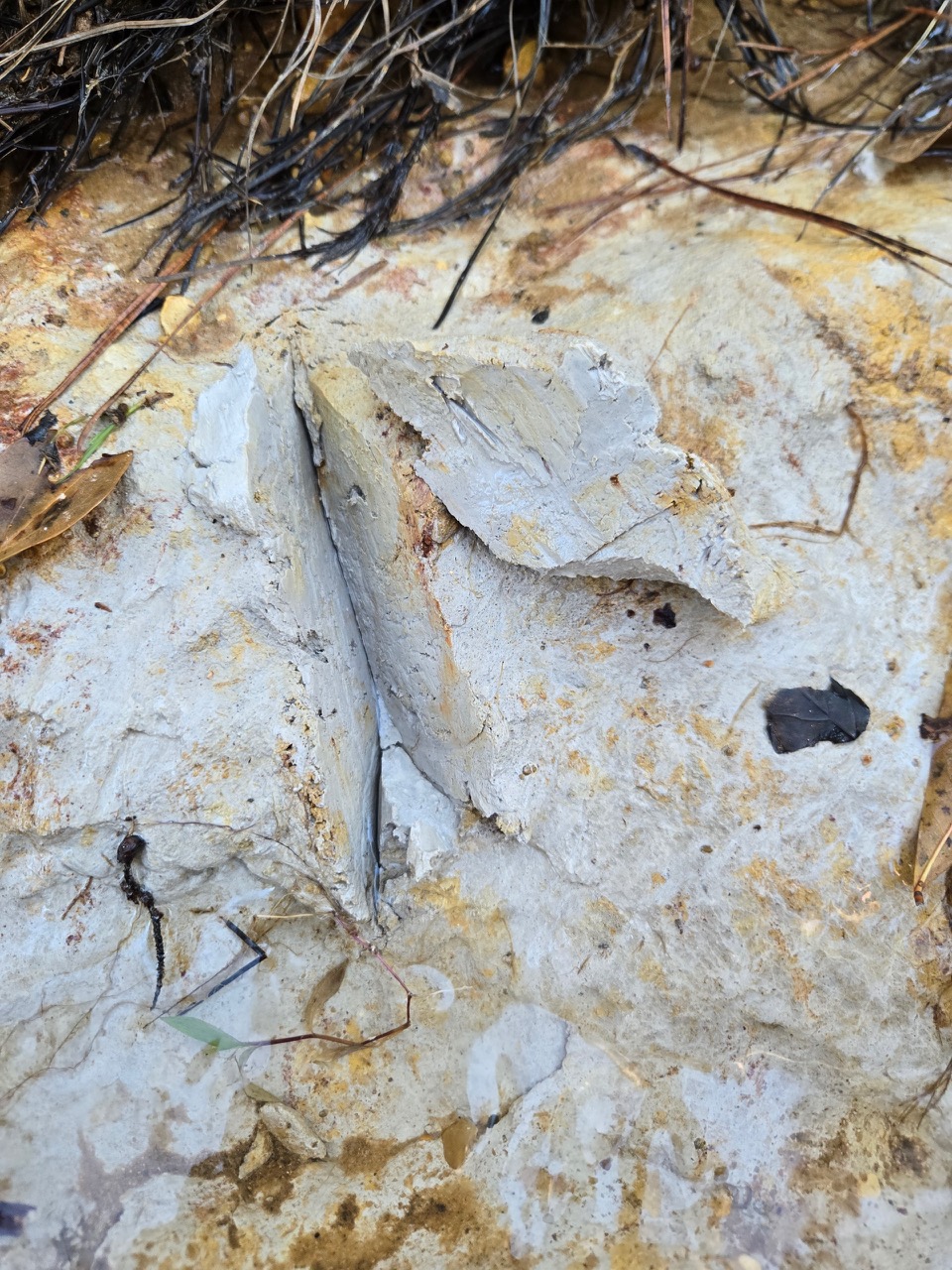
Story: Potter's friend sends a picture of an outcrop of white clay in the ditch near his driveway.
Result: A DIY claybody is born.
This planet is full of accessible clay deposits. Many can be used as-is for stoneware, earthenware and even porcelain. Characterizing this clay is the first step. How plastic is it? What does it look like when fired at different temperatures? Does it contain impurities that need to be sieved out? Does it dry without cracking? Does it work with glazes? Etc.
A journey of clay discovery to a finished piece is one of the most rewarding experiences you can have as a potter. And be more self-reliant. You don’t need special gear, just curiosity, eyes that notice, a few simple tools, and a willingness to experiment and learn to characterize clays. And one more thing: An organized way to keep records of your testing. Think of an insight-live account as a commitment to building experience; it is your memory of everything that worked. And didn't.
Related Pictures
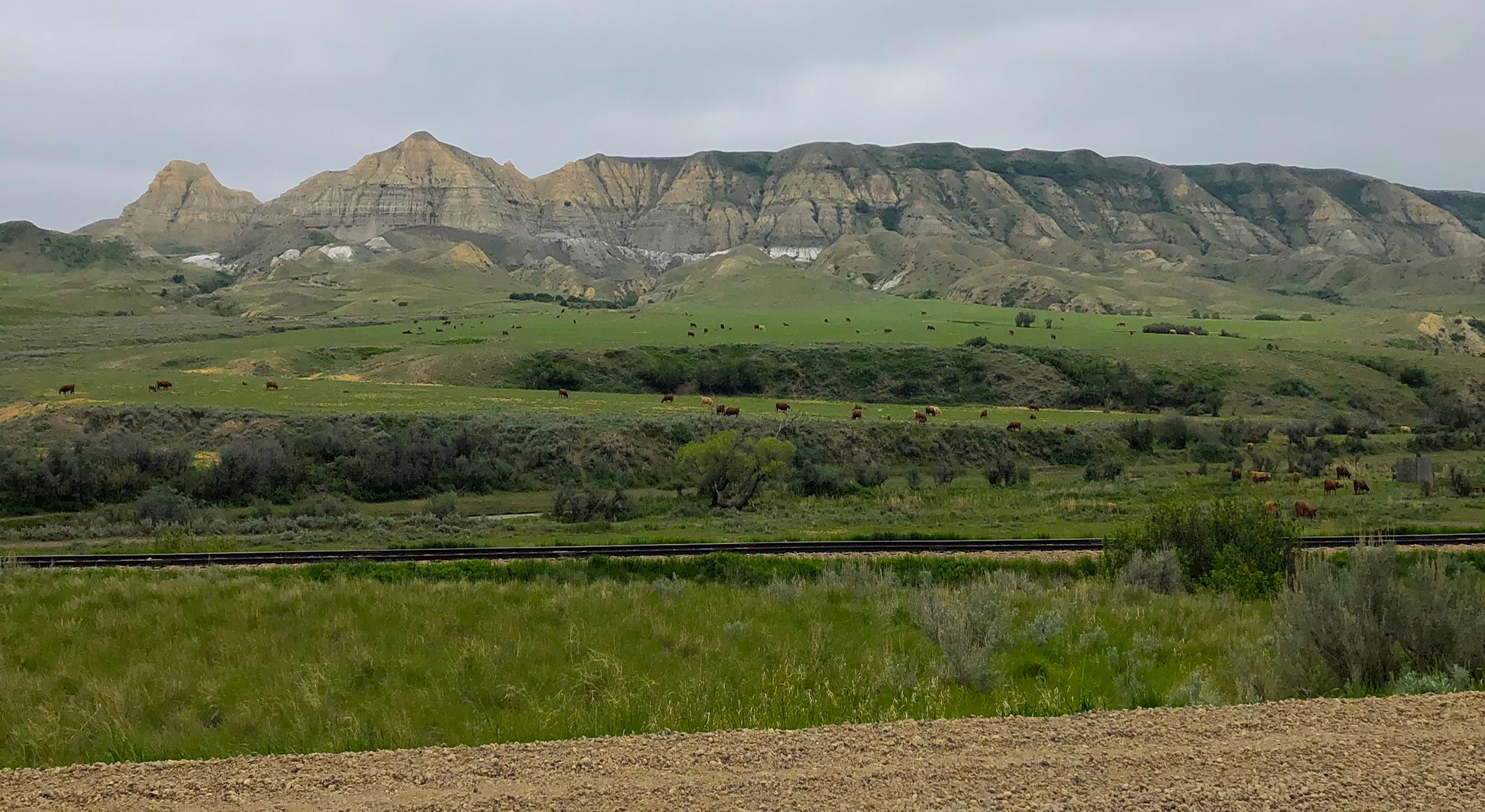
Outcrops of the Whitemud formation in the Eastend river valley - 2021
This picture has its own page with more detail, click here to see it.
In the spring this is what you will see to the north (near Ravenscrag, Saskatchewan on the south road to Eastend). The Whitemud clays are clearly visible. The amount of overburden makes it difficult to find minable sections, so Plainsman Clays mines on the opposite side where gently rolling hills fall to the valley bottom. On that side there are no outcrops, these white layers are largely hidden and can only be discovered by exploratory digging. But on this side they are easily accessed and can readily be sampled. This is the exact location where the Whitemud clays were first discovered for pottery in the early 1900s, there are actually some mineable sections on the front hills to left. I-XL brick mined clay here for many years. This is also the site of a mine for the former Medalta Potteries.
Links
| Articles |
How to Find and Test Your Own Native Clays
Some of the key tests needed to really understand what a clay is and what it can be used for can be done with inexpensive equipment and simple procedures. These practical tests can give you a better picture than a data sheet full of numbers. |
 PayPal | No tracking, No ads, No paywall, No transient content! Just organized, concise information constantly updated and improved. Was this helpful? Consider supporting me. |
Got a Question?
Buy me a coffee and we can talk 

https://digitalfire.com, All Rights Reserved
Privacy Policy