Alumina parts are ceramics on steroids!
In terms of hardness, wear resistance, and high-temperature stability, alumina ceramic is far superior to even the strongest mullite porcelain. Such porcelains are mixes of kaolin, feldspar and silica. Alumina parts are just micron-sized calcined alumina powder fired to an incredible cone 30 or more, often held there for days! The powder is mixed with binders and formed by pressing or injection molding. Precision "green machining" is also used (while parts are chalky). With super fine particle size, high purity, dense packing and prolonged firing, surfaces can be very white and so smooth they are glossy (e.g. spark plugs are not glazed). While parts can even be translucent they are not vitrified, no glass is developed during firing. Rather, they are sintered - the fine particles fuse into a material approaching diamond hardness.
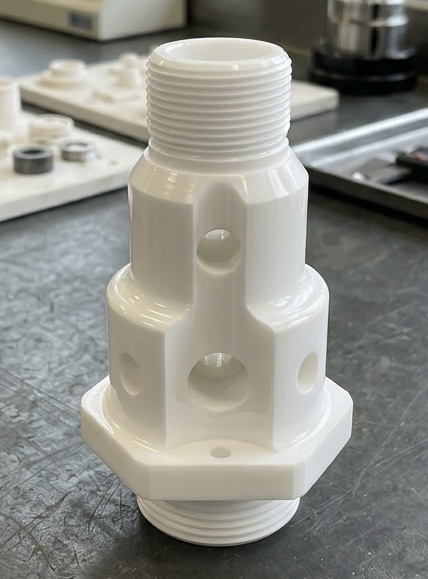
Created by Gemini using a prompt to create a typical alumina part AI Policy
Links
| Materials |
Calcined Alumina
A high-purity Al2O3 used in technical ceramics, refractories, glazes, and bodies for its extreme hardness, high-temperature strength, and chemical stability. |
 PayPal | No tracking, No ads, No paywall, No transient content! Just organized, concise information constantly updated and improved. Was this helpful? Consider supporting me. |
Got a Question?
Buy me a coffee and we can talk 

https://digitalfire.com, All Rights Reserved
Privacy Policy