A plaster table: Better than a pugmill, essential for testing
This is an example of an angle iron utility table being made into a plaster table. The cardboard sides extend upward to make the slab thicker and create a buffer gap to prevent the expanding and setting plaster from pressing outward on the frame. 150 lbs plaster (92 lbs water) was poured into the plastic-lined space (the bottom cardboard sections were supported from below). In a dry enough climate, this table could make enough clay to support slurry-to-plastic production for a potter (a thicker slab and a fan would enable even more capacity). The slurry-up process is better than a pugmill for small operations. It's much cheaper and is an easier way to utilize scrap material and weigh out custom recipes. The clay quality and de-airing is better (without hard chunks and contamination common to pugmilling). The procedure generates much less dust and the tank is easily cleaned. Slurries are easily sieved, especially if you have a sieve shaker.

Related Pictures
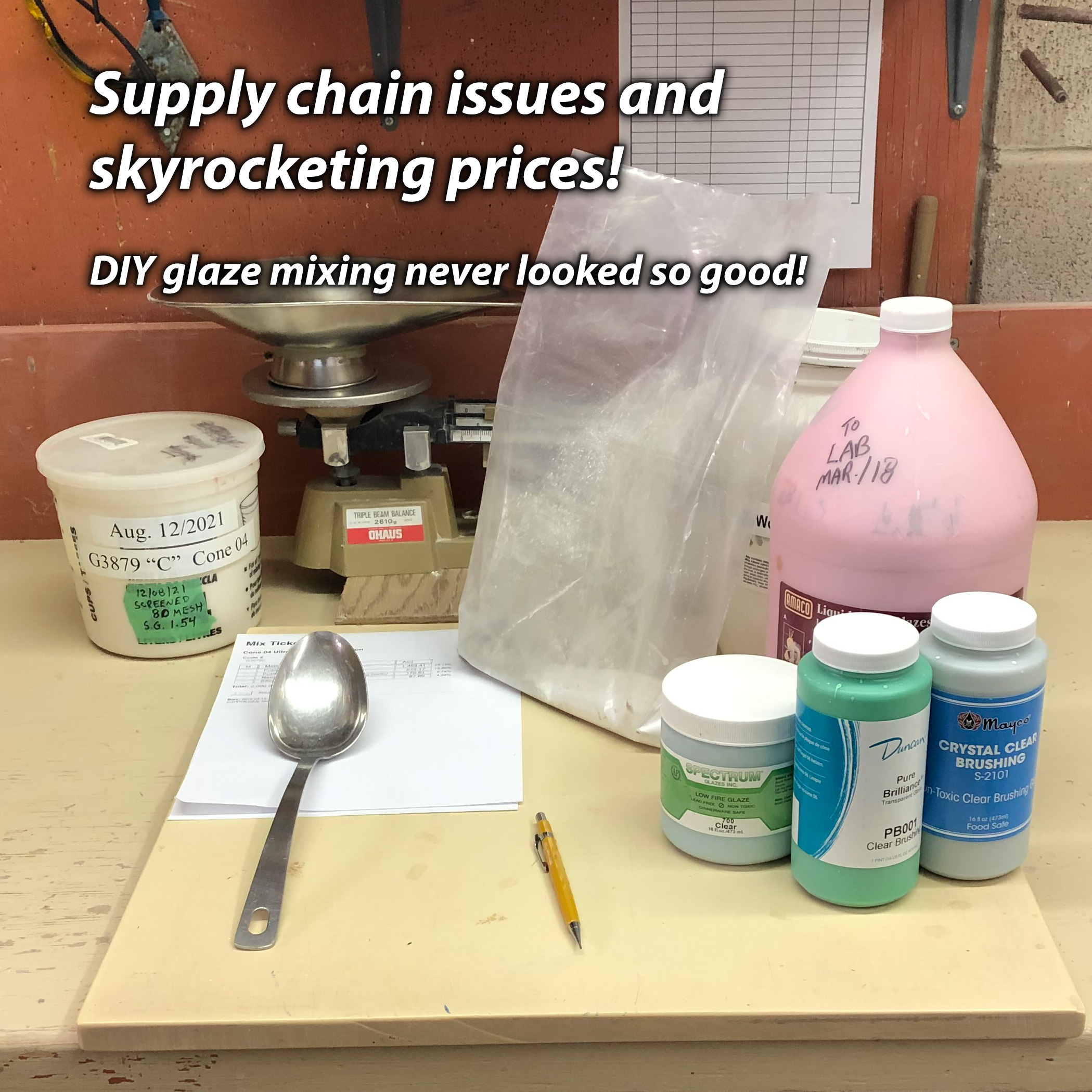
Supply chain crises hit commercial glazes first.
Cope better by knowing DIY glaze mixing.
This picture has its own page with more detail, click here to see it.
As potters, we learned that no one is affected by supply chain problems more than prepared glaze manufacturers; they have complex recipes that require complex supply chains. It wasn't just availability; product consistency was also affected. It is again time to think about DIY, to start learning how to weigh out the ingredients to make at least some of your own. Arm yourself with good base recipes that fit your clay bodies (without crazing or shivering). Add stains, opacifiers and variegators to the bases to make anything you want. Admittedly, ingredients in your recipes can also become unavailable! But DIY is about options. When you "understand" glaze ingredients and what each contributes to the recipe and oxide chemistry, you are equipped to go well beyond weathering material supply issues. You will improve recipes, not just adjust them, to accommodate alternative materials. It is not rocket science; it is just work accompanied by organized record-keeping and good labelling.
Our $50 pottery mugs vs. the $5 imports:
Do we just pretend this situation doesn't exist?

This picture has its own page with more detail, click here to see it.
Peggy-potter makes the hand-crafted mugs. Carla-coffee-drinker, needs a mug. This apparent perfect alignment goes off the rails when Carla compares Peggy's $50 price with premium imported mugs costing $5 (shown here). Especially when the imports emulate Peggy's techniques flawlessly while offering better durability and strength!
Peggy has to choose between hyping "kiln drops" on social or cutting costs. DIY techniques and supplies are a first option. Also mold-making and slip casting, even mixing her own casting slips. Mixing her own glazes, underglazes and engobes is the next step. Or learning to use less expensive bodies (e.g. with engobes).
Going DIY is not a big equipment investment. A plaster table, scale, mixing and batching table and a propeller mixer are the most important. And keeping good records (e.g. an account at insight-live.com). Following manufacturers on Instagram to see their glazing and forming techniques can help. Build throwing and drying skills by making hundreds of the same item. Consider: What you do affects other potters, prices cannot keep rising, or there will be no market.
Links
| Glossary |
Plaster table
Essential in a pottery studio for dewatering reclaim clay, stiffening clay that is too soft or making your own clay bodies. |
| Glossary |
Native Clay
A clay that a potter finds, tests and learns to process. To reduce the costs of importing materials, manufacturers, especially in Asia, also often develop processes to enable the use of clays mined in their locality. |
| Glossary |
Pugmill
The practice of removing air from clay as it is pugged. Deaired clay has better forming properties and produces a smoother fired surface. |
| Articles |
Formulating a Porcelain
The principles behind formulating a porcelain are quite simple. You just need to know the purpose of each material, a starting recipe and a testing regimen. |
 PayPal | No tracking, No ads, No paywall, No transient content! Just organized, concise information constantly updated and improved. Was this helpful? Consider supporting me. |
Got a Question?
Buy me a coffee and we can talk 

https://digitalfire.com, All Rights Reserved
Privacy Policy