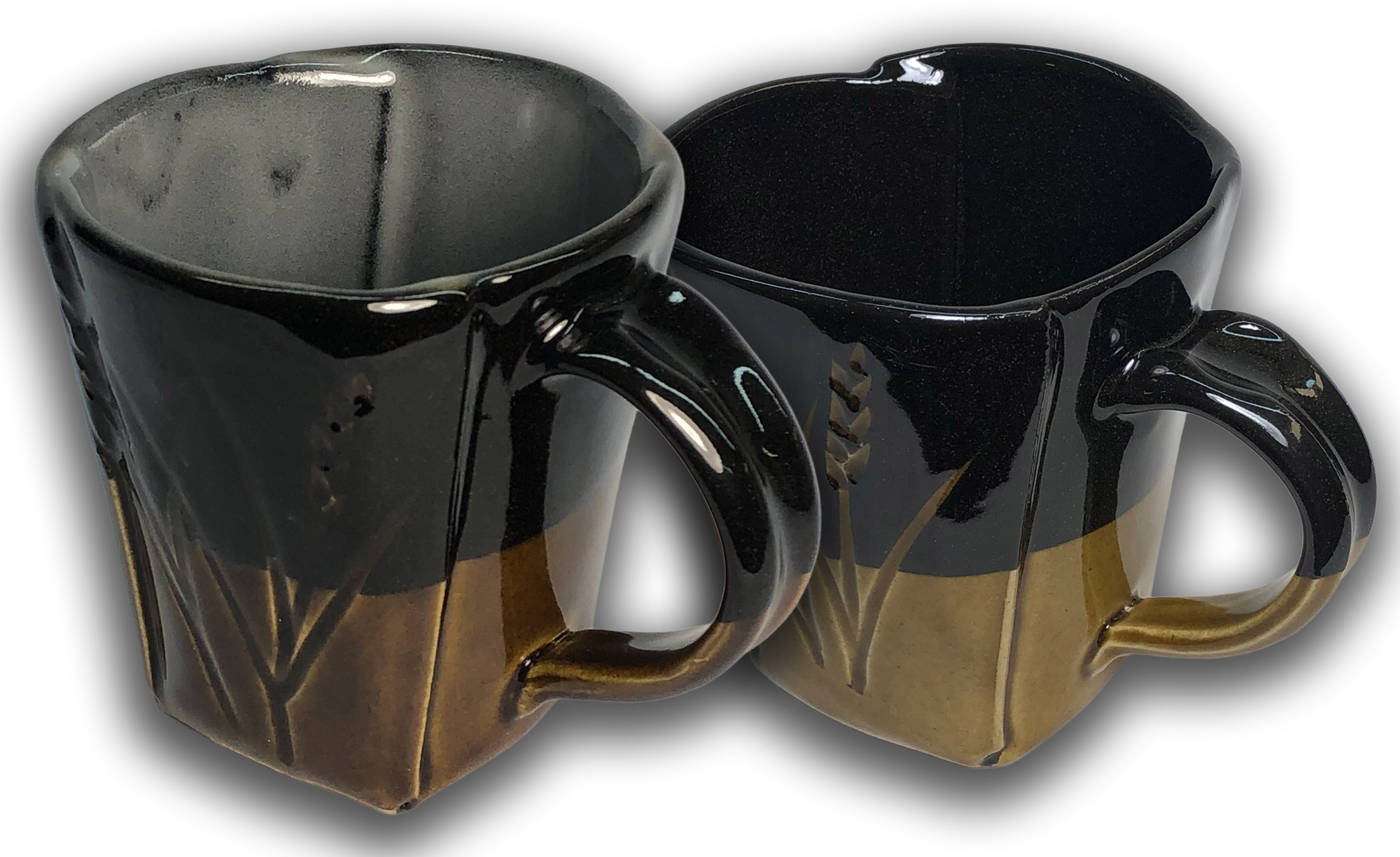
Same body, same outside glaze.
But the inside transparent glaze is different
The wrong transparent glaze on a black underglaze or engobe can do what you see here (inside left). These mugs are a buff stoneware, Plainsman M340. A black engobe was applied by pouring the inside and dipping the outside two-thirds of the way down.
L3954F black engobe was applied inside and upper exterior to both leather hard mugs. After firing to cone 6 using the PLC6DS schedule, G2926B, which is crystal clear on M340 itself, became completely clouded over the engobe because bubbles generated during firing remained trapped in the melt.
Right: The entire mug was dipped in GA6-B. The Alberta Slip particles and the melt characteristics of GA6-B promote bubble coalescence and escape, producing an exceptionally glossy jet-black surface over the same engobe.
 PayPal | No tracking, No ads, No paywall, No transient content! Just organized, concise information constantly updated and improved. Was this helpful? Consider supporting me. |
Got a Question?
Buy me a coffee and we can talk 

https://digitalfire.com, All Rights Reserved
Privacy Policy