Prepare your own glazes for three application methods
Potters commonly mix glazes from recipes, while hobbyists often use bottled commercial products intended for brushing. But the same glaze powder batch can be prepared in quite different ways depending on how it needs to be applied.
- Dipping glazes need a slurry that is sufficiently thixotropic (to suspend well, apply evenly, stop flowing after withdrawal). They dry quickly on porous bisque. They normally contain little or no gum, so the dried layer does not need to be especially hard. Industrial versions are high-solids, pottery versions are usually low-solids.
- Brushing glazes need to behave more like paint. CMC gum slows drying, improves brushing and levelling, and hardens the dried layer so it adheres well and can tolerate multiple coats. Commercial versions are generally low-solids, while potters have the liberty to mix as high-solids.
- Base-coat dipping glazes are a compromise between the two. They must still gel, drain and dry quickly enough for dipping, but they also need enough gum and dry strength that another glaze can be applied over them without the first layer softening, lifting or letting go of the body.

Related Pictures
DIY brushing glazes by-the-jar:
Here is my setup to make them
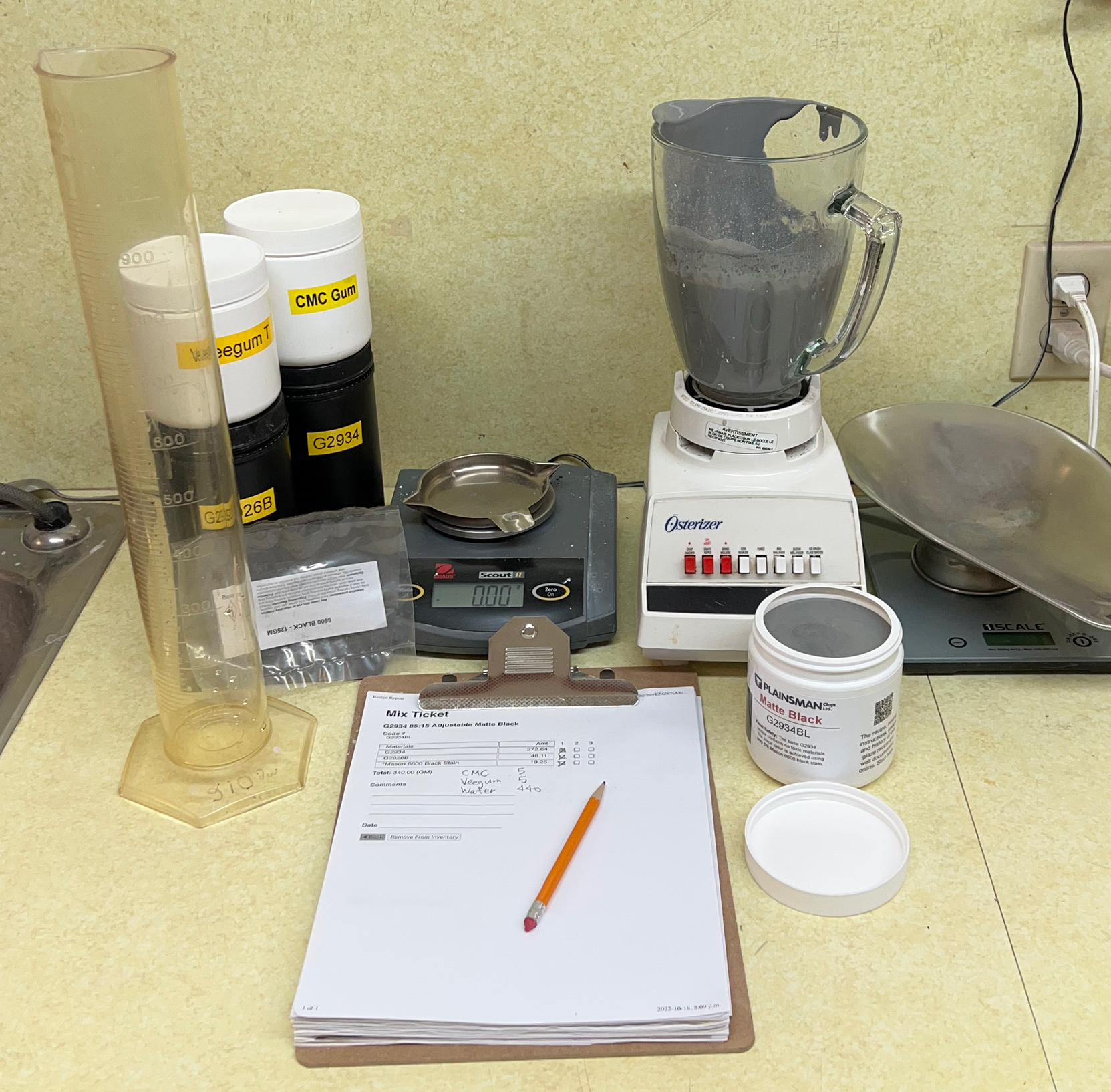
This picture has its own page with more detail, click here to see it.
Let's make a DIY low SG version of G2934BL. Weigh out 340g of dipping glaze powder. Include 5g Veegum (to gel the slurry to enable more than normal water) and 5g CMC gum (for slow drying and brushing properties). Shake-mix all the powder in a plastic bag. Pour it into 440g water, blender mix on low speed, then finish with 20 seconds on high speed. This fills a 500ml jar. In subsequent batches, I adjust the Veegum for more or less gel, the CMC for slower or faster drying and the water amount for thicker or thinner painted layers. Dipping glaze recipes can and do respond differently to the gums. Those having little clay content work well (e.g. reactive and crystalline glazes). If bentonite is present, it is often best to leave it out. Recipes having high percentages of ball clay or kaolin might work best with less Veegum. Keep good notes (with pictures) to reach the objective of good brushing properties. Use code-numbering on the jars and test pieces.
Here is some incentive: Brushing glazes have gotten to the point where it can cost $5 to glaze one mug! This is so worthwhile doing that I make custom labels for each jar!
Links
| Glossary |
Brushing Glaze
Hobbyists and increasing numbers of potters use commercial paint-on glazes. It's convenient, there are lots of visual effects. There are also issues compared to dipping glazes. You can also make your own. |
| Glossary |
Base-Coat Dipping Glaze
These are ceramic glazes intended for dipping but which contain a gum to enable them to adhere to the body better and tolerate over-layers without danger of flaking or cracking. |
| Glossary |
Dipping Glaze
In traditional ceramics and pottery dipping glazes can be of two main types: For single layer and for application of other layers overtop. Understanding the difference is important. |
| Glossary |
Glaze Layering
In hobby ceramics and pottery it is common to layer glazes for visual effects. Using brush-on glazes it is easy. But how to do it with dipping glazes? Or apply brush-ons on to dipped base coats? |
 PayPal | No tracking, No ads, No paywall, No transient content! Just organized, concise information constantly updated and improved. Was this helpful? Consider supporting me. |
Got a Question?
Buy me a coffee and we can talk 

https://digitalfire.com, All Rights Reserved
Privacy Policy