Commercial brush-on glaze vs leaded DIY glaze
This is why lead bisicilate was so popular
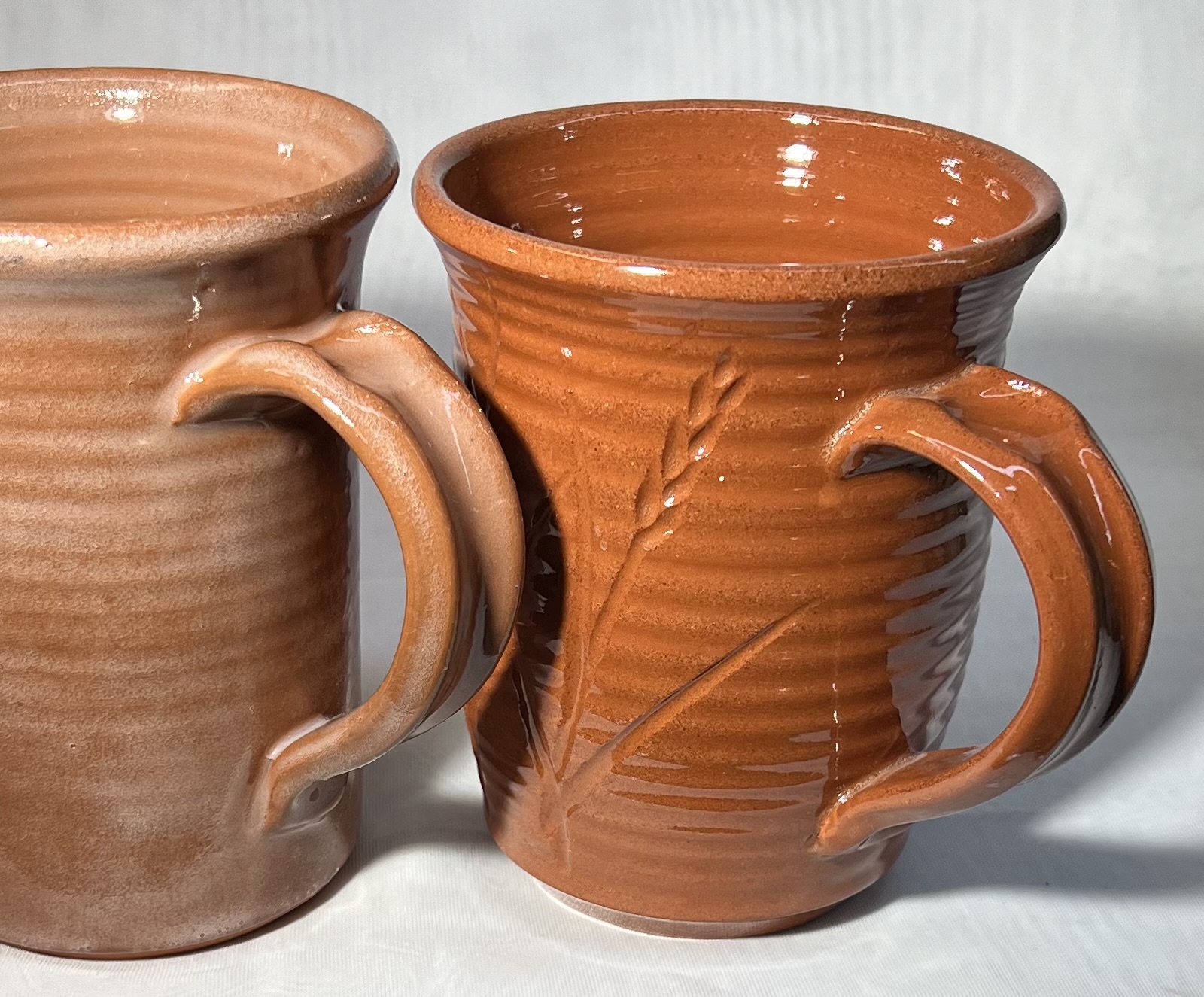
These two mugs are Plainsman L215 terra cotta fired at cone 04. On the left, the glaze is Spectrum 700 clear, a commercial brushing glaze. Three coats were needed to achieve a smooth surface (because the body is sandy and only ground to 42 mesh). It took an hour of drying between each of the coats. The glaze on the right is G3971 lead bisilicate. I mixed it as a brushing glaze also, but as a high-solids slurry, so only two coats were needed (and they dried faster).
Related Pictures
UK Slipware: A Tradition of Terra Cotta and Lead Glaze
No borosilicate glaze can do this

This picture has its own page with more detail, click here to see it.
The traditional UK slipware is possible because of the brilliant gloss and hyper transparency of glaze made using lead bisilicate frits. The lead glaze interacts with the colors in underlying slips, dissolving and feathering them (as enabled by the time and temperature of the kiln). Interactions with iron produce warm colors. Ware is bisque fired after the decorating and drying (lower left), then dipped in the leaded glaze. Photo courtesy of Russell Kingston, Lynmouth Slipware Pottery.
 PayPal | No tracking, No ads, No paywall, No transient content! Just organized, concise information constantly updated and improved. Was this helpful? Consider supporting me. |
Got a Question?
Buy me a coffee and we can talk 

https://digitalfire.com, All Rights Reserved
Privacy Policy