An unevenly cooled tile has cracked
Example of a severely dunted cone 6 stoneware tile. This problem was deliberately created by stacking several tiles on top of this one. This set up a temperature gradient across it so that different parts passed through quartz inversion at different times.

Related Pictures
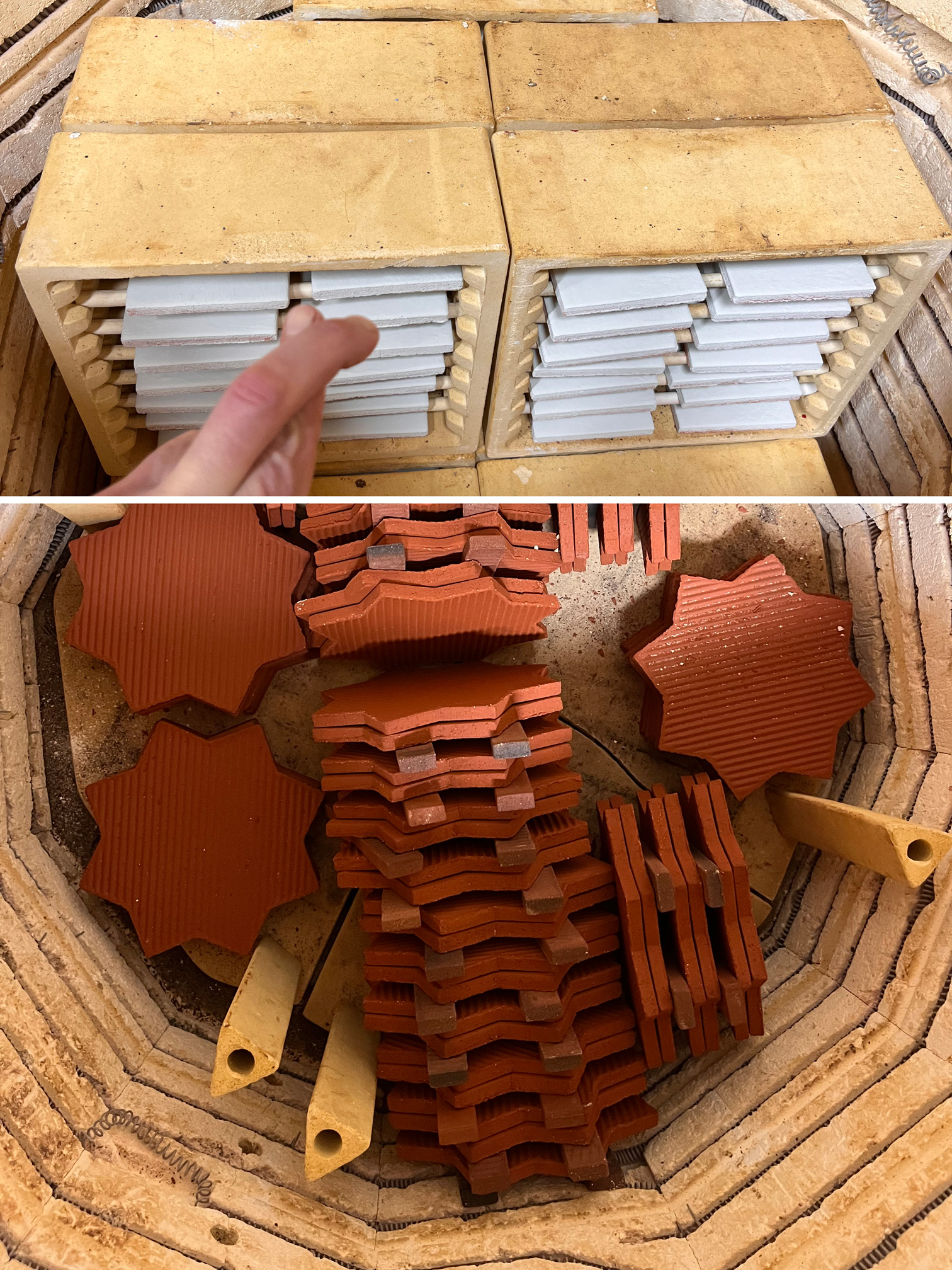
Tile stacking in an electric kiln - Fingers crossed!
This picture has its own page with more detail, click here to see it.
Small-scale operations everywhere are making tile like this. Most use plastic clay intended for pottery, which introduces more drying shrinkage, complicating drying them flat. Stacking them in the kiln can be a game of chance. Stacked too tightly and they crack (mostly because of quartz inversion). Stacked to loosely and most of the energy goes into heating the shelves and stackers. Using a clay with minimal large quartz particles is the best way to avoid dunting, however that is also a balance since such clays are more difficult to fit glazes to (without crazing).
Links
| Glossary |
Dunting
Dunting generally refers to firing cracks that occur in ceramic ware as it is cooled in the kiln. The reason is generally uneven cross section or too rapid cooling. |
| Glossary |
Quartz Inversion
In ceramics, this refers to the sudden volume change in crystalline quartz particles experience as they pass up and down a temperature window centering on 573C. |
 PayPal | No tracking, No ads, No paywall, No transient content! Just organized, concise information constantly updated and improved. Was this helpful? Consider supporting me. |
Got a Question?
Buy me a coffee and we can talk 

https://digitalfire.com, All Rights Reserved
Privacy Policy