A Clear Glaze Bubbles Over DIY Underglazes:
The real solution is in the underglaze recipe
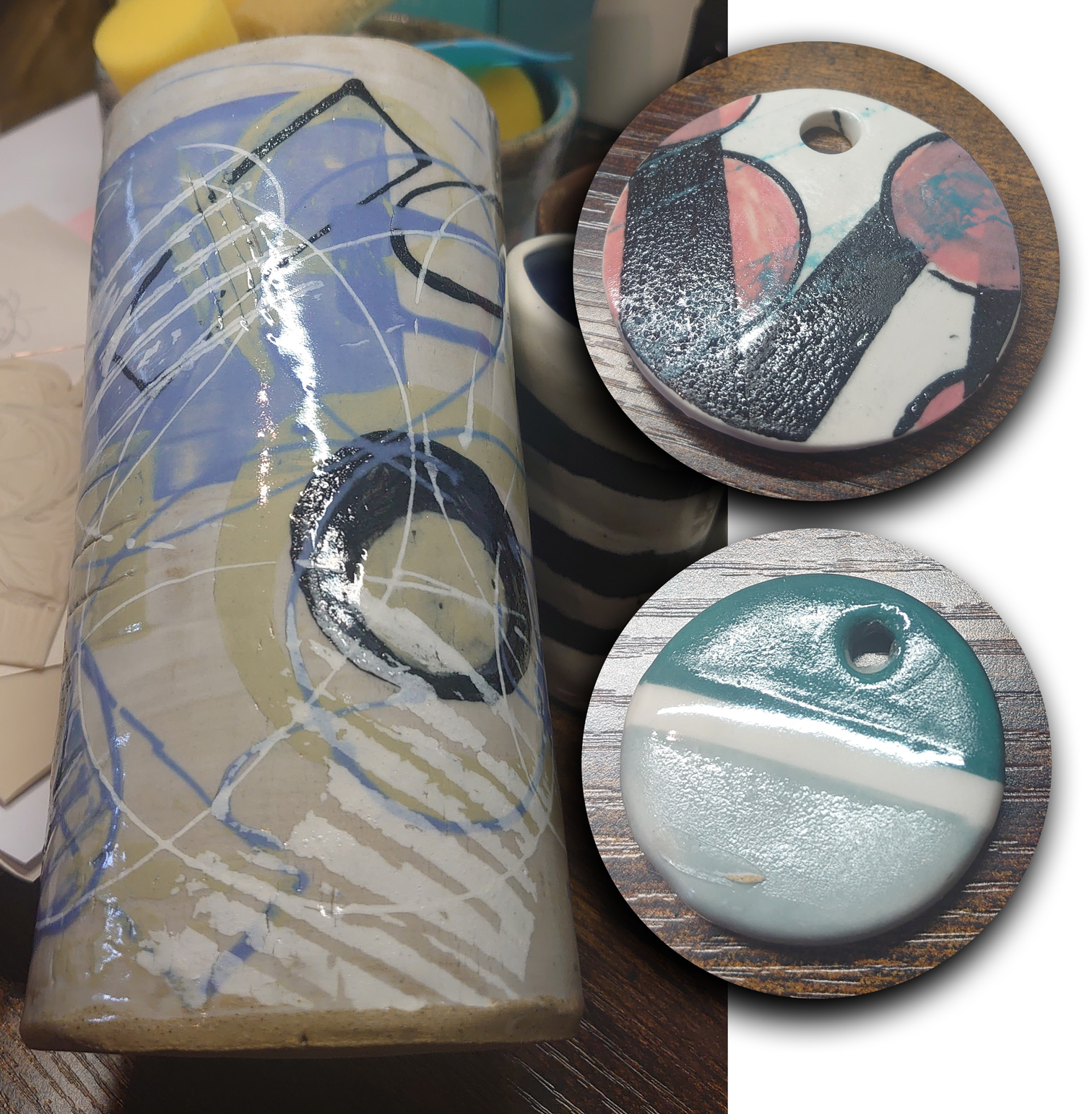
Potters often encounter the problem shown here. These pieces are fired at cone 6. They are decorated with underglazes made from a mix of porcelain powders and stains. The transparent glaze works over certain colors but on others, it is full of microbubbles and pinholes. The potter has not had success finding a transparent overglaze that works consistently. Stain manufacturers do not mix stains with porcelain to making underglazes.
So, although closer control of the transparent glaze thickness or a more fluid melt glaze recipe might help, the real solution may lie with the underglaze recipes used here. An ideal bisque-stage underglaze is sinter-bonded but not sealed (therefore not accepting glaze water). An ideal fired underglaze also has controlled maturity: enough glass development to bond well to the body and promote glaze acceptance, but not so much that edge-bleeding and opacity loss occur. This state of 'controlled maturity' is also more likely to match body thermal expansion. The cost savings and the potential to fine-tune each color to your exact needs can be powerful motivations to use DIY underglazes.
Related Pictures
Pure stain powders painted under the glaze:
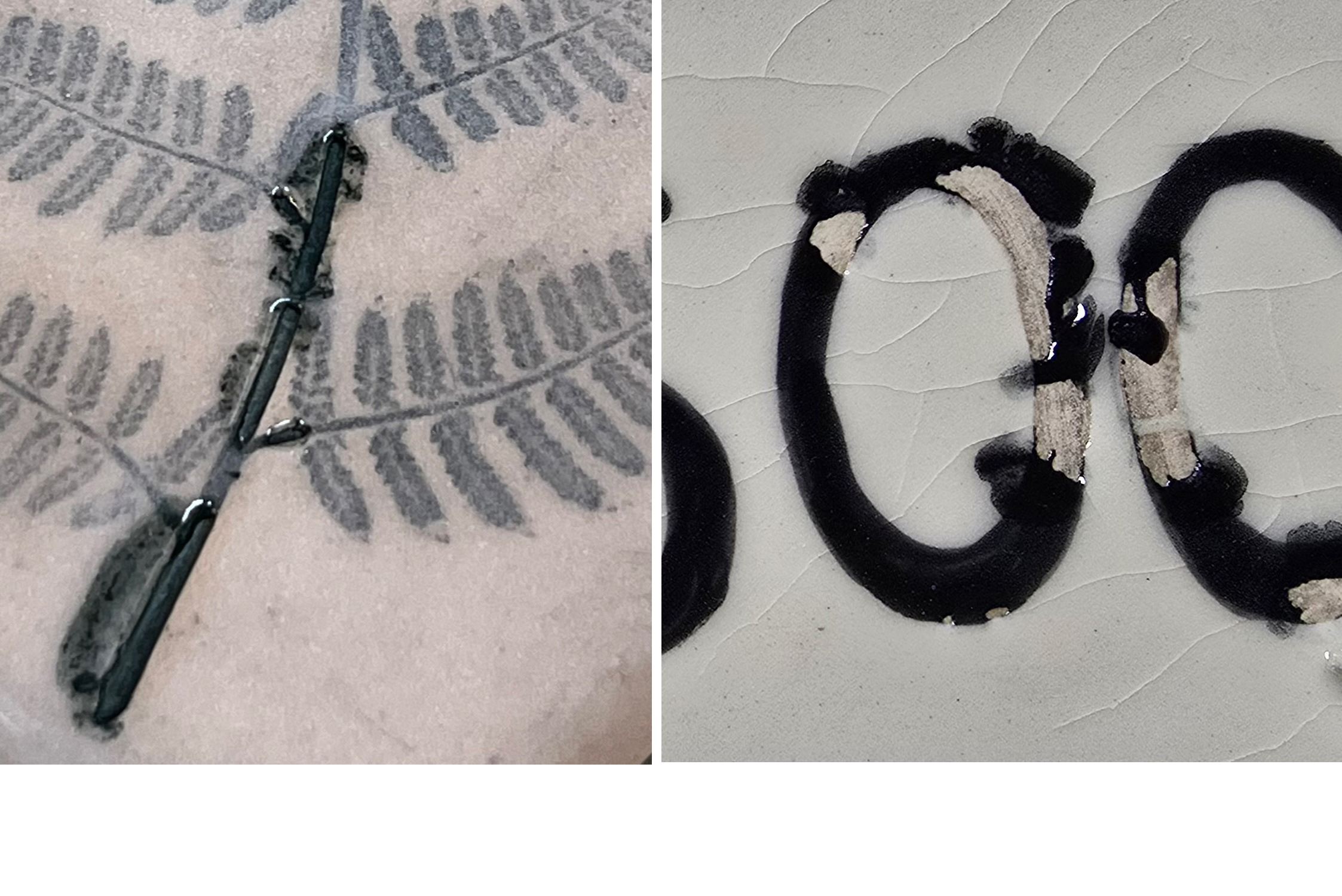
Why is the glaze shedding off?
This picture has its own page with more detail, click here to see it.
These black stain-water mixes were painted onto bisque and an overglaze was applied. Out the kiln, this crawling happened. Why? Many stains are refractory, thus do not glass-bond with the body. And they repel being wetted by the molten glaze on top. Stains need to be mixed with a stain medium that both supplies a bonding glass (for firing) and a clay to suspend the slurry and dry-harden and dry-bond it. One medium option used to be Gerstley Borate, it was both plastic (so it dried like a clay and suspended the slurry), and it was a melter. It was just a matter of tuning the percentage to optimize performance. One problem was that the best mix of those ended up using 70% stain (whereas 15-20% is theoretically enough). A better option is to use a full-fledged medium, a recipe. Each of the ingredients is there for a purpose. This provides the ultimate flexibility to tune the mix properties for brushing and firing (also enabling minimizing the percentage of stain).
Links
| Glossary |
Underglaze
Understand pottery underglazes: Why they brush differently, how they fire, why clears fail over them, and how to make your own recipes. In technical rather than art language. |
| Glossary |
Stain Medium
A stain medium (or ceramic medium) is a mix of powdered ceramic materials that impart ceramic properties that stain powders lack in themselves (e.g. ability to form a hard ceramic that fits the underlying body or overlying glaze. |
 PayPal | No tracking, No ads, No paywall, No transient content! Just organized, concise information constantly updated and improved. Was this helpful? Consider supporting me. |
Got a Question?
Buy me a coffee and we can talk 

https://digitalfire.com, All Rights Reserved
Privacy Policy