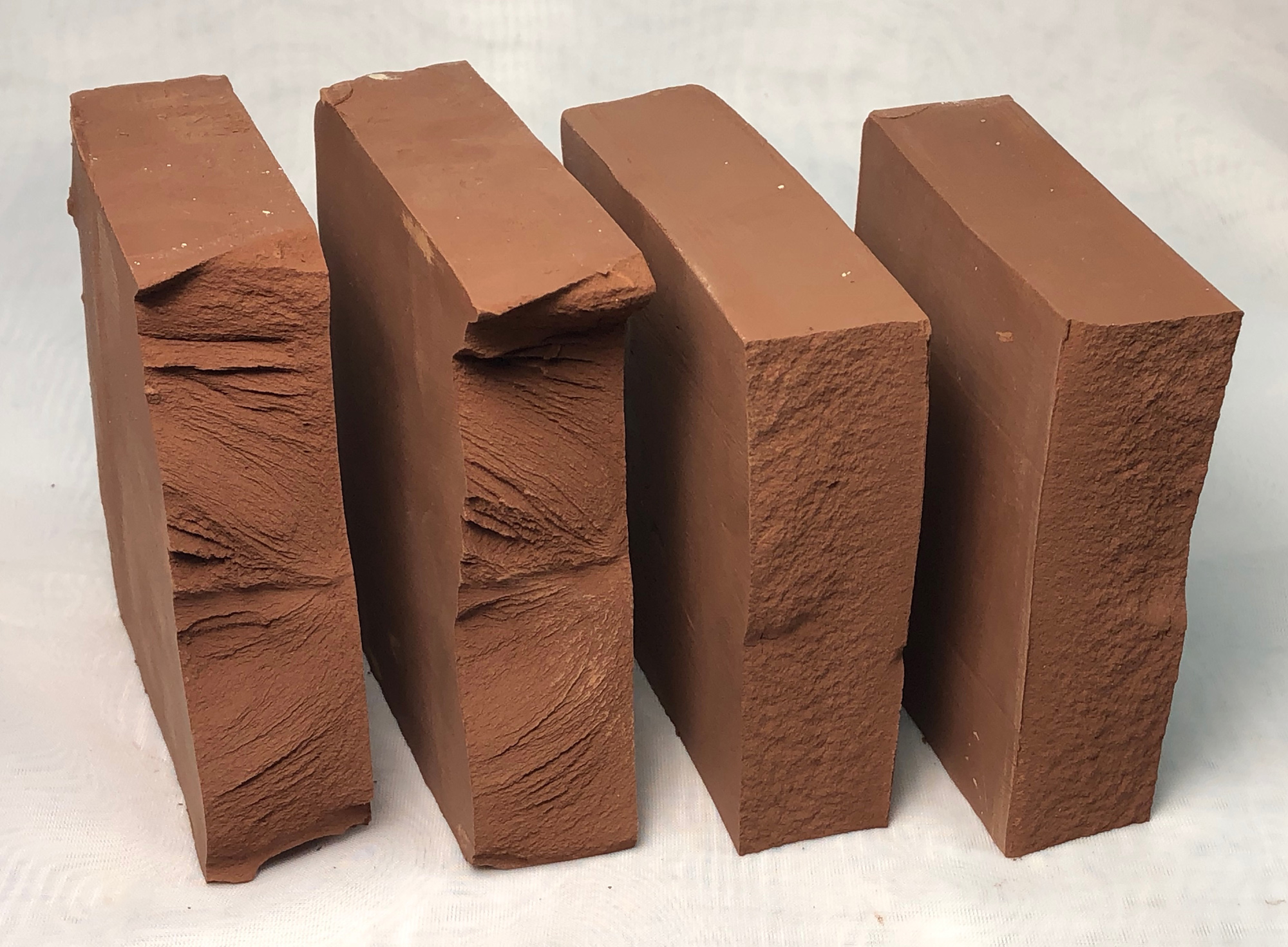
Laminations in unwedged clay
The brick-halves on the left cracked in two during drying, the crack opened at the center. I dried six of them and all cracked in the same way. The one-inch-slices were cut laterally from an extruded slug of clay and sun-dried. The radial pattern of the laminations are clearly visible on the break. These laminations are "a weakness" formed-into this extruded and unwedged clay, they would, of course, extend to fired integrity, weakening the piece. The halves on the right are from a brick that I made by first wedging (kneading) the clay, then forming and cutting it to size. It was likewise sun-dried. But did not crack. I broke it (with difficulty), notice the break followed the stresses of the breaking process, not internal lines of weakness.
Links
| Glossary |
Wedging
The process of mixing a plastic clay by hand before forming it. Similar to kneading of bread dough, it is considered an essential step by most potters. |
| Glossary |
Laminations
Laminations because of improper pugging of a clay body will cause separations and drying cracks in the ware. |
| Glossary |
Pugmill
The practice of removing air from clay as it is pugged. Deaired clay has better forming properties and produces a smoother fired surface. |
 PayPal | No tracking, No ads, No paywall, No transient content! Just organized, concise information constantly updated and improved. Was this helpful? Consider supporting me. |
Got a Question?
Buy me a coffee and we can talk 

https://digitalfire.com, All Rights Reserved
Privacy Policy