A small test kiln: More control, faster learning
A question about a glaze or body should be a reason to run a test. Having your own small programmable kiln means you can do that without waiting for a production load or tolerating someone else’s firing schedule.
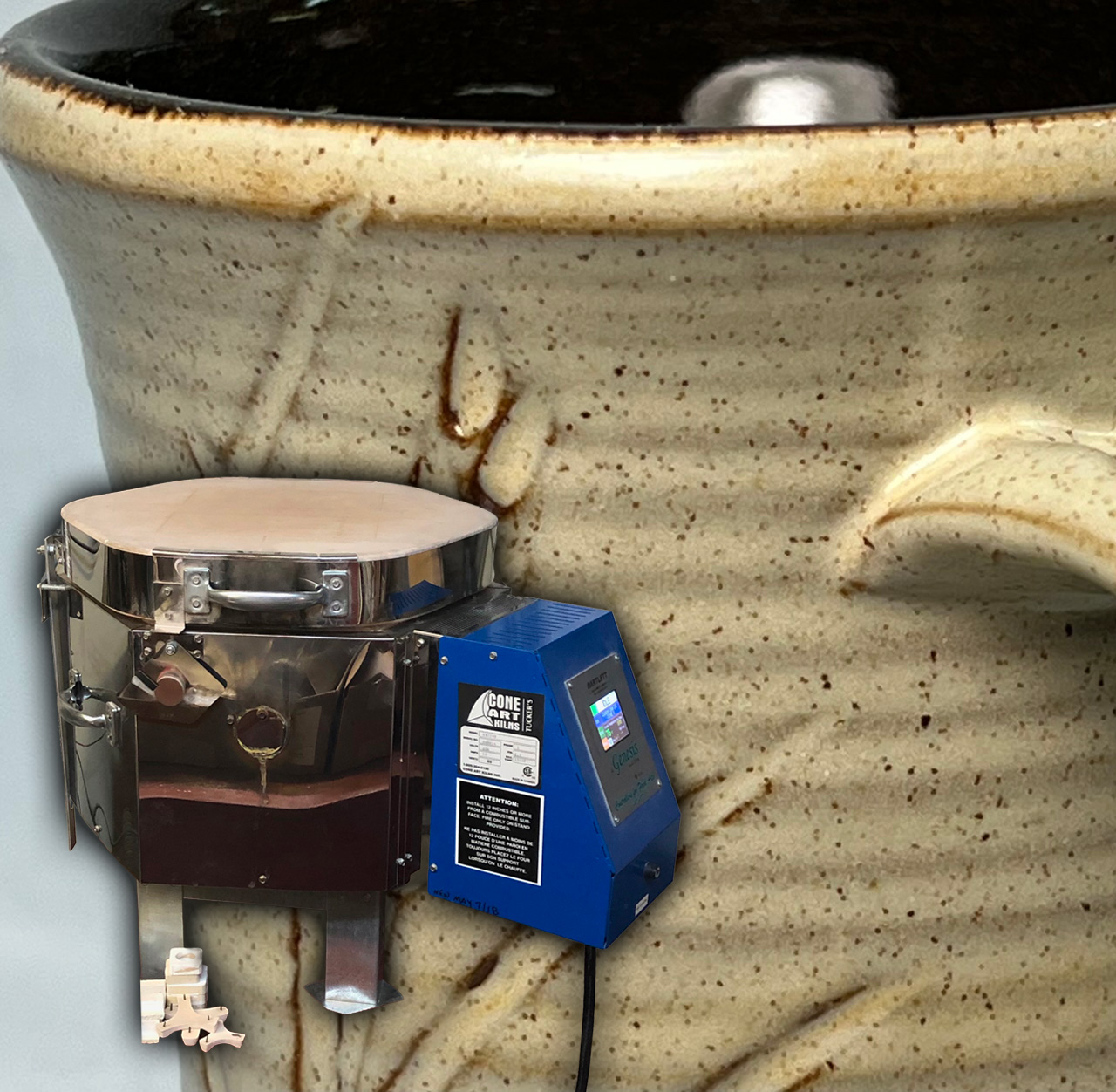
This is a Cone Art 119D: an 11-inch-diameter, 9-inch-deep, 0.57-cubic-foot cone 10 test kiln. It runs on 208 V and has a Bartlett Genesis touchscreen controller. Being able to create, edit and repeat firing schedules easily is central to how it's used and what can be tested. It holds four or five mugs, or a dozen clay and glaze test specimens. Small loads make frequent testing practical: compare a recipe adjustment, investigate a defect or check a new material shipment. Controlling the cooling schedule is among the most fascinating of tests (and a way to emulate a slow-cooling production kiln). With most firings below cone 7, a set of elements can last a thousand firings. Start with a kiln like this and you will discover how much you can accomplish before needing a larger one. Even then, the little kiln keeps its job.

Related Pictures
A test kiln turns “What if?” into “Let’s find out”
This picture has its own page with more detail, click here to see it.
You don’t have to invent a glaze from scratch to start making glazes your own. Begin with a documented recipe, make one controlled change and compare the results. This is G3933, made by adding iron oxide, rutile and tin oxide to a 75:25 blend of G2934 matte and G2926B glossy base glazes. I like it—but this mug gives me plenty of reasons to keep testing:
Crawling
The glaze has crawled at some sharp edges of the incised decoration. Would a small CMC gum addition help it adhere better during drying?Matteness
Would changing the matte-to-glossy blend from 75:25 to 80:20 give the surface a little more matteness?Firing
What would the C5DHSC slow-cooling schedule do to the color and surface? How would those results compare on a red-burning clay?Additives
What would separate increases in rutile, iron oxide or granular manganese do to the variegation, color and speckling?A small test kiln makes these questions practical to investigate. I can fire a few samples when I need to, compare each change with the original and use what I learn to decide the next step.
A small 220V electric test kiln

This picture has its own page with more detail, click here to see it.
Very well endowed with elements. From the back view you can see how simple the wiring is on a kiln like this.
Making your own hexagonal shelves using calcined alumina

This picture has its own page with more detail, click here to see it.
This homemade kiln shelf (left) for our test kiln was fired at cone 10. This is a third the weight (and thickness) of the cordierite one on the right. However it does not have the thermal shock resistance of cordierite, uneven heatup can crack it. It is made from a body I slurry up consisting of 96.25% calcined alumina and 3.75% Veegum. It rolls out nicely and dries flat between pieces of plasterboard, taking about three days (if you try this and the body is not plastic then your alumina is not fine enough or you did not blender mix the slurry well enough). Alumina produces a lighter shelf than Zircopax and shrinks much less than refractory bodies we have tried (e.g. L4543), I cut the slab only 1/4" larger and it has fired to the same size.
Links
| Articles |
Electric Hobby Kilns: What You Need to Know
Electric hobby kilns are certainly not up to the quality and capability of small industrial electric kilns, being aware of the limitations and keeping them in good repair is very important. |
| Glossary |
Test Kiln
A test kiln is a must for all potters and small manufacturers, even serious hobbyists. Here is why. |
| Glossary |
Kiln Controller
In ceramic kilns the firing schedule is typically managed automatically by an electronic controller. But that may not mean that ware gets automatically fired to the correct temperature and atmosphere. |
| Glossary |
Kiln Firing
All types of ceramic are fired in a kiln to cement particles together to produce a hard and water and temperature resistant product. |
| URLs |
https://kilnfrog.com/
Wide selection of glass, clay, metals, jewelry, blade kilns. Especially smaller sizes. Brands in 2024: Evenheat, Jen-Ken, Olympic, Hot-Shot, Cress, Paragon, Heat Treat Now. |
| URLs |
https://tuckers-pottery-supplies-inc.shoplightspeed.com/cone-art-119d-round-pottery-kiln.html
ConeArt 119D Cone 10 Test Kiln |
 PayPal | No tracking, No ads, No paywall, No transient content! Just organized, concise information constantly updated and improved. Was this helpful? Consider supporting me. |
Got a Question?
Buy me a coffee and we can talk 

https://digitalfire.com, All Rights Reserved
Privacy Policy