A transparent glaze is going satin:
Is it the feldspar and kaolin substitutions?
A potter reports that a switch from G-200 feldspar to Mahavir, and EPK to Imerys kaolin, has resulted in this transparent glaze becoming more satin. Is that possible? Yes. Because this glaze is on a unity formula tipping point.
To see it, you do not need to know how to do glaze chemistry, just how to display the calculated unity formulas side-by-side. My Insight-live shows them here. The material change has little effect. But there is an anomaly: 0.29 MgO. That is magnesia matte territory. The MgO is very likely there to help bring the thermal expansion as low as possible (to avoid crazing). For people who cool their kilns relatively quickly, this fires glossy. But a material change could well affect the cooling rate needed to maintain the gloss. That being said, the potter may also be firing slower, yet attributing the mattness to the materials. Or it could be a combination of both.
This is a popular glaze, among others in the book "Mastering Glazes". In Ron Roy's circumstances, and for many others, it is glossy. But for this potter, a small change (in the recipe materials and also likely in firing) has produced this issue.
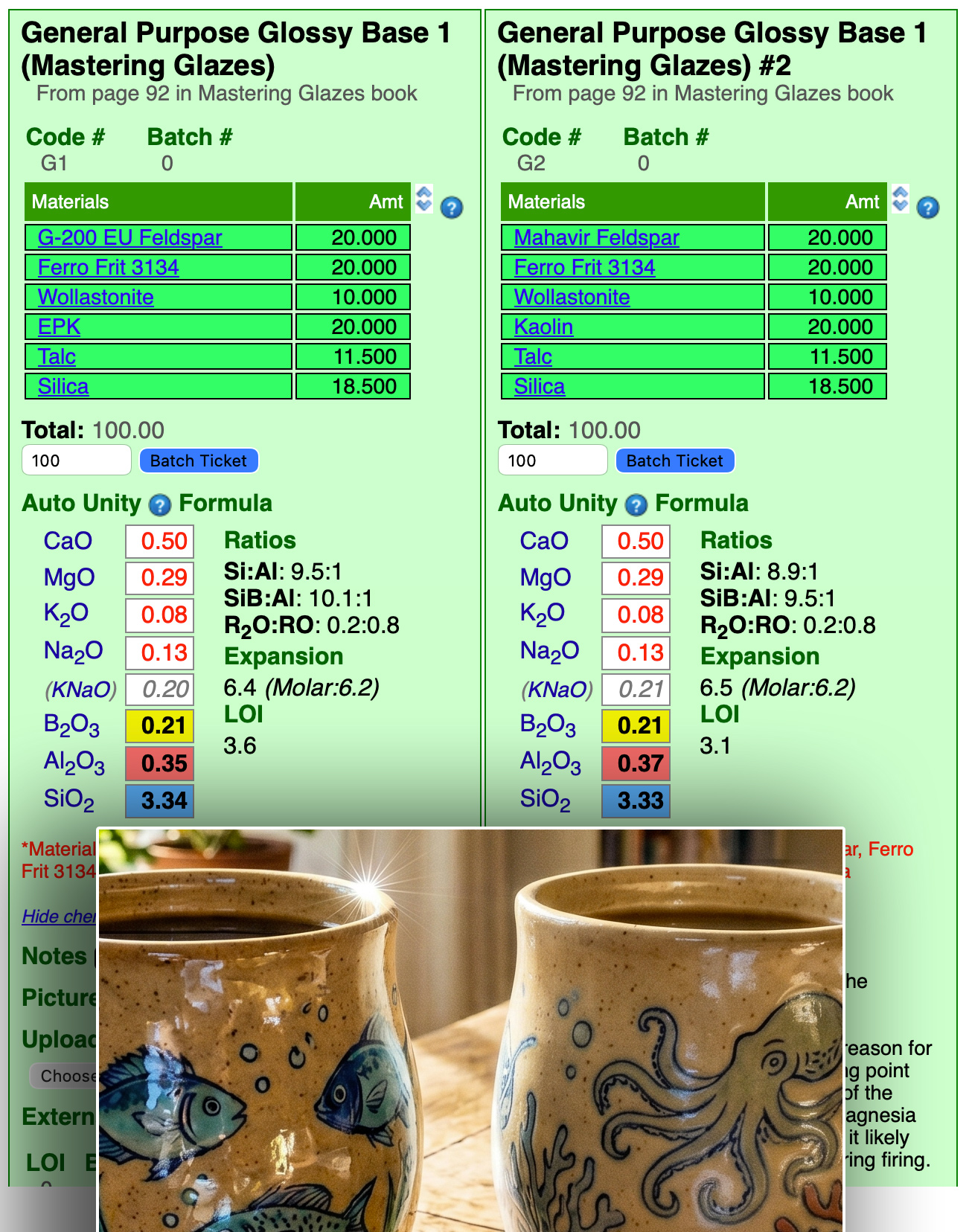
Made on Gemini from the potter's description of the problem. AI Policy
Links
| Recipes |
MGBase3 - General Purpose Glossy Base 1 (Mastering Glazes)
From page 92 in Mastering Glazes book |
| Glossary |
Tipping point
Why do ceramic processes seem to work for years and then suddenly fail? Obvious and not-so-obvious tipping points in recipes, materials and methods can trigger production disasters. |
| Typecodes |
Glaze Chemistry
Case studies where glaze chemistry was used to solve a problem. |
 PayPal | No tracking, No ads, No paywall, No transient content! Just organized, concise information constantly updated and improved. Was this helpful? Consider supporting me. |
Got a Question?
Buy me a coffee and we can talk 

https://digitalfire.com, All Rights Reserved
Privacy Policy