A plastic pottery clay for rolling ceramic tile:
Not a crazy idea when it can do what this can!
This is the dolomite body recipe L4410P (a development version of Plainsman Snow). It is monoporosa tile on steroids; this body has zero percent firing shrinkage at cone 04! Predicting the final size and keeping that size consistent is much easier with such bodies. I have measured its drying shrinkage as 6% (doing our standard SHAB test). The final size needed is 20.5 cm square. Thus, I calculate the cut size to be 20.5 / (100 - 0.06) = 21.8 cm (or 20.5 / 0.94 = 21.8 cm). To keep these flat, we put them between sheets of drywall; the process takes 2-3 days. Since no change in size occurs during firing, this body has another big advantage: Tiles stay flatter during firing (a major problem with tile production). While making wall tile using a plastic pottery body is not something for industry (especially because of the space requirements for drying), for artisans working on a small scale, a body made by mixing super plastic ball clay with dolomite produces amazing working and tactile properties. The bonus is that they work so well at low temperatures, where there are so many glazing options.

Related Pictures
QRCode mounted on Plainsman "Snow" tile

This picture has its own page with more detail, click here to see it.
Plainsman Snow clay (developed under code number L4410P) makes this QRCode mosaic possible. Each 8mm square porcelain pixel is glaze-glued onto a 21cm square 5mm thick ceramic tile made of Snow (simply rolled and cut and dewatered between sheets of Gyproc). During the bisque firing to cone 04, the Snow tile had zero shrinkage, from dry to fired, and therefore did not curl up at the edges. On refiring to melt the glaze it again stays flat. No other common plastic clay can do this! Snow continues this zero-shrinkage performance for seven more cones of firing (all the way to 4). The secret is the 40% dolomite it contains. We silicone-sealed this work front and back, now it is ready for outdoor installation.
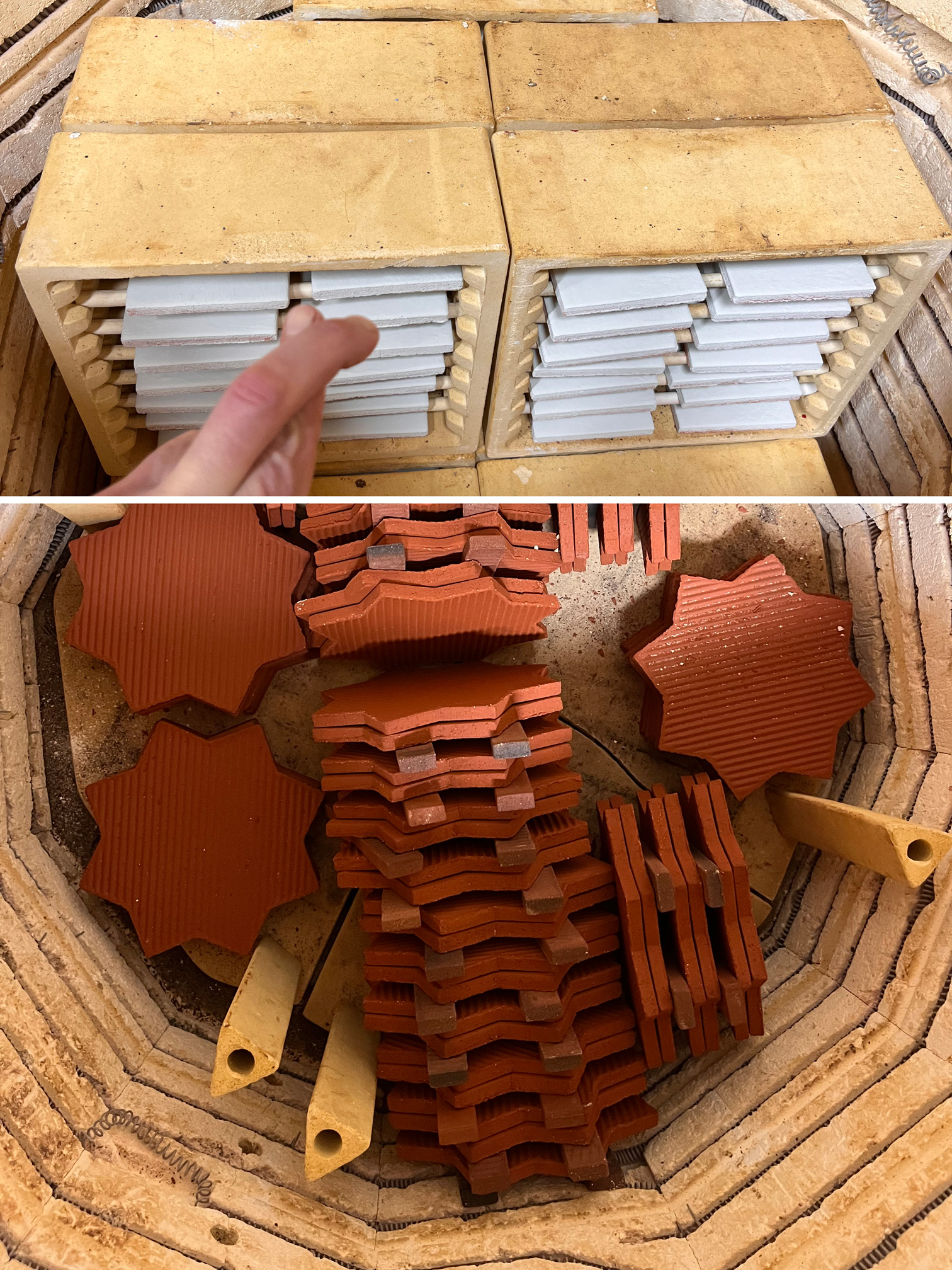
Tile stacking in an electric kiln - Fingers crossed!
This picture has its own page with more detail, click here to see it.
Small-scale operations everywhere are making tile like this. Most use plastic clay intended for pottery, which introduces more drying shrinkage, complicating drying them flat. Stacking them in the kiln can be a game of chance. Stacked too tightly and they crack (mostly because of quartz inversion). Stacked to loosely and most of the energy goes into heating the shelves and stackers. Using a clay with minimal large quartz particles is the best way to avoid dunting, however that is also a balance since such clays are more difficult to fit glazes to (without crazing).
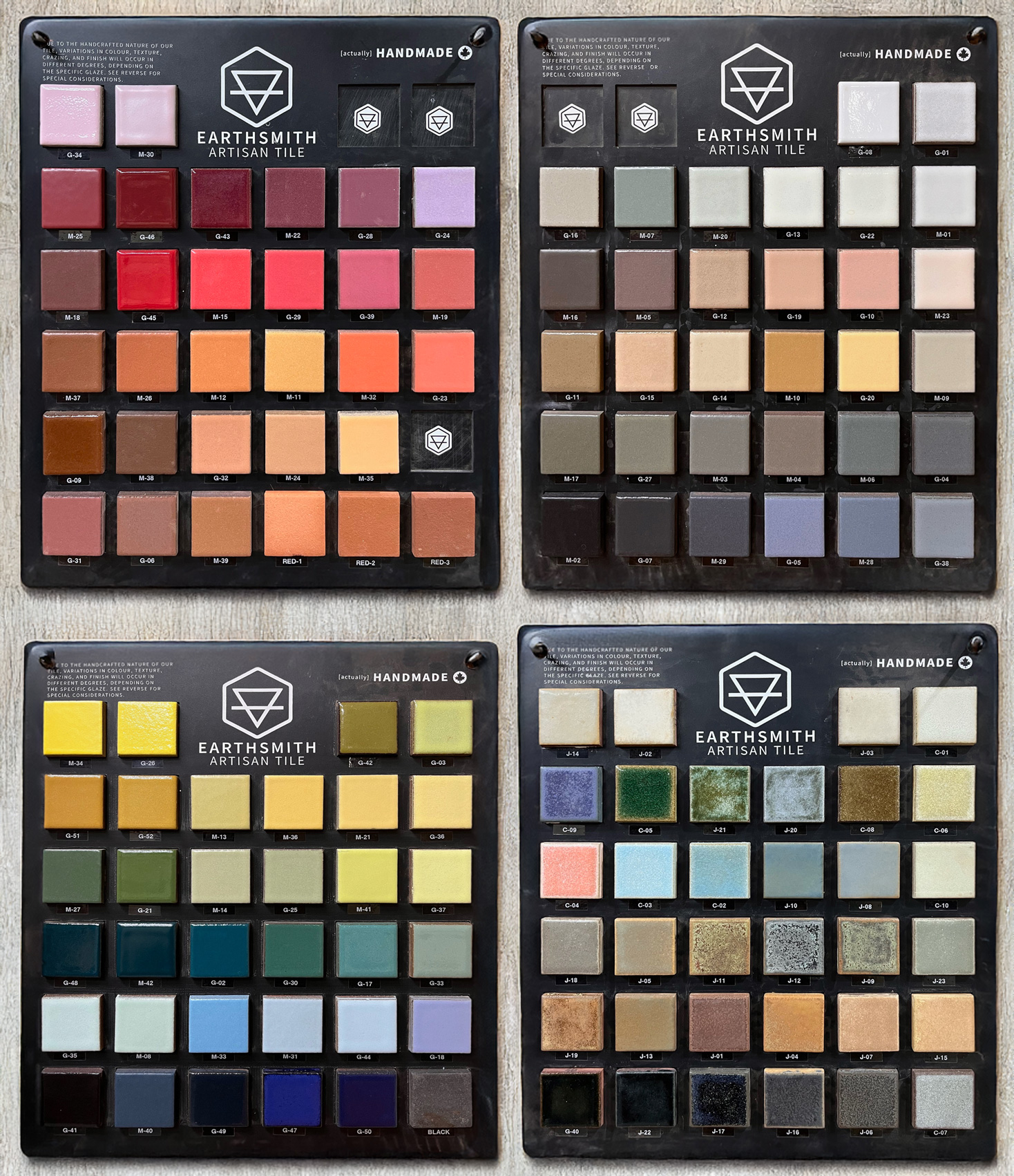
Tile that is "actually HANDMADE"
This picture has its own page with more detail, click here to see it.
This artisan, Dennis Cuku, is the king of DIY tile, making product that he calls "actually HANDMADE". He uses a red-burding terra-cotta-like middle temperature clay body. He also makes glazes in-house and fires using 36 shapes. He mixes 129 glazes and produces about 50,000 ft.² of tile per year. Tile making presents many unique challenges, not the least of which is the need for consistency and predictability of surface character and color. This endeavour is made possible with data, a lot of it. Not just glaze recipes, but many forming, glazing and firing procedures and techniques that must be documented.
Links
| Glossary |
Ceramic Tile
Tile manufacture is the largest sector of ceramic industry. Engineers overcome the very difficult technical challenges of drying and firing defect-free, flat and durable tile. Potters can do it too. |
| Articles |
Monoporosa or Single Fired Wall Tiles
A history, technical description of the process and body and glaze materials overview of the monoporosa single fire glazed wall tile process from the man who invented it. |
 PayPal | No tracking, No ads, No paywall, No transient content! Just organized, concise information constantly updated and improved. Was this helpful? Consider supporting me. |
Got a Question?
Buy me a coffee and we can talk 

https://digitalfire.com, All Rights Reserved
Privacy Policy