3919 | 3918 | 3917 | 3911 | 3910 | 3908 | 3909 | 3907 | 3901 | 3902 | 3904 | 3899 | 3898 | 3897 | 3896 | 3895 | 3893 | 3890 | 3891 | 3892 | 3888 | 3889 | 3883 | 3885 | 3882 | 3880 | 3881 | 3878 | 3876 | 3871 | 3872 | 3874 | 3869 | 3870 | 3866 | 3867 | 3864 | 3863 | 3862 | 3861 | 3860 | 3859 | 3838 | 3857 | 3858 | 3855 | 3856 | 3851 | 3853 | 3854 | 3849 | 3850 | 3852 | 3846 | 3848 | 3843 | 3840 | 3841 | 3842 | 3837 | 3836 | 3833 | 3831 | 3832 | 3829 | 3827 | 3828 | 3826 | 3824 | 3823 | 3822 | 3820 | 3819 | 3818 | 3815 | 3816 | 3817 | 3814 | 3813 | 3811 | 3810 | 3806 | 3807 | 3808 | 3805 | 3803 | 3802 | 3801 | 3800 | 3797 | 3798 | 3796 | 3793 | 3794 | 3792 | 3789 | 3786 | 3784 | 3787 | 3781 | 3779 | 3775 | 3773 | 3774 | 3772 | 3767 | 3768 | 3769 | 3762 | 3760 | 3759 | 3755 | 3752 | 3753 | 3754 | 3750 | 3748 | 3749 | 3742 | 3743 | 3745 | 3746 | 3747 | 3740 | 3737 | 3738 | 3736 | 3734 | 3733 | 3732 | 3731 | 3729 | 3728 | 3726 | 3725 | 3724 | 3723 | 3721 | 3719 | 3720 | 3718 | 3716 | 3713 | 3712 | 3711 | 3710 | 3709 | 3707 | 3708 | 3706 | 3705 | 3704 | 3702 | 3701 | 3700 | 3699 | 3698 | 3695 | 3696 | 3697 | 3692 | 3693 | 3694 | 3690 | 3691 | 3689 | 3688 | 3685 | 3686 | 3679 | 3678 | 3676 | 3675 | 3674 | 3672 | 3673 | 3663 | 3664 | 3661 | 3656 | 3657 | 3658 | 3659 | 3651 | 3652 | 3654 | 3655 | 3650 | 3649 | 3648 | 3646 | 3647 | 3644 | 3645 | 3643 | 3642 | 3640 | 3639 | 3637 | 3636 | 3634 | 3635 | 3632 | 3631 | 3629 | 3630 | 3626 | 3627 | 3624 | 3625 | 3622 | 3623 | 3620 | 3619 | 3612 | 3610 | 3611 | 3606 | 3607 | 3608 | 3609 | 3602 | 3603 | 3604 | 3605 | 3601 | 3600 | 3599 | 3598 | 3596 | 3595 | 3594 | 3593 | 3591 | 3592 | 3588 | 3589 | 3585 | 3586 | 3584 | 3580 | 3581 | 3582 | 3583 | 3579 | 3577 | 3578 | 3576 | 3574 | 3572 | 3573 | 3571 | 3570 | 3568 | 3567 | 3565 | 3562 | 3563 | 3560 | 3561 | 3559 | 3557 | 3556 | 3555 | 3554 | 3553 | 3551 | 3552 | 3550 | 3549 | 3548 | 3547 | 3546 | 3544 | 3545 | 3543 | 3542 | 3538 | 3539 | 3540 | 3541 | 3536 | 3537 | 3535 | 3534 | 3531 | 3532 | 3533 | 3529 | 3530 | 3527 | 3528 | 3526 | 3525 | 3524 | 3523 | 3522 | 3520 | 3518 | 3516 | 3517 | 3515 | 3514 | 3512 | 3513 | 3511 | 3510 | 3509 | 3508 | 3507 | 3506 | 3505 | 3504 | 3046 | 3503 | 3493 | 3494 | 3490 | 3491 | 3486 | 3489 | 3485 | 3481 | 3483 | 3492 | 3479 | 3480 | 3476 | 3477 | 3474 | 3473 | 3471 | 3470 | 3469 | 3468 | 3465 | 3466 | 3467 | 3463 | 3459 | 3460 | 3461 | 3462 | 3458 | 3457 | 3456 | 3455 | 3454 | 3452 | 3449 | 3448 | 3447 | 3446 | 3445 | 3443 | 3444 | 3442 | 3441 | 3439 | 3440 | 3437 | 3438 | 3435 | 3436 | 3431 | 3433 | 3434 | 3430 | 3427 | 3428 | 3425 | 3426 | 3424 | 3423 | 3422 | 3419 | 3421 | 3418 | 3415 | 3416 | 3417 | 3414 | 3413 | 3411 | 3412 | 3409 | 3410 | 3408 | 3401 | 3402 | 3403 | 3404 | 3406 | 3407 | 3400 | 3399 | 3397 | 3393 | 3394 | 3396 | 3392 | 3391 | 3387 | 3389 | 3390 | 3385 | 3384 | 3383 | 3382 | 3379 | 3380 | 3381 | 3378 | 3376 | 3375 | 3374 | 3373 | 3372 | 3370 | 3367 | 3368 | 3369 | 3364 | 3363 | 3360 | 3359 | 3358 | 3356 | 3355 | 3354 | 3352 | 3349 | 3348 | 3347 | 3344 | 3345 | 3346 | 3343 | 3342 | 3340 | 3338 | 3339 | 3337 | 3335 | 3336 | 3334 | 3333 | 3330 | 3322 | 3319 | 3320 | 3321 | 3317 | 3316 | 3313 | 3314 | 3315 | 3312 | 3310 | 3311 | 3309 | 3307 | 3308 | 3306 | 3304 | 3303 | 3302 | 3300 | 3301 | 3298 | 3299 | 3296 | 3295 | 3293 | 3294 | 3292 | 3291 | 3290 | 3289 | 3288 | 3286 | 3285 | 3284 | 3280 | 3281 | 3282 | 3278 | 3277 | 3272 | 3273 | 3274 | 3275 | 3276 | 3271 | 3270 | 3267 | 3268 | 3265 | 3266 | 3264 | 3262 | 3261 | 3260 | 3259 | 3258 | 3257 | 3256 | 3255 | 3253 | 3254 | 3251 | 3248 | | 3247 | 3245 | 3246 | 3244 | 3241 | 3239 | 3236 | 3237 | 3235 | 3234 | 3233 | 3231 | 3232 | 3230 | 3229 | 3201 | 3202 | 3203 | 3204 | 3205 | 3206 | 3207 | 3208 | 3209 | 3210 | 3211 | 3212 | 3213 | 3214 | 3215 | 3216 | 3217 | 3219 | 3220 | 3222 | 3223 | 3224 | 3226 | 3227 | 3228 | 3199 | 3198 | 3197 | 3195 | 3196 | 3191 | 3192 | 3193 | 3194 | 3188 | 3189 | 3187 | 3185 | 3186 | 3183 | 3181 | 3182 | 3179 | 3180 | 3177 | 3176 | 3175 | 3174 | 3173 | 3169 | 3167 | 3164 | 3162 | 3159 | 3158 | 3157 | 3154 | 3155 | 3156 | 3153 | 3149 | 3150 | 3144 | 3145 | 3146 | 3147 | 3148 | 3142 | 3143 | 3139 | 3141 | 3138 | 3136 | 3137 | 3132 | 3135 | 3131 | 3130 | 3127 | 3124 | 3125 | 3126 | 3122 | 3123 | 3121 | 3120 | 3117 | 3119 | 3116 | 3112 | 3113 | 3114 | 3109 | 3110 | 3111 | 3098 | 3099 | 3102 | 3103 | 3104 | 3105 | 3106 | 3107 | 3108 | 3096 | 3094 | 3095 | 3091 | 3092 | 3093 | 3089 | 3090 | 3087 | 3086 | 3082 | 3083 | 3084 | 3080 | 3081 | 3079 | 3078 | 3077 | 3074 | 3075 | 3076 | 3073 | 3072 | 3070 | 3053 | 3055 | 3056 | 3057 | 3058 | 3059 | 3060 | 3061 | 3062 | 3063 | 3064 | 3065 | 3066 | 3067 | 3068 | 3069 | 3052 | 3050 | 3051 | 3048 | 3049 | 3047 | 3044 | 3043 | 3042 | 3041 | 3040 | 3038 | 3039 | 3037 | 3036 | 3035 | 3034 | 3033 | 3029 | 3030 | 3031 | 3023 | 3024 | 3021 | 3022 | 3019 | 3016 | 3017 | 3018 | 3015 | 3012 | 3013 | 3014 | 3011 | 3010 | 3007 | 3008 | 3009 | 3005 | 3006 | 3004 | 3001 | 3002 | 3003 | 2999 | 2995 | 2996 | 2994 | 2991 | 2992 | 2993 | 2990 | 2989 | 2986 | 2987 | 2988 | 2982 | 2983 | 2984 | 2985 | 2979 | 2980 | 2976 | 2977 | 2974 | 2973 | 2970 | 2971 | 2967 | 2968 | 2969 | 2966 | 2964 | 2965 | 2963 | 2961 | 2962 | 2960 | 2958 | 2952 | 2953 | 2954 | 2955 | 2956 | 2950 | 2951 | 2948 | 2949 | 2945 | 2946 | 2947 | 2944 | 2943 | 2939 | 2940 | 2941 | 2942 | 2937 | 2938 | 2936 | 2935 | 2929 | 2930 | 2931 | 2932 | 2933 | 2934 | 2928 | 2927 | 2925 | 2926 | 2921 | 2922 | 2923 | 2924 | 2919 | 2920 | 2917 | 2918 | 2915 | 2916 | 2913 | 2914 | 2912 | 2911 | 2910 | 2909 | 2907 | 2908 | 2906 | 2905 | 2903 | 2904 | 2900 | 2899 | 2898 | 2893 | 2894 | 2895 | 2896 | 2897 | 2890 | 2891 | 2892 | 2887 | 2888 | 2889 | 2885 | 2882 | 2883 | 2884 | 2880 | 2881 | 2878 | 2877 | 2872 | 2873 | 2874 | 2875 | 2876 | 2871 | 2868 | 2869 | 2870 | 2866 | 2867 | 2865 | 2864 | 2862 | 2863 | 2861 | 2860 | 2858 | 2859 | 2856 | 2857 | 2854 | 2855 | 2853 | 2852 | 2848 | 2849 | 2850 | 2847 | 2845 | 2846 | 2843 | 2842 | 2840 | 2841 | 2839 | 2838 | 2837 | 2836 | 2835 | 2833 | 2834 | 2832 | 2831 | 2828 | 2829 | 2827 | 2826 | 2825 | 2824 | 2822 | 2823 | 2820 | 2821 | 2819 | 2816 | 2815 | 2814 | 2813 | 2812 | 2811 | 2793 | 2794 | 2795 | 2796 | 2797 | 2798 | 2799 | 2800 | 2801 | 2802 | 2803 | 2804 | 2805 | 2806 | 2807 | 2808 | 2809 | 2810 | 2791 | 2792 | 2790 | 2787 | 2788 | 2784 | 2785 | 2786 | 2781 | 2782 | 2780 | 2777 | 2778 | 2779 | 2776 | 2775 | 2774 | 2772 | 2771 | 2769 | 2770 | 2768 | 2767 | 2766 | 2764 | 2765 | 2762 | 2763 | 2761 | 2760 | 2759 | 2758 | 2756 | 2752 | 2753 | 2754 | 2755 | 2750 | 2751 | 2748 | 2749 | 2747 | 2745 | 2746 | 2742 | 2743 | 2740 | 2741 | 2739 | 2737 | 2738 | 2736 | 2735 | 2734 | 2733 | 2732 | 2729 | 2730 | 2731 | 2728 | 2727 | 2726 | 2723 | 2724 | 2725 | 2722 | 2719 | 2720 | 2721 | 2718 | 2716 | 2715 | 2714 | 2713 | 2712 | 2711 | 2709 | 2708 | 2706 | 2707 | 2704 | 2705 | 2703 | 2702 | 2700 | 2693 | 2694 | 2695 | 2696 | 2697 | 2698 | 2699 | 2692 | 2690 | 2691 | 2689 | 2688 | 2687 | 2686 | 2685 | 2684 | 2683 | 2680 | 2681 | 2682 | 2678 | 2679 | 2677 | 2676 | 2675 | 2674 | 2673 | 2672 | 2671 | 2670 | 2669 | 2666 | 2668 | 2664 | 2665 | 2662 | 2663 | 2660 | 2661 | 2656 | 2657 | 2658 | 2659 | 2655 | 2654 | 2653 | 2652 | 2649 | 2650 | 2651 | 2646 | 2647 | 2648 | 2643 | 2644 | 2641 | 2642 | 2639 | 2640 | 2637 | 2638 | 2635 | 2636 | 2633 | 2634 | 2631 | 2632 | 2630 | 2629 | 2627 | 2628 | 2624 | 2626 | 2621 | 2622 | 2623 | 2618 | 2619 | 2617 | 2614 | 2615 | 2616 | 2613 | 2612 | 2607 | 2608 | 2609 | 2611 | 2606 | 2605 | 2602 | 2603 | 2604 | 2600 | 2601 | 2599 | 2598 | 2597 | 2595 | 2596 | 2591 | 2592 | 2593 | 2594 | 2585 | 2586 | 2587 | 2588 | 2589 | 2590 | 2584 | 2583 | 2582 | 2581 | 2578 | 2580 | 2576 | 2577 | 2573 | 2574 | 2575 | 2572 | 2571 | 2566 | 2567 | 2569 | 2570 | 2563 | 2565 | 2562 | 2561 | 2560 | 2558 | 2559 | 2557 | 2556 | 2554 | 2555 | 2551 | 2552 | 2548 | 2549 | 2550 | 2547 | 2545 | 2546 | 2542 | 2543 | 2544 | 2540 | 2541 | 2539 | 2537 | 2536 | 2533 | 2534 | 2535 | 2531 | 2532 | 2530 | 2528 | 2525 | 2526 | 2527 | 2522 | 2523 | 2521 | 2519 | 2520 | 2518 | 2517 | 2516 | 2515 | 2514 | 2511 | 2512 | 2509 | 2510 | 2508 | 2506 | 2507 | 2505 | 2504 | 2503 | 2502 | 2501 | 2499 | 2490 | 2494 | 2495 | 2496 | 2497 | 2498 | 2489 | 2488 | 2487 | 2486 | 2485 | 2484 | 2483 | 2482 | 2481 | 2479 | 2480 | 2478 | 2474 | 2475 | 2476 | 2477 | 2472 | 2473 | 2471 | 2470 | 2465 | 2466 | 2467 | 2468 | 2469 | 2464 | 2461 | 2460 | 2459 | 2458 | 2457 | 2454 | 2455 | 2456 | 2451 | 2452 | 2453 | 2449 | 2450 | 2447 | 2448 | 2442 | 2443 | 2444 | 2445 | 2446 | 2440 | 2441 | 2439 | 2436 | 2437 | 2438 | 2434 | 2435 | 2433 | 2432 | 2429 | 2430 | 2431 | 2425 | 2426 | 2427 | 2428 | 2422 | 2423 | 2424 | 2421 | 2417 | 2418 | 2419 | 2420 | 2416 | 2415 | 2412 | 2411 | 2410 | 2408 | 2409 | 2407 | 2406 | 2405 | 2403 | 2404 | 2402 | 2401 | 2400 | 2399 | 2398 | 2397 | 2396 | 2395 | 2394 | 2392 | 2393 | 2390 | 2389 | 2387 | 2386 | 2385 | 2384 | 2383 | 2380 | 2375 | 2376 | 2377 | 2378 | 2379 | 2374 | 2373 | 2372 | 2371 | 2369 | 2370 | 2366 | 2368 | 2361 | 2362 | 2363 | 2364 | 2365 | 2360 | 2359 | 2355 | 2356 | 2357 | 2354 | 2353 | 2350 | 2351 | 2348 | 2349 | 2346 | 2347 | 2344 | 2345 | 2343 | 2342 | 2341 | 2337 | 2339 | 2340 | 2335 | 2336 | 2334 | 2333 | 2328 | 2329 | 2330 | 2331 | 2332 | 2327 | 2326 | 2323 | 2324 | 2325 | 2322 | 2321 | 2316 | 2317 | 2318 | 2319 | 2320 | 2314 | 2315 | 2311 | 2312 | 2313 | 2309 | 2308 | 2306 | 2307 | 2304 | 2305 | 2303 | 2299 | 2300 | 2301 | 2297 | 2294 | 2295 | 2296 | 2292 | 2278 | 2279 | 2280 | 2282 | 2283 | 2284 | 2285 | 2286 | 2287 | 2288 | 2289 | 2290 | 2273 | 2274 | 2275 | 2276 | 2277 | 2271 | 2270 | 2269 | 2266 | 2265 | 2263 | 2264 | 2260 | 2261 | 2259 | 2258 | 2257 | 2255 | 2256 | 2254 | 2250 | 2252 | 2249 | 2247 | 2248 | 2246 | 2242 | 2243 | 2245 | 2239 | 2240 | 2241 | 2235 | 2236 | 2237 | 2238 | 2234 | 2233 | 2232 | 2231 | 2230 | 2229 | 2225 | 2226 | 2224 | 2222 | 2223 | 2220 | 2221 | 2218 | 2219 | 2216 | 2217 | 2214 | 2215 | 2213 | 2211 | 2212 | 2210 | 2209 | 2208 | 2207 | 2206 | 2205 | 2203 | 2204 | 2202 | 2201 | 2199 | 2200 | 2198 | 2197 | 2195 | 2196 | 2194 | 2192 | 2193 | 2191 | 2189 | 2190 | 2188 | 2186 | 2187 | 2185 | 2184 | 2182 | 2183 | 2180 | 2178 | 2179 | 2176 | 2177 | 2172 | 2173 | 2174 | 2175 | 2171 | 2166 | 2167 | 2169 | 2170 | 2165 | 2156 | 2157 | 2158 | 2159 | 2161 | 2162 | 2164 | 2153 | 2154 | 2155 | 2151 | 2150 | 2148 | 2149 | 2142 | 2143 | 2144 | 2145 | 2146 | 2147 | 2140 | 2141 | 2138 | 2139 | 2136 | 2137 | 2135 | 2129 | 2130 | 2131 | 2132 | 2133 | 2134 | 2128 | 2127 | 2126 | 2125 | 2124 | 2121 | 2122 | 2123 | 2118 | 2117 | 2115 | 2116 | 2114 | 2113 | 2112 | 2111 | 2109 | 2108 | 2107 | 2106 | 2104 | 2105 | 2101 | 2102 | 2103 | 2099 | 2100 | 2096 | 2094 | 2095 | 2093 | 2092 | 2091 | 2089 | 2090 | 2088 | 2087 | 2086 | 2085 | 2084 | 2082 | 2083 | 2081 | 2078 | 2079 | 2080 | 2076 | 2077 | 2073 | 2074 | 2075 | 2071 | 2069 | 2066 | 2067 | 2068 | 2064 | 2060 | 2061 | 2062 | 2059 | 2057 | 2058 | 2052 | 2053 | 2054 | 2055 | 2056 | 2049 | 2050 | 2051 | 2048 | 2047 | 2046 | 2042 | 2043 | 2044 | 2045 | 2040 | 2039 | 2038 | 2036 | 2035 | 2029 | 2030 | 2031 | 2033 | 2034 | 2027 | 2024 | 2025 | 2026 | 2017 | 2018 | 2019 | 2020 | 2021 | 2022 | 2016 | 2015 | 2014 | 2013 | 2010 | 2011 | 2012 | 2008 | 2009 | 2007 | 2001 | 2002 | 2003 | 2004 | 2005 | 1993 | 1995 | 1998 | 2000 | 1990 | 1991 | 1987 | 1988 | 1986 | 1983 | 1984 | 1976 | 1977 | 1978 | 1979 | 1980 | 1981 | 1974 | 1975 | 1973 | 1972 | 1970 | 1968 | 1969 | 1967 | 1966 | 1965 | 1964 | 1962 | 1961 | 1959 | 1960 | 1955 | 1956 | 1957 | 1954 | 1952 | 1953 | 1950 | 1951 | 1948 | 1947 | 1946 | 1944 | 1945 | 1940 | 1941 | 1942 | 1943 | 1939 | 1934 | 1935 | 1936 | 1937 | 1938 | 1932 | 1933 | 1931 | 1930 | 1928 | 1927 | 1922 | 1923 | 1924 | 1925 | 1926 | 1916 | 1918 | 1919 | 1920 | 1921 | 1915 | 1914 | 1906 | 1907 | 1908 | 1909 | 1910 | 1911 | 1912 | 1913 | 1902 | 1904 | 1905 | 1895 | 1896 | 1897 | 1899 | 1900 | 1901 | 1891 | 1893 | 1894 | 1890 | 1888 | 1889 | 1887 | 1885 | 1882 | 1883 | 1884 | 1874 | 1875 | 1876 | 1877 | 1878 | 1879 | 1870 | 1871 | 1872 | 1873 | 1868 | 1867 | 1866 | 1865 | 1864 | 1858 | 1859 | 1860 | 1861 | 1862 | 1863 | 1854 | 1855 | 1850 | 1851 | 1852 | 1848 | 1849 | 1846 | 1847 | 1843 | 1844 | 1845 | 1842 | 1831 | 1832 | 1833 | 1834 | 1835 | 1836 | 1838 | 1839 | 1840 | 1841 | 1828 | 1829 | 1830 | 1827 | 1826 | 1825 | 1823 | 1824 | 1818 | 1819 | 1820 | 1821 | 1822 | 1817 | 1815 | 1816 | 1814 | 1812 | 1811 | 1809 | 1810 | 1807 | 1806 | 1805 | 1804 | 1803 | 1802 | 1796 | 1797 | 1798 | 1799 | 1800 | 1801 | 1792 | 1793 | 1794 | 1791 | 1790 | 1789 | 1788 | 1786 | 1785 | 1781 | 1782 | 1783 | 1784 | 1780 | 1779 | 1776 | 1775 | 1772 | 1773 | 1770 | 1769 | 1768 | 1767 | 1763 | 1765 | 1766 | 1762 | 1760 | 1761 | 1757 | 1758 | 1759 | 1755 | 1749 | 1750 | 1751 | 1752 | 1753 | 1754 | 1748 | 1747 | 1745 | 1744 | 1742 | 1743 | 1740 | 1736 | 1737 | 1735 | 1733 | 1732 | 1729 | 1722 | 1723 | 1716 | 1717 | 1718 | 1715 | 1714 | 1712 | 1713 | 1711 | 1710 | 1709 | 1708 | 1706 | 1705 | 1699 | 1700 | 1701 | 1702 | 1703 | 1704 | 1693 | 1694 | 1695 | 1696 | 1697 | 1692 | 1687 | 1690 | 1691 | 1685 | 1686 | 1683 | 1684 | 1682 | 1681 | 1679 | 1677 | 1678 | 1675 | 1674 | 1671 | 1672 | 1669 | 1668 | 1665 | 1666 | 1667 | 1663 | 1662 | 1659 | 1658 | 1657 | 1654 | 1655 | 1656 | 1650 | 1647 | 1648 | 1649 | 1638 | 1637 | 1636 | 1635 | 1628 | 1623 | 1625 | 1626 | 1627 | 1618 | 1619 | 1622 | 1614 | 1615 | 1616 | 1617 | 1613 | 1603 | 1606 | 1607 | 1608 | 1609 | 1611 | 1612 | 1591 | 1592 | 1593 | 1594 | 1595 | 1596 | 1597 | 1598 | 1599 | 1600 | 1602 | 1578 | 1579 | 1580 | 1581 | 1582 | 1583 | 1584 | 1585 | 1586 | 1587 | 1588 | 1589 | 1590 | 1576 | 1577 | 1575 | 1574 | 1573 | 1288 | 1570 | 1565 | 1566 | 1567 | 1568 | 1564 | 1560 | 1559 | 1555 | 1556 | 1557 | 1558 | 1551 | 1553 | 1554 | 1548 | 1549 | 1550 | 1547 | 1545 | 1546 | 1543 | 1544 | 1537 | 1538 | 1542 | 1533 | 1531 | 1529 | 1528 | 1525 | 1526 | 1527 | 1523 | 1524 | 1521 | 1520 | 1517 | 1518 | 1519 | 1515 | 1516 | 1509 | 1510 | 1511 | 1504 | 1505 | 1506 | 1507 | 1508 | 1499 | 1500 | 1501 | 1502 | 1503 | 1497 | 1498 | 1493 | 1494 | 1495 | 1496 | 1489 | 1488 | 1487 | 1485 | 1484 | 1479 | 1481 | 1483 | 1621 | 1477 | 1476 | 1472 | 1473 | 1471 | 1470 | 1468 | 1469 | 1467 | 1454 | 1457 | 1458 | 1459 | 1460 | 1461 | 1462 | 1463 | 1452 | 1451 | 1446 | 1447 | 1448 | 1449 | 1450 | 1442 | 1443 | 1432 | 1435 | 1436 | 1437 | 1439 | 1396 | 1399 | 1401 | 1402 | 1403 | 1404 | 1405 | 1407 | 1408 | 1409 | 1410 | 1411 | 1412 | 1413 | 1414 | 1418 | 1419 | 1420 | 1421 | 1422 | 1423 | 1424 | 1425 | 1426 | 1427 | 1429 | 1430 | 1341 | 1342 | 1343 | 1344 | 1391 | 1392 | 1393 | 1394 | 1339 | 1340 | 1337 | 1329 | 1330 | 1331 | 1332 | 1333 | 1335 | 1328 | 1327 | 1321 | 1322 | 1323 | 1324 | 1325 | 1320 | 1301 | 1302 | 1303 | 1304 | 1305 | 1306 | 1307 | 1308 | 1309 | 1310 | 1311 | 1312 | 1313 | 1314 | 1315 | 1297 | 1298 | 1299 | 1300 | 1291 | 1292 | 1293 | 1295 | 1296 | 1290 | 1280 | 1281 | 1282 | 1285 | 1286 | 1287 | 1279 | 1276 | 1277 | 1278 | 1275 | 1264 | 1265 | 1266 | 1268 | 1269 | 1270 | 1271 | 1272 | 1273 | 1261 | 1262 | 1259 | 1260 | 1257 | 1258 | 1255 | 1254 | 1252 | 1250 | 1249 | 1247 | 1243 | 1244 | 1245 | 1246 | 1241 | 1242 | 1240 | 1238 | 1239 | 1237 | 1236 | 1235 | 1231 | 1232 | 1233 | 1234 | 1228 | 1229 | 1230 | 1224 | 1225 | 1226 | 1223 | 1220 | 1221 | 1222 | 1215 | 1216 | 1217 | 1218 | 1211 | 1212 | 1213 | 1214 | 1209 | 1210 | 1208 | 1202 | 1204 | 1205 | 1206 | 1200 | 1201 | 1199 | 1196 | 1198 | 1192 | 1193 | 1189 | 1190 | 1191 | 1185 | 1178 | 1179 | 1182 | 1184 | 1166 | 1167 | 1168 | 1169 | 1171 | 1173 | 1174 | 1164 | 1163 | 1153 | 1154 | 1155 | 1156 | 1157 | 1158 | 1159 | 1160 | 1161 | 1151 | 1152 | 1147 | 1148 | 1149 | 1146 | 1142 | 1143 | 1144 | 1145 | 1138 | 1139 | 1140 | 1136 | 1133 | 1134 | 1135 | 1132 | 629 | 1130 | 1131 | 1129 | 1123 | 1124 | 1125 | 1126 | 1127 | 1128 | 1122 | 1121 | 1120 | 1119 | 1116 | 1117 | 1118 | 1115 | 1114 | 1109 | 1111 | 1112 | 1113 | 1107 | 1106 | 1099 | 1100 | 1101 | 1102 | 1103 | 1098 | 1094 | 1095 | 1097 | 1093 | 1091 | 1092 | 1089 | 1090 | 1088 | 1085 | 1086 | 1081 | 1082 | 1078 | 1079 | 1080 | 1076 | 1077 | 1075 | 1074 | 743 | 1072 | 1073 | 1070 | 1071 | 1069 | 1068 | 1067 | 1057 | 1058 | 1059 | 1060 | 1061 | 1062 | 1063 | 1064 | 1065 | 1066 | 1055 | 730 | 1047 | 1048 | 1049 | 1050 | 1051 | 1052 | 1053 | 1042 | 1043 | 1044 | 1045 | 1046 | 1036 | 1037 | 1038 | 1039 | 1040 | 1041 | 1034 | 1035 | 910 | 1032 | 935 | 1030 | 1031 | 1026 | 1027 | 1028 | 1029 | 1024 | 1025 | 1023 | 1021 | 1022 | 1018 | 1019 | 1020 | 1017 | 684 | 1016 | 1015 | 890 | 1014 | 1011 | 1012 | 1013 | 1010 | 1009 | 1008 | 1007 | 660 | 1006 | 690 | 1005 | 1002 | 1003 | 997 | 999 | 1000 | 1001 | 996 | 995 | 994 | 987 | 988 | 989 | 990 | 991 | 992 | 984 | 985 | 986 | 431 | 983 | 982 | 979 | 980 | 981 | 961 | 977 | 978 | 975 | 976 | 972 | 974 | 969 | 970 | 971 | 968 | 911 | 967 | 817 | 850 | 853 | 658 | 659 | 439 | 966 | 964 | 962 | 963 | 960 | 958 | 959 | 957 | 954 | 955 | 956 | 952 | 953 | 949 | 950 | 951 | 947 | 948 | 946 | 945 | 944 | 943 | 942 | 941 | 938 | 936 | 937 | 934 | 931 | 932 | 933 | 752 | 292 | 815 | 816 | 819 | 316 | 832 | 839 | 846 | 847 | 854 | 855 | 863 | 864 | 865 | 362 | 879 | 888 | 891 | 918 | 689 | 716 | 722 | 724 | 741 | 744 | 746 | 749 | 750 | 929 | 927 | 928 | 925 | 926 | 924 | 153 | 923 | 919 | 920 | 921 | 916 | 914 | 912 | 908 | 909 | 905 | 906 | 464 | 354 | 904 | 878 | 900 | 893 | 894 | 895 | 896 | 897 | 892 | 898 | 899 | 889 | 351 | 885 | 886 | 880 | 881 | 883 | 884 | 667 | 874 | 875 | 361 | 930 | 940 | 430 | 434 | 873 | 825 | 826 | 828 | 829 | 844 | 845 | 849 | 852 | 856 | 857 | 858 | 859 | 860 | 870 | 697 | 764 | 862 | 861 | 818 | 851 | 663 | 830 | 831 | 833 | 834 | 835 | 836 | 838 | 840 | 842 | 843 | 824 | 837 | 822 | 820 | 801 | 810 | 811 | 812 | 814 | 628 | 656 | 657 | 661 | 664 | 665 | 666 | 668 | 669 | 670 | 674 | 675 | 677 | 680 | 681 | 682 | 683 | 685 | 686 | 687 | 688 | 691 | 692 | 693 | 694 | 696 | 698 | 699 | 700 | 701 | 702 | 703 | 704 | 705 | 713 | 459 | 717 | 719 | 720 | 721 | 725 | 729 | 731 | 734 | 736 | 737 | 740 | 748 | 751 | 754 | 755 | 756 | 757 | 758 | 759 | 760 | 761 | 762 | 711 | 813 | 809 | 808 | 803 | 804 | 805 | 364 | 802 | 800 | 798 | 796 | 797 | 795 | 791 | 792 | 793 | 794 | 461 | 790 | 787 | 788 | 770 | 771 | 772 | 773 | 774 | 775 | 777 | 782 | 784 | 768 | 769 | 767 | 765 | 766 | 626 | 726 | 727 | 728 | 710 | 706 | 295 | 444 | 484 | 652 | 654 | 655 | 643 | 646 | 647 | 648 | 649 | 650 | 630 | 631 | 633 | 634 | 635 | 638 | 639 | 640 | 564 | 578 | 579 | 582 | 583 | 584 | 587 | 588 | 590 | 591 | 592 | 593 | 594 | 595 | 596 | 597 | 598 | 599 | 600 | 601 | 602 | 603 | 604 | 605 | 606 | 607 | 608 | 609 | 610 | 611 | 613 | 614 | 615 | 616 | 617 | 618 | 619 | 620 | 623 | 438 | 442 | 443 | 447 | 448 | 455 | 465 | 466 | 472 | 473 | 481 | 482 | 483 | 576 | 575 | 562 | 532 | 535 | 537 | 539 | 541 | 543 | 545 | 547 | 551 | 553 | 555 | 513 | 514 | 515 | 516 | 517 | 518 | 519 | 520 | 521 | 522 | 523 | 524 | 525 | 526 | 527 | 528 | 530 | 500 | 501 | 502 | 503 | 504 | 505 | 506 | 507 | 508 | 509 | 511 | 487 | 488 | 489 | 491 | 492 | 495 | 496 | 499 | 458 | 456 | 360 | 294 | 293 | 415 | 416 | 404 | 402 | 397 | 398 | 401 | 396 | 377 | 386 | 372 | 369 | 368 | 358 | 344 | 353 | 355 | 321 | 322 | 325 | 319 | 257 | 8 | 13 | 14 | 271 | 272 | 33 | 289 | 34 | 35 | 296 | 44 | 45 | 86 | 98 | 100 | 106 | 117 | 139 | 145 | 159 | 182 | 183 | 184 | 185 | 210 | 211 | 212 | 216 | 222 | 223 | 235 | 239 | 240 | 243 | 246 | 248 | 250 | 3587 | 3590 | 3160
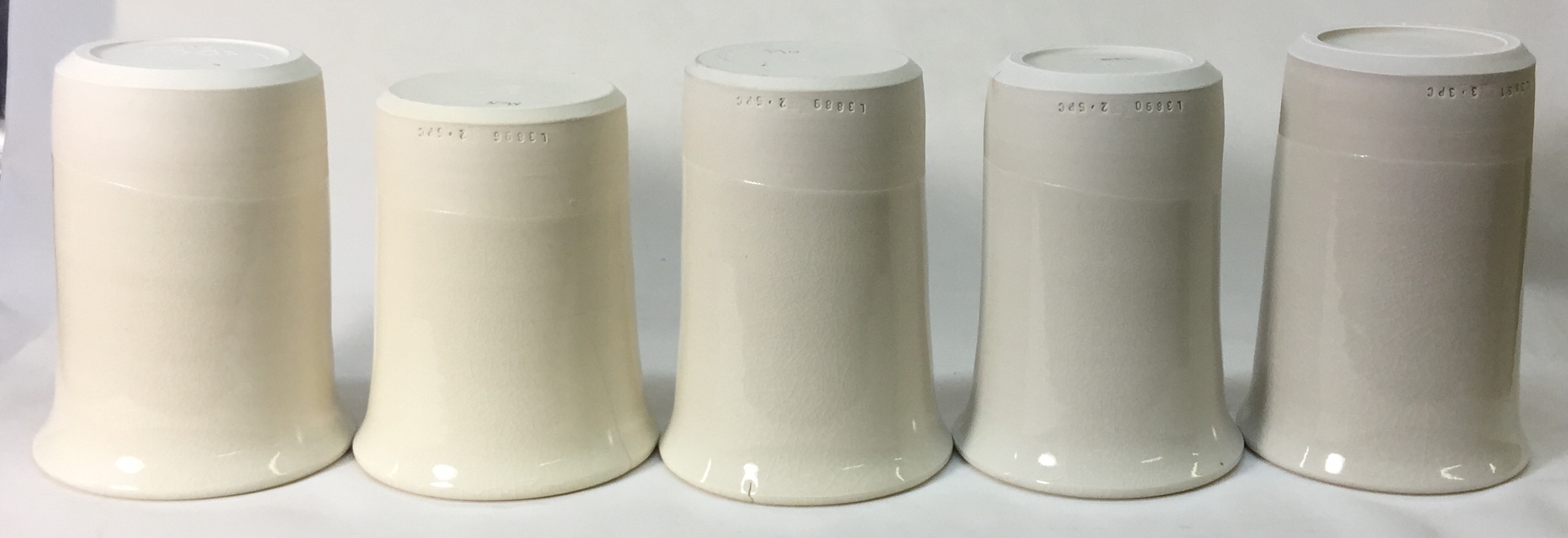
Kaolins compared in plasticity, maturity
To which kaolin can bentonite be added to gave it similar plasticity as #6 Tile kaolin while firing to a similar degree of maturity. I compared McNamee, Pioneer, EPK, Grolleg and New Zealand kaolins against the #6 Tile code number L3883. I mixed each as a 70:30 mix of kaolin and nepheline syenite. To get adequate plasticity for throwing, I added 2.5 and 5% bentonite. I slurryied each of them up in water, mixing a total of fifteen separate mixes. From each I made SHAB test bars and threw them on the potters wheel (to gauge plasticity). In the end, I found that one of these, with 5% added bentonite, is a credible substitute for #6 Tile kaolin.
Access to the full test results coming in the next few days.
Links
| Materials |
Tile #6 Kaolin
The most plastic kaolin in North America, most suitable for making plastic porcelains but increasingly being used in glazes to replace EPK. |
| Materials |
Grolleg Kaolin
A white burning kaolin from the UK, commonly used in porcelain bodies and as a glaze suspender. Sticky when wet, low plasticity. |
| Materials |
New Zealand Halloysite
The whitest burning kaolin available to potters. Low plasticity. Very sticky when wet, suspends glazes well. |
| Materials |
McNamee Kaolin
|
| Materials |
Pioneer Kaolin
Pioneer Kaolin has been a standard for many years in the North American ceramic industry and bodies and glazes. It has low plasticity. |
| Materials |
EP Kaolin
A kaolin that gels slurries (good for suspending glazes). It has two variations: a low and medium plasticity. It fires white for use in porcelain bodies. |
 PayPal | No tracking, No ads, No paywall, No transient content! Just organized, concise information constantly updated and improved. Was this helpful? Consider supporting me. |
Got a Question?
Buy me a coffee and we can talk 

https://digitalfire.com, All Rights Reserved
Privacy Policy