URL: Video: Throwing a large coil-formed vessel
Click the link below to go to this page
https://www.instagram.com/reel/DXk0OgxipU6
The potter has not joined the coils, they are simply laid one atop the other and the throwing stage is begun immediately.
Related Information
Joining rules are different
When clay is soft and plastic
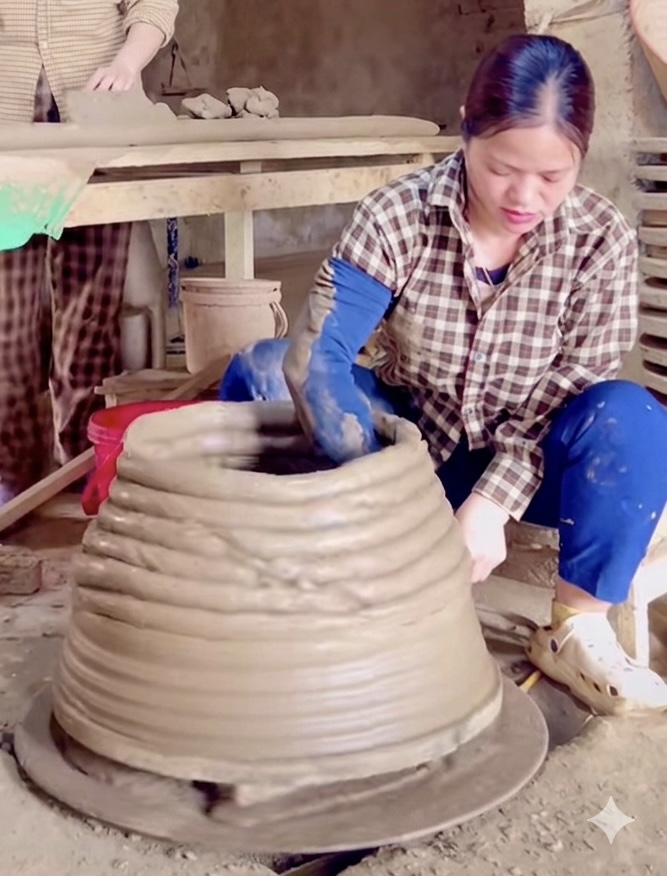
This picture has its own page with more detail, click here to see it.
This woman has quickly laid coils of smooth plastic clay on top of each other, in a conical shape. Then she simply begins throwing, centering, compressing and even verticaling the walls on the first pull. Since joining stiffer grogged clay elements, as done in typical hand-building, can be a time-consuming, elaborate process, how can this potter just ignore that?
-The clay is very soft, but very plastic (evident in how the coils are rolled, how the potter dangles the coils like a rope, yet they don’t break, and that she can make such large pieces).
-The coils are rolled on a wet table by a helper, then laid in place while still slip-covered and sticky (it glues them together on contact).
-The piece being made is large and the walls are thick. Asian potters are not averse to doing alot of trimming to thin them later.
-The mere act of applying pressure and thinning the wall also joins the coils.
Watch her do this on the Instagram video link on the home page for this post.
 PayPal | No tracking, No ads, No paywall, No transient content! Just organized, concise information constantly updated and improved. Was this helpful? Consider supporting me. |
Got a Question?
Buy me a coffee and we can talk 

https://digitalfire.com, All Rights Reserved
Privacy Policy