April 2026: We are continuing a major code rewrite, please be patient regarding any issues. If any page is not working for a period of hours, please contact us. Thank you.

Monthly Tech-Tip from Tony Hansen SignUp

No tracking! No ads! No paywall!

0.8mm thickness | 200 mesh | 325 mesh | 3D Design | 3D Modeling | 3D Printer | 3D Printing Clay | 3D Slicer | 3D-Printing | 42 mesh | A.I. in Ceramics | Abrasion Ceramics | Acidic Oxides | Agglomeration | AI at Digitalfire | Alkali | Alkaline Earths | All-in-one case mold | Amorphous | Apparent porosity | Artware | Ball milling | Bamboo Glaze | Base Glaze | Base-Coat Dipping Glaze | Basic Oxides | Batch Recipe | Bisque | Bit Image | Black Core | Bleeding of colors | Blender Mixing | Blunging | Body Bloating | Body glaze Interface | Body Warping | Bone China | Borate | Boron Blue | Boron Frit | Borosilicate | Breaking Glaze | Brick Making | Brushing Glaze | Calcia Matte | Calcination | Calculated Thermal Expansion | Candling | Carbon Burnout | Carbon trap glazes | CAS Numbers | Casting Slip | Casting-Jiggering | Catch Glaze | Celadon Glaze | Ceramic | Ceramic Binder | Ceramic Decals | Ceramic Glaze | Ceramic Glaze Defects | Ceramic Ink | Ceramic Material | Ceramic Oxide | Ceramic Slip | Ceramic Stain | Ceramic Tile | Ceramic Transfer | Ceramics | Characterization | Chemical Analysis | Chromaticity | Clay | Clay body | Clay Body Porosity | Clay Stiffness | Clays for Construction | Clays for Ovens and Heaters | Co-efficient of Thermal Expansion | Code Numbering | Coil pottery | Colloid | Colorant | Commercial hobby brushing glazes | Cone 1 | Cone 5 | Cone 6 | Cone plaque | Content Management System | Copper Red | Cordierite Ceramics | Crackle glaze | Cristobalite | Cristobalite Inversion | CRM | Crucible | Crystalline glazes | Crystallization | Cuerda Seca | Cutlery Marking | Decomposition | Deflocculation | Dehydration | Differential thermal analysis | Digitalfire API | Digitalfire Foresight | Digitalfire Insight | Digitalfire Insight-Live | Digitalfire Reference Library | Digitalfire Taxonomy | Dimpled glaze | Dinnerware Safe | Dip Glazing | Dipping Glaze | Dishwasher Safe | Displacer | Do-It-Yourself | Drop-and-Soak Firing | Drying Crack | Drying Performance | Drying Shrinkage | Dunting | Dust Pressing | Earthenware | Efflorescence | Encapsulated Stain | Engobe | Eutectic | Fast Fire Glazes | Fat Glaze | FDM, SLA, SLS, MEX 3D printing technologies | Feldspar Glazes | Fining Agent | Firebrick | Fireclay | Fired Strength | Firing Schedule | Firing Shrinkage | Flameware | Flashing | Flocculation | Fluid Melt Glazes | Flux | Food Safe | Foot Ring | Forming Method | Formula Ratios | Formula Weight | Frit | Fritware | Functional | GHS Safety Data Sheets | Glass vs. Crystalline | Glass-Ceramic Glazes | Glaze Blisters | Glaze Bubbles | Glaze Chemistry | Glaze Compression | Glaze Crawling | Glaze Crazing | Glaze Durability | Glaze fit | Glaze Gelling | Glaze laydown | Glaze Layering | Glaze Mixing | Glaze Recipes | Glaze shivering | Glaze Shrinkage | Glaze thickness | Globally Harmonized Data Sheets | Glossy Glaze | Green Strength | Grog | Gunmetal glaze | High Temperature Glaze | Hot Pressing | Incised decoration | Industrial clay body | Infill and Support | Ink Jet Printing | Inside-only Glazing | Iron Red Glaze | Jasper Ware | Jiggering | JSON | Kaki | Kiln Controller | Kiln Firing | Kiln fumes | Kiln venting system | Kiln Wash | Kneading clay | Kovar Metal | Laminations | Leaching | Lead in Ceramic Glazes | Leather hard | Limit Formula | Limit Recipe | Liner Glaze | Liner Glazing | Liquid Bright Colors | LOI | Low Temperature Glaze | Magnesia Matte | Majolica | Managed Service Provider | Marbling | Material Substitution | Matte Glaze | Maturity | Maximum Density | MDT | Mechanism | Medium Temperature | Melt Fluidity | Melting Temperature | Metal Oxides | Metallic Glazes | Micro Organisms | Microwave Safe | Mineral phase | Mineralogy | Mocha glazes | Mohs Hardness | Mold Natches | Mold Shell Flange | Mole% | Monocottura | Mosaic Tile | Mottled | Native Clay | Non Oxide Ceramics | Oil-spot glaze | Once fire glazing | Opacifier | Opacity | Ovenware | Overglaze | Oxidation Firing | Oxide Formula | Oxide Interaction | Oxide System | Particle classification | Particle orientation | Particle Size Distribution | Particle size reduction | Particle Sizes | PCE | Permeability | Phase Diagram | Phase Separation | Physical Testing | Pinholing | Plainsman Clays | Plaster Bat | Plaster table | Plasticine | Plasticity | Plucking | Porcelain | Porcelain Insulators | Porcelaineous Stoneware | Portable Document Format | Pour Glazing | Pour Spout | Powder Processing | Precipitation | Primary Clay | Primitive Firing | Propane | Propeller Mixer | Pugmill | Pyroceramics | Pyrometric Cone | Quartz Inversion | Raku | Reactive Glazes | Reduction Firing | Reduction Speckle | Refiring Ceramics | Refractory | Refractory Ceramic Coatings | Representative Sample | Restaurant Ware | Rheology | Rutile Blue Glazes | Salt and Soda firing | Sanitary ware | Sculpture | Search Engine Optimization | Secondary Clay | Shino Glazes | Side Rails | Sieve | Sieve Shaker | Silica:Alumina Ratio | Silk screen printing | Sintering | Slaking | Slip Casting | Slip Trailing | Slipware | Slurry | Slurry Processing | Slurry Up | Soaking | Soluble colors | Soluble Salts | Specific gravity | Splitting | Spray Glazing | Stain Medium | Stoneware | Stull Chart | Sulfate Scum | Sulfates | Surface Area | Surface Tension | Suspension | Tapper Clay | Tenmoku | Terra Cotta | Terra Sigilatta | Test Kiln | Theoretical Material | Thermal Conductivity | Thermal shock | Thermocouple | Thixotropy | Throwing | Tipping point | Tony Hansen | Toxicity | Trafficking | Translucency | Transparent Glazes | Triaxial Glaze Blending | Ultimate Particles | Underglaze | Unity Formula | Upwork | Variegation | Viscosity | Vitreous | Vitrification | Volatiles | Water Content | Water in Ceramics | Water Smoking | Water Solubility | Wedging | Whiteware | WooCommerce | Wood Ash Glaze | Wood Firing | WordPress | Zero3 | Zero4 | Zeta Potential

Wood Firing

A method of firing pottery in a fuel burning kiln (using wood) rather than gas. Temperatures beyond cone 10 can be achieved.

Key phrases linking here: wood firing - Learn more

Details

These H440 and H550 clays have been fired in a wood kiln. They were unglazed.

Wood firing differs from gas and salt firing in that the fuel itself becomes part of the surface process: flame, ash, and volatilized alkalis from burning wood interact directly with the clay over many hours or days to produce flashing, ash glaze, and highly variable surfaces.
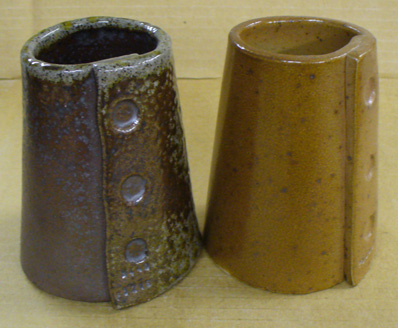
The technique is used by necessity in many countries and by choice in others. A properly designed kiln is capable of delivering high temperatures and so it is very practical to make stoneware and porcelain.

Wood-fired ware is prized because no two pieces are ever alike: the long firing, moving flame, drifting ash, and kiln atmosphere leave each pot with surfaces that record the firing itself, giving it a depth, spontaneity, and sense of natural history that cannot be duplicated in gas or electric kilns.

Related Information

Large wood-fired slip-decorated vessels

By Kate Johnston of NC, USA


This picture has its own page with more detail, click here to see it.

Kate’s pots are made with local materials, boldly carved with organic patterns inspired by Art Deco design, and fired in a large wood-burning kiln. Kate shows her pots internationally and has lectured and taught throughout the USA.

Test piece to demonstrate flashing

From a Manabigama wood fired kiln


This picture has its own page with more detail, click here to see it.

From Robert Self. This firing went past cone 13. The body is Laguna Speckstone.

Redart-as-a-glaze test piece

Wood-fired on Laguna B-Mix


This picture has its own page with more detail, click here to see it.

Fired to cone 13 in a Manabigama wood fired kiln.

Flashing from wood firing

The range of possible surfaces


This picture has its own page with more detail, click here to see it.

Made by Robert Self. This is Laguna White Stoneware body fired to cone 13 in a Manabigama wood fired kiln.

Links

Glossary Kiln Firing
All types of ceramic are fired in a kiln to cement particles together to produce a hard and water and temperature resistant product.
Glossary Flashing
A visual effect that occurs in wood and salt firing of ceramic ware. Many potters value the effect and use special materials and firing methods to enhance it.
By Tony Hansen
Follow me on

Got a Question?

Buy me a coffee and we can talk



https://digitalfire.com, All Rights Reserved
Privacy Policy