Plainsman Next Chapter
Related Information
M340 and its glaze made from materials mined in Canada

This picture has its own page with more detail, click here to see it.
This is a cone 6 stoneware mug made using Plainsman M340. It is 100% raw clays mined from the Whitemud formation in the Ravenscrag area of southwestern Saskatchewan. The clay surface can be made white or black using our L3954B engobe. In this case the black version has been applied at the leather hard stage (by pour-in, pour-out on the inside and dipping on the outside). The GA6-B transparent amber base glaze is made using ~80% Canadian and Mexican-made ingredients.
A Highly Plastic White Burning Kaolinized Sand:
This proves we can have a Canadian kaolin

This picture has its own page with more detail, click here to see it.
This is kaolinized sand from Flintoft, Saskatchewan. It is among clays I am currently rediscovering. This is far more plastic and fires much whiter than the Ravenscrag quarry equivalent. Consider highlights of physical tests to characterize it (data shown lower left):
-Super refractory (thus theoretically pure). The SHAB test bars (lower right from cone 10R and 10 down to 6 oxidation) correspond to the SHAB test results in the chart. Even at cone 10, this has an amazing 19% porosity. With almost zero shrinkage.
-Plasticity: Excellent (notice the texture of the plastic material in the close-up photo on the upper left).
-The DFAC test disk upper right shows perfect drying performance and very low soluble salts.
-White burning: The top bar is reduction-fired yet barely darker than the one below it at the same temperature in oxidation (indicating low iron content).
-Centre-bottom: G1947U clear glaze on it fired at cone 10R.
-Easy-to-access in new and old quarry sites.
I compared this with about 10 other clays in the area, doing the same for all of them, preserving a treasure trove of data for clays I have been overlooking.
Mel Noble at Plainsman Clay's Ravenscrag, Saskatchewan quarry

This picture has its own page with more detail, click here to see it.
Six different sedimentary clays are extracted from this quarry. It was opened in the 1970s, the best location available at the time. These test bars were made by slaking select lumps from each layer (thus exhibiting their best performance). The left-most dried test bars show the layers (top to bottom). The A1 top layer is the most plastic and has the most iron contamination (it is used in the most speckled reduction firing bodies). A2, the second one down, is a ball clay (similar to commercial products, although darker burning), it is very refractory and the base for Plainsman Fireclay. A3, third from top, is a complete buff high-temperature stoneware (like H550), although sandy and over-mature at cone 10. 3B, third from bottom, is a smooth medium-temperature stoneware; it contains significant natural feldspar (although fired color and particulate contamination are the most variable). The second from the bottom, 3C. fires the whitest and is the most refractory (it is the base for H441G). The bottom one, 3D, the best product in the quarry. Although the least plastic and most silty, it is also very fine particled and the cleanest (consistently free of particulate impurities and sand), it pairs very well with a ball clay to make a cone 6 stoneware.
Here is What Processing a Clay Can Do

This picture has its own page with more detail, click here to see it.
The clay is Plainsman 3B.
Left: Without processing, other than grinding to 42 mesh (currently the finest Plainsman can grind on a practical scale). When fired toward zero porosity it burns like this (at cone 6, 8, 9, 10 and 10R bottom to top). Of course, these are not big issues for non-vitreous rustic bodies fired at cone 6. The speckle and bloating are caused by impurity iron-bearing particles and others having an LOI (they decompose and produce gases that cause the bloats).
Right: The impurity particles make up a small percentage; they can be removed in the lab by sieving to produce a natural porcelain that fully vitrifies by cone 6 (the middle bar). Only about 5% of the material was removed to produce this amazing product (I call it MNP).
Imagine what could be done if this raw material could be mined further east, where clay quality is much better!
Rutile Blues - Almost every single stoneware potter uses them
These are made from Canadian materials and recipes
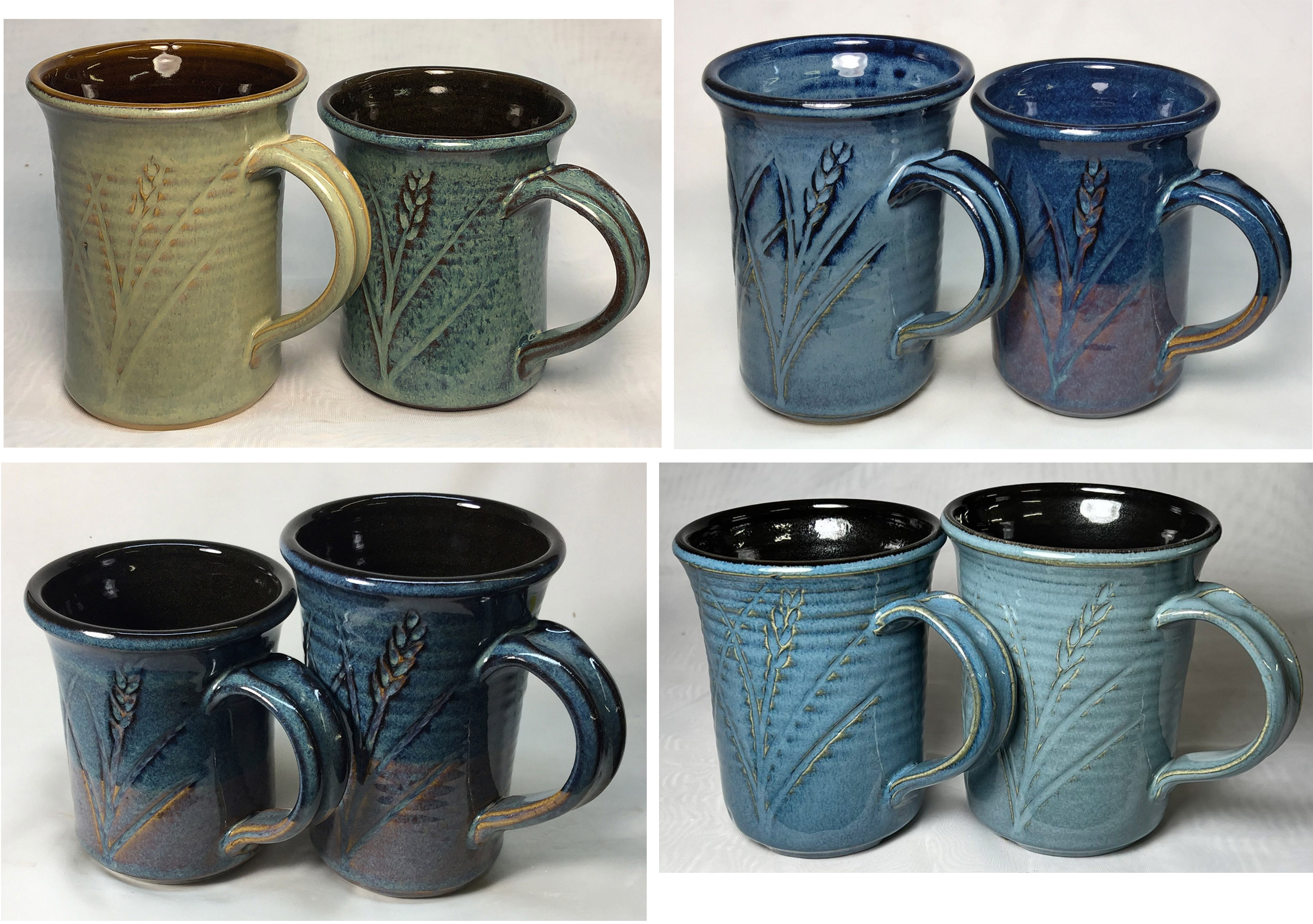
This picture has its own page with more detail, click here to see it.
There is a lot of magic, Canadian magic, in this picture. Pretty well every single potter working at mid-temperature needs rutile blue, gloss black, honey amber and transparent glazes (even multiple versions of each). And almost all need a base slip (or engobe). Here they are.
Upper left: GA6-C and GA6-B on light and dark burning bodies.
Upper right: GR6-M and GA6-C on M340 (with black engobe L3954B).
Lower left: GA6-C and GA6-B on M340 (with black engobe).
Lower right: GR6-M, G3914A, G2926BL on slow and fast cooled mugs.
Every glaze company makes multiple variations of each of these, especially rutile blues (or floating blues). Unfortunately, they often do not fit Plainsman Clays. But these do, in fact, they are adjustable (and better in other ways, as well as less expensive). Plainsman Clays mines and makes most of the raw materials, this is a great opportunity, hopefully soon realized.
Co-locate the QC Lab/Studio With Production:
So many good reasons to do this.
 Created using a simple prompt AI Policy
This picture has its own page with more detail, click here to see it.
In almost all cases, it is better to physically locate your quality control (QC) lab and studio close to or integrated with the clay body production facility. Here's why:
1. Faster Feedback Loop: Problems in production can be tested and addressed immediately. QC staff can pull samples directly from the line and respond in real time.
2. Improved Collaboration: Informal conversations and direct observation encourage faster recognition of issues and shared ownership of product quality. Production staff can observe lab tests and better understand why certain process controls matter.
3. Better Testing Relevance: Tests (throwing, casting, drying, glazing, firing) reflect the exact materials and conditions used in production, not outdated or transported samples. Factors surrounding run production are known.
4. Shared Culture of Quality: When the lab is physically distant, it can become an “ivory tower.” On-site, it becomes part of the process — not an external check, but a partner. Visibility of the lab reinforces its role in continuous improvement.
5. Lower Cost and Logistics: Less delay, double handling, and easier scheduling. Equipment and space can be shared.
Recognize these universal oxidation glazes?
Almost every potter needs a Albany brown and rutile blue.
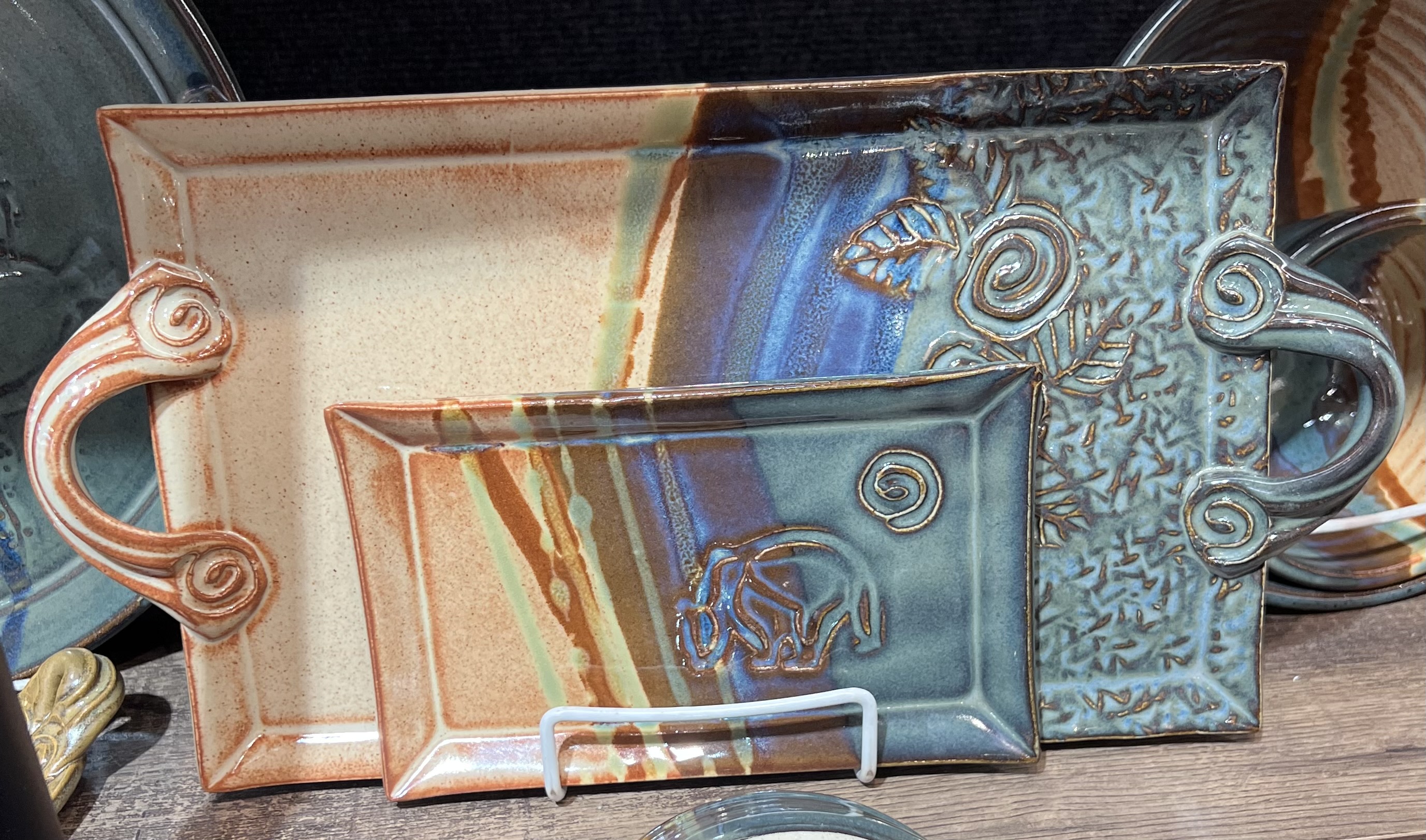
This picture has its own page with more detail, click here to see it.
These are made by Barbara Childs Pottery (I saw them on sale in a tourist shop in Alaska). To keep costs down, I first assumed they use dipping glazes they mix themselves. Potter's Choice PC-32 Albany Slip Brown and PC-20 Rutile Blue hobby glazes emulate these long time pottery glaze recipes. However, a reader noted that Barabara Childs uses Clay Art Center’s Stellar Rust and Floating Blue (with guest appearances by Blue Green). But Amaco and Clay Art don't just use the traditional recipes; they adapt and improve them. Consider the rutile blue. Neither is using the traditional G2826R floating blue recipe, there are new and better ways using recipes like GA6-C and GR6-M. Likewise, with the brown, they are not using the traditional G2415E Albany Brown recipe. Rather, they improve it (e.g. like with G3933G1). High on their list of improvements would have been a way to reduce or remove the lithium to cut costs. Maybe you are a hobbyist and don’t feel you need to DIY your costs down. But do your customers feel the same way? Not buying just ten small jars of hobby brushing glaze will pay for a mixer and much of the ingredients to make gallons of each of these as dipping glazes. It will also set you on the road to gradually improving the glazes you use. And even reducing your prices. What about buying premixed powders? Yes, that is much less expensive. But if you are mixing the glaze from one manufacturer with the clay body from another, crazing is an ever-present issue. Mixing your own enables an adjustment to fix the problem.
I once tolerated this amount of pinholing:
Then I discovered drop-and-hold firing

This picture has its own page with more detail, click here to see it.
This cone 6 vase was made from a coarse-grained stoneware body typical of those long produced by Plainsman Clays. These materials performed exceptionally well at cone 10 reduction, but when similar bodies began being fired at cone 6 oxidation, pinholing often became a challenge. Why? The coarser particle structure creates fewer but larger pathways for escaping decomposition gases, concentrating gas flow through localized vents and leaving behind pits like those visible here. A the gas is generated from fewer larger particles, concentrating it.
Yet today many potters fire these same clays with little or no pinholing. Electronic kiln controllers deserve much of the credit, making drop-and-hold and slow-cooling schedules practical. Equally important, I formulate glazes with enough melt fluidity to heal gas-release craters during the hold, while maintaining sufficiently low surface tension to avoid trapping gases in bubbles that later become blisters. Commercial glaze manufacturers have quietly optimized for these same properties.
The physical tests on which Digitalfire was built:
They are in danger
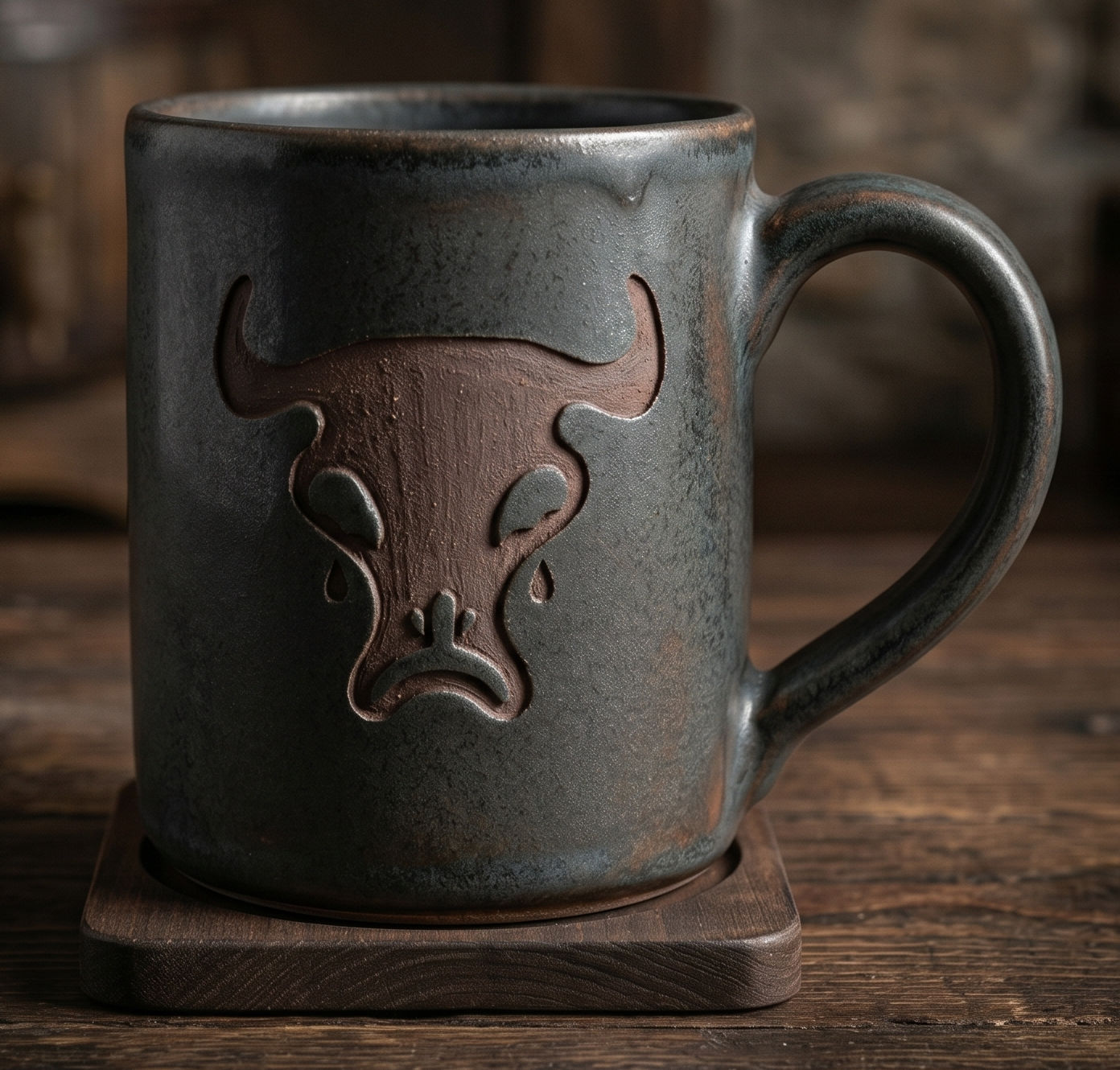
This picture has its own page with more detail, click here to see it.
This was posted June 18:
The lawyer's letter had an additional demand: "Remove any documentation or data of DigitalFire from Plainsman’s premises" (this may differ from what Plainsman itself is saying, not sure why). This was confusing, as any data is digital, so I interpreted it to mean all of my physical materials in the lab from and by which the data at Digitalfire was partially built.
There were hundreds of projects in the pipeline producing data. Promising ones were DIY dipping glazes, base coat dipping glazes, an Alberta slip calcination pilot, casting Coffee clay (without raw manganese or umber), casting M390, M340 and even H440, a new 440-on-steroids, 200 mesh MNP PR3D work, the beer bottle demo casting, better and new engobes, DIY underglaze, an amazing iron red glaze, and so much more. I was learning the power of CAD, donating 3D printers. There were countless projects to help customers navigate the idiosyncratic clays. And for companies/people from around the world. The physical assets could have been the basis for a one-of-a-kind Digitalfire field school for DIY clay-gathering and testing. Luke Lindoe worked there. His books and the personal records, and those of past techs in the local ceramic industry are there. I knew every square inch, and resisting the demand to dismantle it two years ago got me fired the first time. It was the place I discovered smectite as a catalyst for translucency, Crystal Ice, 3D case molding, the amazing G2934 base matte (and gunmetal black), drop and hold firing, how to calculate Alberta slip, flow GLFL testing, SHAB test procedures, so many glaze chemistry success stories. Perhaps most important, records of testing and recent trips to Flintoft, the Blue Hills, Claybank and other sites having much better clay than the current mine (no lab has ever documented these amazing clays like I did).
Plainsman.ca site down for good
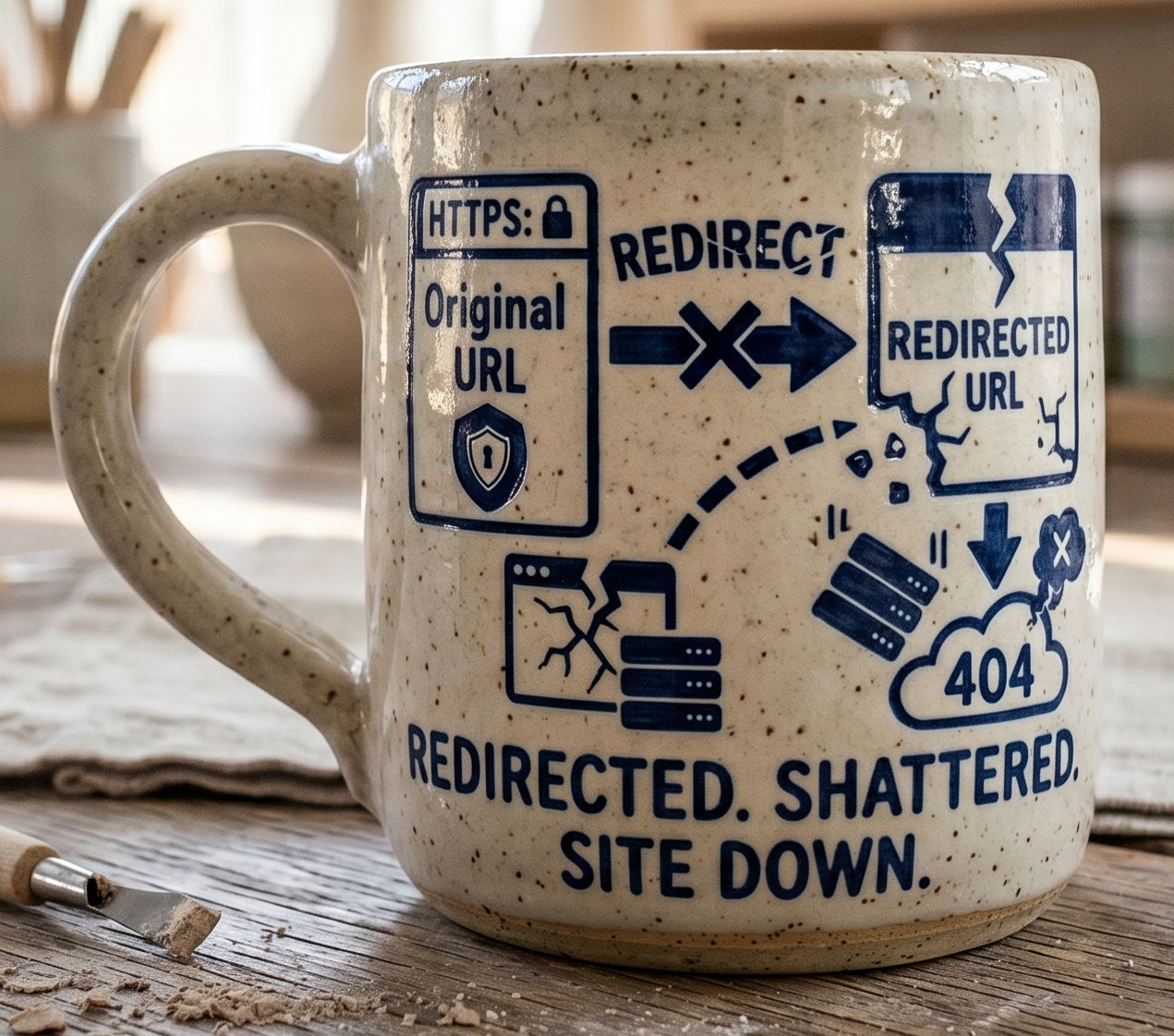
This picture has its own page with more detail, click here to see it.
I bought the URL PlainsmanClays.ca in 2021 and maintained it on my own server, at my own expense, as an active backup and prototyping site for the main dot-com site. Plainsman demanded to "return it", under threat of legal action. I transferred it to them on June 18, for free, as a sign of good faith. I had also been hosting the DNS records and have removed them. That meant that body usage information and problem mitigation, testing data, example pieces, glaze recipe suggestions, casting instructions, the Celebration project, etc. that took decades to carefully compile (based on and built from many, many hundreds of customer support issues), are gone. Information on the use of Alberta Slip, Ravenscrag Slip, bodies like Polar Ice, M370, M340 and many others, recommended base glaze recipes to fit the bodies, engobe information, firing schedules, and more. Important terms on all of the pages linked automatically into Digitalfire. I expressed regret for this and stated the impact on Digitalfire: Thousands of links to the Plainsman website would stop working because they depended on the existence of an API there. Perhaps Plainsman can be convinced to restore this valuable resource.
As a further sign of goodwill today, I helped them recover from losing their Bitwarden password. This enabled login to their own GoDaddy account to get the URL plainsmanpotterysupply.com (which they accused me of harbouring). I helped them login to their own Gmail account which I also did not have access to (GoDaddy needed it for login). This was possible because I discovered that one of the browsers on an old computer I once supplied for use there, autofilled the Google password. And an Android phone I supplied for 2-factor logins, which I still have, was able to scan the 2-factor challenge code for the Google login.
 PayPal | No tracking, No ads, No paywall, No transient content! Just organized, concise information constantly updated and improved. Was this helpful? Consider supporting me. |
Got a Question?
Buy me a coffee and we can talk 

https://digitalfire.com, All Rights Reserved
Privacy Policy