A Low Cost Tester of Glaze Melt Fluidity
A One-speed Lab or Studio Slurry Mixer
A Textbook Cone 6 Matte Glaze With Problems
Adjusting Glaze Expansion by Calculation to Solve Shivering
Alberta Slip, 20 Years of Substitution for Albany Slip
An Overview of Ceramic Stains
Are You in Control of Your Production Process?
Are Your Glazes Food Safe or are They Leachable?
Attack on Glass: Corrosion Attack Mechanisms
Ball Milling Glazes, Bodies, Engobes
Binders for Ceramic Bodies
Bringing Out the Big Guns in Craze Control: MgO (G1215U)
Can We Help You Fix a Specific Problem?
Ceramic Glazes Today
Ceramic Material Nomenclature
Ceramic Tile Clay Body Formulation
Changing Our View of Glazes
Chemistry vs. Matrix Blending to Create Glazes from Native Materials
Concentrate on One Good Glaze
Converting between Oxide Weight %, Mole % and Unity Formula
Copper Red Glazes
Crazing and Bacteria: Is There a Hazard?
Crazing in Stoneware Glazes: Treating the Causes, Not the Symptoms
Creating a Non-Glaze Ceramic Slip or Engobe
Creating Your Own Budget Glaze
Crystal Glazes: Understanding the Process and Materials
Deflocculants: A Detailed Overview
Demonstrating Glaze Fit Issues to Students
Diagnosing a Casting Problem at a Sanitaryware Plant
Drying Ceramics Without Cracks
Duplicating Albany Slip
Duplicating AP Green Fireclay
Electric Hobby Kilns: What You Need to Know
Fighting the Glaze Dragon
Firing Clay Test Bars
Firing: What Happens to Ceramic Ware in a Firing Kiln
First You See It Then You Don't: Raku Glaze Stability
Fixing a glaze that does not stay in suspension
Formulating a body using clays native to your area
Formulating a Clear Glaze Compatible with Chrome-Tin Stains
Formulating a Porcelain
Formulating Ash and Native-Material Glazes
G1214M Cone 5-7 20x5 glossy transparent glaze
G1214W Cone 6 transparent glaze
G1214Z Cone 6 matte glaze
G1916M Cone 06-04 transparent glaze
Getting the Glaze Color You Want: Working With Stains
Glaze and Body Pigments and Stains in the Ceramic Tile Industry
Glaze chemistry using a frit of approximate analysis
Glaze Recipes: Formulate and Make Your Own Instead
Glaze Types, Formulation and Application in the Tile Industry
Having Your Glaze Tested for Toxic Metal Release
High Gloss Glazes
Hire Us for a 3D Printing Project
How a Material Chemical Analysis is Done
How desktop INSIGHT Deals With Unity, LOI and Formula Weight
How to Find and Test Your Own Native Clays
I have always done it this way!
Inkjet Decoration of Ceramic Tiles
Is Your Fired Ware Safe?
Leaching Cone 6 Glaze Case Study
Limit Formulas and Target Formulas
Low Budget Testing of Ceramic Glazes
Make Your Own Ball Mill Stand
Making Glaze Testing Cones
Monoporosa or Single Fired Wall Tiles
Organic Matter in Clays: Detailed Overview
Outdoor Weather Resistant Ceramics
Painting Glazes Rather Than Dipping or Spraying
Particle Size Distribution of Ceramic Powders
Porcelain Tile, Vitrified Tile
Rationalizing Conflicting Opinions About Plasticity
Ravenscrag Slip is Born
Recylcing Scrap Clay
Reducing the Firing Temperature of a Glaze From Cone 10 to 6
Setting up a Clay Testing Program in Your Company or Studio
Simple Physical Testing of Clays
Single Fire Glazing
Soluble Salts in Minerals: Detailed Overview
Some Keys to Dealing With Firing Cracks
Stoneware Casting Body Recipes
Substituting Cornwall Stone
Super-Refined Terra Sigillata
The Chemistry, Physics and Manufacturing of Glaze Frits
The Effect of Glaze Fit on Fired Ware Strength
The Four Levels on Which to View Ceramic Glazes
The Majolica Earthenware Process
The Potter's Prayer
The Right Chemistry for a Cone 6 Magnesia Matte
The Trials of Being the Only Technical Person in the Club
The Whining Stops Here: A Realistic Look at Clay Bodies
Those Unlabelled Bags and Buckets
Tiles and Mosaics for Potters
Toxicity of Firebricks Used in Ovens
Trafficking in Glaze Recipes
Understanding Ceramic Materials
Understanding Ceramic Oxides
Understanding Glaze Slurry Properties
Understanding the Deflocculation Process in Slip Casting
Understanding the Terra Cotta Slip Casting Recipes In North America
Understanding Thermal Expansion in Ceramic Glazes
Unwanted Crystallization in a Cone 6 Glaze
Using Dextrin, Glycerine and CMC Gum together
Volcanic Ash
What Determines a Glaze's Firing Temperature?
What is a Mole, Checking Out the Mole
What is the Glaze Dragon?
Where do I start in understanding glazes?
Why Textbook Glazes Are So Difficult
Working with children
Studio Management Software 2026 (booking)
As the economics of making and selling pottery become harder, are you thinking of turning to teaching to help sustain a studio? There certainly is a market; pottery is increasingly being offered as a supported creative experience: customers pay for access to instruction, equipment, materials and firing rather than assembling a home studio and learning to manage the entire process. Many studios accommodate everyone from occasional visitors to committed makers who prefer shared facilities. Booking automation is almost essential nowadays. There are so many options, in trying to understand each better, I am researching examples of studios and the booking software or service they use.
The following studios are offering pottery as a supported creative experience: customers pay for access to instruction, equipment, materials and firing rather than assembling a home studio and learning to manage the entire process. These studios accommodate everyone from occasional visitors to committed makers who prefer shared facilities.
Many studios are using competent booking systems. Others are selling classes through ordinary shopping carts. Some teachers are still coordinating registration by email. The clearest gaps I found below are in connecting class registration, follow-up sessions, equipment availability, and firing/pickup communication.
- The Pottery Rooms, Chester, UK: They use Acuity Scheduling. The advertised flow is choose an experience, choose an available date/time, confirm and pay.
- Clay Half, Montrose, Scotland: They use Bookwhen. Lists dates and courses, with filters, class passes, gift vouchers and waiting lists. Its waiting list applies to a particular class, rather than carrying forward to future offerings.
- Norris Arts, Camas, Washington: They use SimplyBook.me. Customers can pay online through PayPal or choose to pay later at the studio. The studio builds a 30-minute cleaning/preparation gap between sessions.
- Kids ’N’ Clay>: They use Sawyer. Their published Spring 2026 arrangement reserves a weekly place for the semester and bills monthly. Cancellation still requires email or a phone call.
- Groundworks Art Lab, Boulder, Colorado: They use CourseStorm. Searchable catalog with filters for medium, duration, location and day. Listings distinguish courses that include open-lab access from those that do not; firing fees may be separate.
- Bookworm Pottery, Wilmington, North Carolina: They use Shopify (Shopify does not have a native, built-in booking system out of the box. To add appointments, classes, rentals, or event scheduling, you must install a third-party booking app from the Shopify App Store). The owner says the current setup has no waiting-list system; last-minute openings are posted on Instagram. Private-group availability is handled by email.
- HEI Pottery Studio, Canada: They use Wix-based booking. For its two-session experience, students receive a message after bisque firing and then book their glazing visit.
- Clay Work Studio: They use Shopping-cart enrollment on an apparent Squarespace site, plus a separate Google Calendar for practice/glaze-mixing access. Students are asked to email their experience level.
- Mitra Mahmoodi: They use email/text registration on the published workshop page. Participants are instructed to contact the teacher to reserve a place.
- Klaypots, Sydney: They use ClassBento marketplace. Listings show group sizes, scheduled classes, private sessions at a requested time, and sold-out offerings with waiting lists.
- Ceramic Materials Workshop: They use Thinkific. This is course purchase and learning access rather than physical seat/equipment scheduling.
Related Information
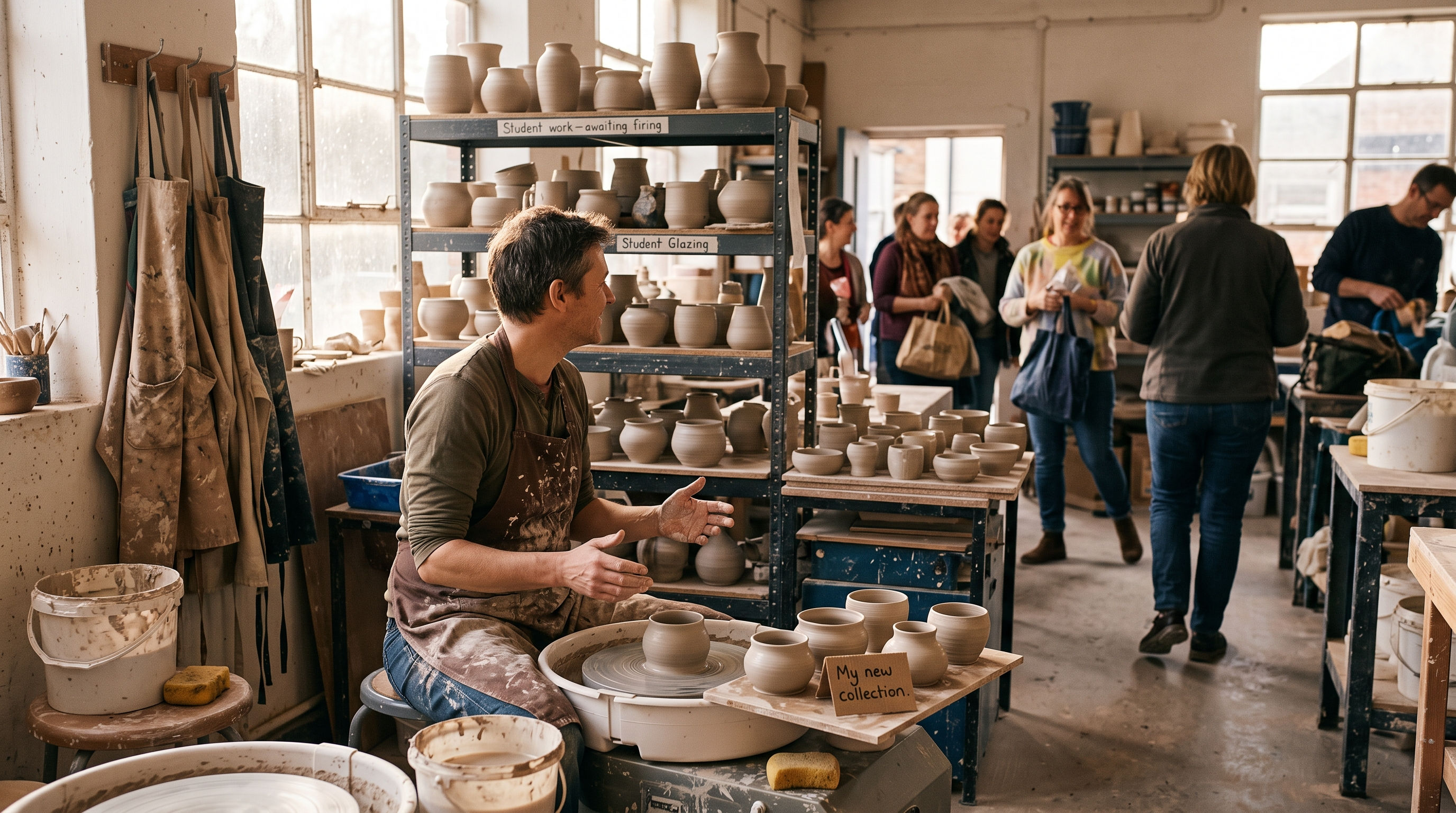
Teaching pays for the studio.
But when does the potter get to make pots?
This picture has its own page with more detail, click here to see it.
Before setting up a community studio, reflect that teaching brings its own workload, and what begins as a way to subsidize making can gradually become the main business, leaving little time for the pottery that prompted it. Booking automation can reduce administrative work, but it cannot remove the physical workload of teaching and processing students’ pottery (e.g. advertising, preparation, demonstrations, cleanup, reclaiming clay, organizing space for drying ware and kiln staging and firing students’ work).
As a way of cutting costs, have you considered DIY ceramics? Making your own glazes, engobes, slips, tools, etc. A 3D printer and some 3D CAD skills can add so many cost-cutting options.
Links
| URLs |
https://potteryclasses.fun
A demo pottery class booking site Claude Code made this for me on an Amazon free-tier server. No CMS (content management system) is needed. The server has 12gb of free space to store data (which is maintained in an SQLite database). |
 PayPal | No tracking, No ads, No paywall, No transient content! Just organized, concise information constantly updated and improved. Was this helpful? Consider supporting me. |
| By Tony Hansen Follow me on        |  |
Got a Question?
Buy me a coffee and we can talk 

https://digitalfire.com, All Rights Reserved
Privacy Policy