3D Printing a Clay Cookie Cutter-Stamper
A 3-minute Mug with Plainsman Polar Ice
A Broken Glaze Meets Insight-Live and a Magic Material
Accessing Recipes from "Mid-Fire Glazes" book in Insight-Live
Adjusting the Thixotropy of an Engobe for Pottery
Analysing a Crazing, Cutlery-marking Glaze Using Insight-Live
Compare the Chemistry of Recipes Using Insight-Live
Connecting an External Image to Insight-Live Pictures
Converting G1214M Cone 6 transparent glaze to G1214Z matte
Create a Synthetic Feldspar in Insight-Live
Creating a Cone 6 Oil-Spot Overglaze Effect
Design a Triangular Pottery Plate Block Mold in Fusion 360
Designing a Jigger Mold for a Bowl Using Fusion 360 CAD
Downloading and 3D-Printing a 3MF file
Draw a propeller in Fusion 360 for use on an overhead propeller mixer
Drawing a Mug Handle Mold in Fusion 360
Drawing a Mug Mold Using OnShape CAD
Enter a Recipe Into Insight-live
Entering TestData Into Insight-Live
Fine tune the thixotropy of a glaze or engobe slurry
Getting Frustrated With a 55% Gerstley Borate Glaze
How I Developed the G2926B Cone 6 Transparent Base Glaze
How I Formulated G2934 Cone 6 Silky MgO Matte Glaze Using Insight-Live
How to Apply a White Slip to Terra Cotta Ware
How to Paste a Recipe Into Insight-live
Importing Data into Insight-live
Importing Desktop Insight Recipes to Insight-live
Importing Generic CSV Recipe Data into Insight-Live
Insight-Live Meets a Silica Deprived Glaze Recipe
Insight-Live Quick Tour
Liner Glazing a Stoneware Mug
Make a precision plaster mold for slip casting using Fusion 360 and 3D Printing
Making ceramic glaze flow test balls
Making test bars for the SHAB, LDW and DFAC tests
Manually program your kiln or suffer glaze defects!
Mica and Feldspar Mine of MGK Minerals
Predicting Glaze Durability by Chemistry in Insight-Live
Preparing Pictures for Insight-live
Replace Lithium Carbonate With Lithium Frit Using Insight-Live
Replacing 10% Gerstley Borate in a clear glaze
Same Beer Bottle Mold Using Fusion 360 and OnShape CAD
Signing Up at Insight-live.com
Signing-In at Insight-live.com
Slip cast a stoneware beer bottle
Substitute Ferro Frit 3134 For Another Frit
Substituting Custer Feldspar for Another in a Cone 10R Glaze Recipe
Thixotropy and How to Gel a Ceramic Glaze
Use Insight-live to substitute materials in a recipe
Watch Thixotropy Happen With a 20kg Batch of Dipping Glaze
Fine tune the thixotropy of a glaze or engobe slurry
How I tune the thixotropy of a dipping glaze or engobe so it hangs on after extraction, not dripping.
Transcript/Notes
Gelled (thixotropic) slurries for dipping are so much better to work with, you'll never go back once you have mastered this DIY technique. While some glazes and engobes gel naturally, especially those with high clay content, these almost always work best when the water content is within a certain range, so fine-tuning like this is still needed. Although not shown here, if over-gelling happens, a drip or two of deflocculant (e.g. Darvan) brings back the fluidity; this is more likely to happen with engobes since they need more gel (for dipping and even more for painting).
Transcript:
I am going to check the thixotropy of this slurry.
To do that, I turn off the mixer and count until it gels and stops.
more..
In this case, that happens in about 3 seconds.Then I slowly pull the spatula out.
Notice there’s not one drip coming off of it.
Now, I’ll do it again. A few drips.
I like it to gel just a little more so I’ll add a tiny pinch of Epsom salts and let it mix for a few minutes.
This is the procedure each time I use this.
Note: Since I have a good table top mixer I use granular Epsom salts, sprinkling it in and leaving the slurry to mix until it stabilizes. Fine tuning slurries like this is a lot of about judgement, and I feel more comfortable dealing with the granular material directly.
Links
| Glossary |
Thixotropy
Thixotropy is a property of ceramic slurries of high water content. Thixotropic suspensions flow when moving but gel after sitting (for a few moments more depending on application). This phenomenon is helpful in getting even, drip-free glaze coverage. |
See the magic of thixotropy as I mix a 20kg batch of G2926B glaze
In this video, I mix 20kg of G2926B glaze powder into 20kg of water using our powerful propeller mixer. The resulting slurry is like water, absolutely unusable. Yet on measuring the specific gravity (using a hydrometer because it floats freely) I find that it is too high, I actually have to add more water! How is that even possible? Instead, I add Epsom salts and mix again and the slurry gels and hangs on in a perfectly even layer when I dip the spatula. This is a thixotropic gel, it will apply evenly to bisque ware yet not go on too thickly. We normally recommend a specific gravity of 1.44 for this glaze, but in this case, it seemed watery enough at 1.46 (on use, it will become clear if 1.46 is OK e.g. if it goes onto the ware too thick). If that happens I'll just add water to 1.44 (and more Epson salts if needed). Based on online pricing at this time, coverage is minimum six times and as much as twenty times less expensive than buying jars of transparent brushing glaze (considering both the total powder weight and the specific gravity difference between this and commercial glazes we use).
Fine-tuning the thixotropy of a glaze or engobe
For dipping, this is so much better!
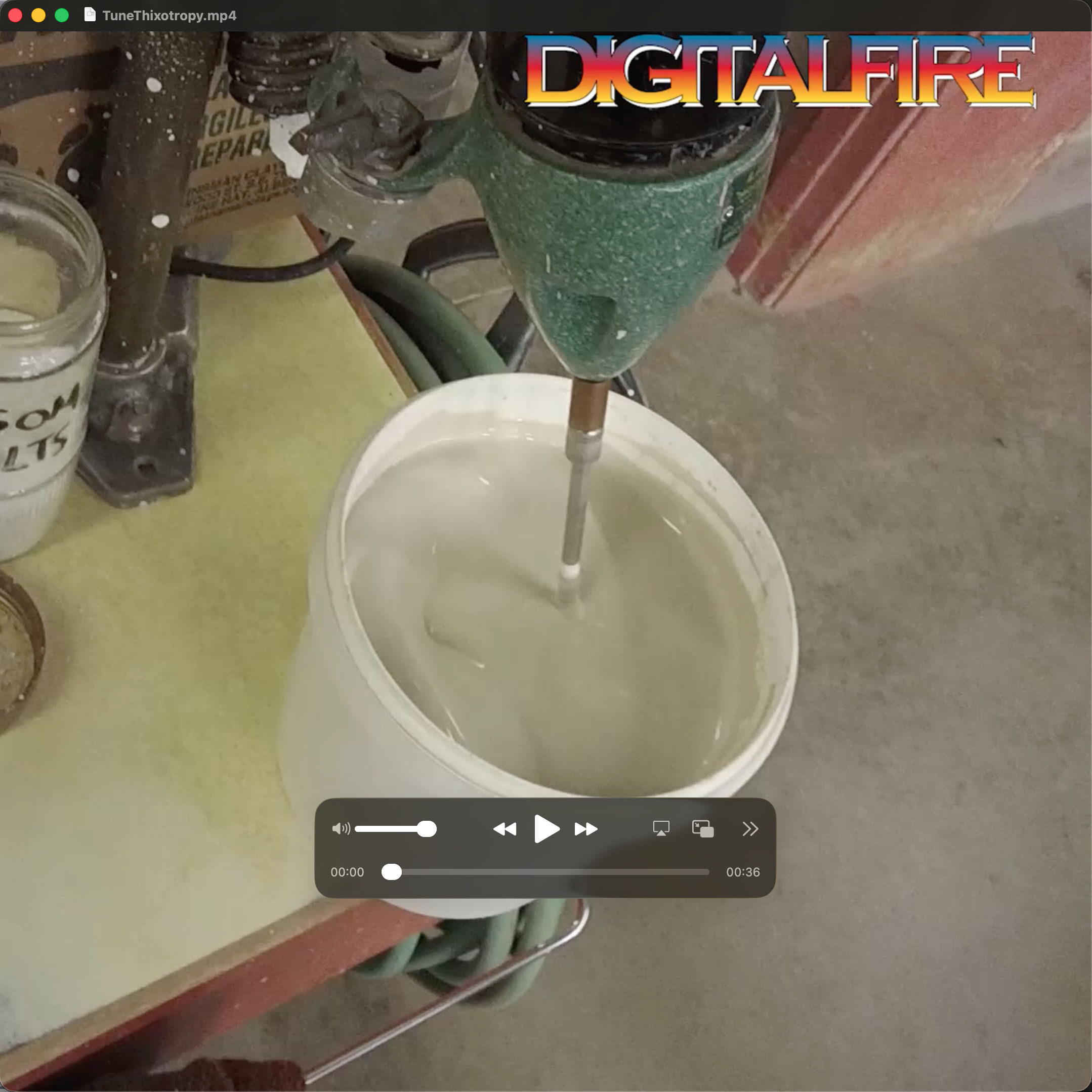
This picture has its own page with more detail, click here to see it.
Watch this 30-second video to see. Gelled (thixotropic) slurries for dipping are so much better to work with; you'll never go back once you have mastered this DIY technique. While some glazes and engobes gel naturally, especially those with high clay content, these almost always work best when the water content is within a certain range, so fine-tuning like this is still needed. Although not shown here, if over-gelling happens, a drip or two of deflocculant (e.g. Darvan) brings back the fluidity, this is more likely to happen with engobes since they need more gel (for dipping and even more for painting). A side benefit of this: No settling in the bucket.
 PayPal | No tracking, No ads, No paywall, No transient content! Just organized, concise information constantly updated and improved. Was this helpful? Consider supporting me. |
| By Tony Hansen Follow me on        |  |
Got a Question?
Buy me a coffee and we can talk 

https://digitalfire.com, All Rights Reserved
Privacy Policy